UNDRR News

The latest news from the United Nations Office for Disaster Risk Reduction (UNDRR), the lead UN agency for the coordination of disaster risk reduction (DRR).
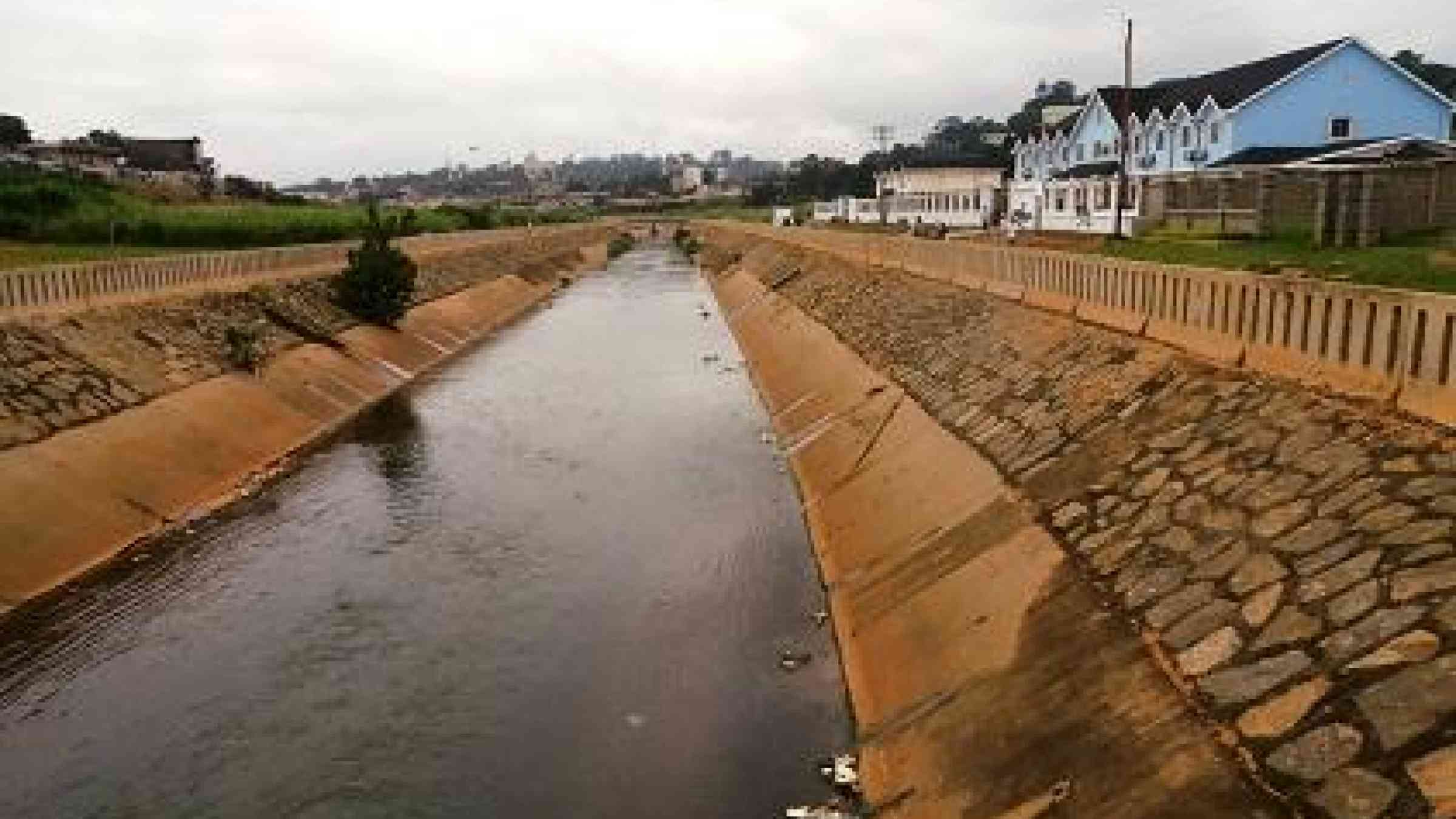
Cameroon's capital Yaoundé is building a network of drainage canals to curb flood risk (Photo: UNISDR)
Update

Recovering from floods that killed dozens of people and displaced thousands in June and July, Cameroon is working to rein in risk in its fast-growing urban centres.

United Nations Office for Disaster Risk Reduction - Regional Office for Africa
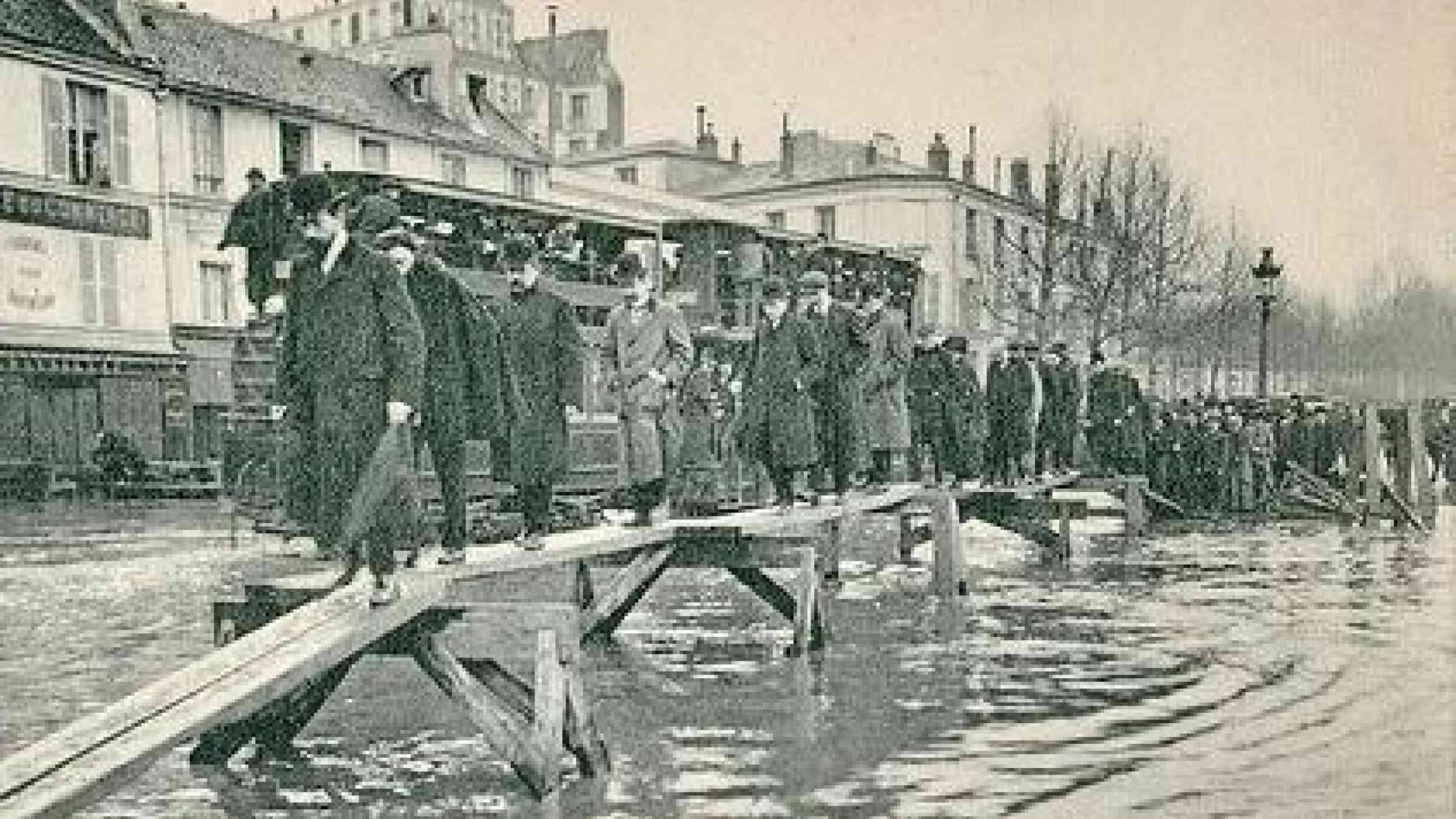
<b>Faded memory: </b>A repeat of the 1910 floods in Paris would now affect up to 5 million people and cause up to Euros 30 billion of damage.
Update

The French capital, Paris, has been invited to join the “Making Cities Resilient” Campaign by the UN Office for Disaster Risk Reduction as a new OECD analysis reveals the extent of the city’s exposure to a repeat of a major flood disaster. The OECD Review on Flood Risk Management of the Seine River – commissioned by Etablissement Public Territorial de Bassin (EPTB) Seine Grands Lacs, with the Ministry of Ecology and Ile-de-France Regional Council – found that a repeat of the 1910 flood could affect up to five million residents and cause Euros 30 billion worth of damages. Speaking at the launch of the report, UNISDR Chief, Margareta Wahlström, said: “Making Paris resilient is an important strategic goal for France. Floods displace more people worldwide, create more unemployment and disrupt city life more than any other category of disaster.

United Nations Office for Disaster Risk Reduction - Regional Office for Europe & Central Asia
<b>Path to resilience: </b>Lao Cai in Vietnam was one of four study cities that benefited from the use of UNISDR’s Local Government Self-Assessment Tool (LGSAT).
Update

UNISDR’s Local Government Self-Assessment Tool (LGSAT) is an effective tool to assess a city’s institutional capacity to build resilience, a new report has found. The study said the LGSAT opened up dialogue and enabled the establishment of baseline data for the Ten Essentials of UNISDR’s Making Cities Resilient Campaign “that can be used to track progress as the cities continue to build disaster and climate resilience”. The report, titled ‘Assessing City Resilience: Lessons from using the UNISDR Local Government Self-Assessment Tool in Thailand and Vietnam’, said the LGSAT enabled local discussions to take place within an internationally-applied framework of common issues. The study looked at four cities – Hue and Lao Cai, in Vietnam, and Udon Thani and Hat Yai, in Thailand – and identified gaps between policy and practice, and between planning and implementation.

United Nations Office for Disaster Risk Reduction - Regional Office for Asia and Pacific
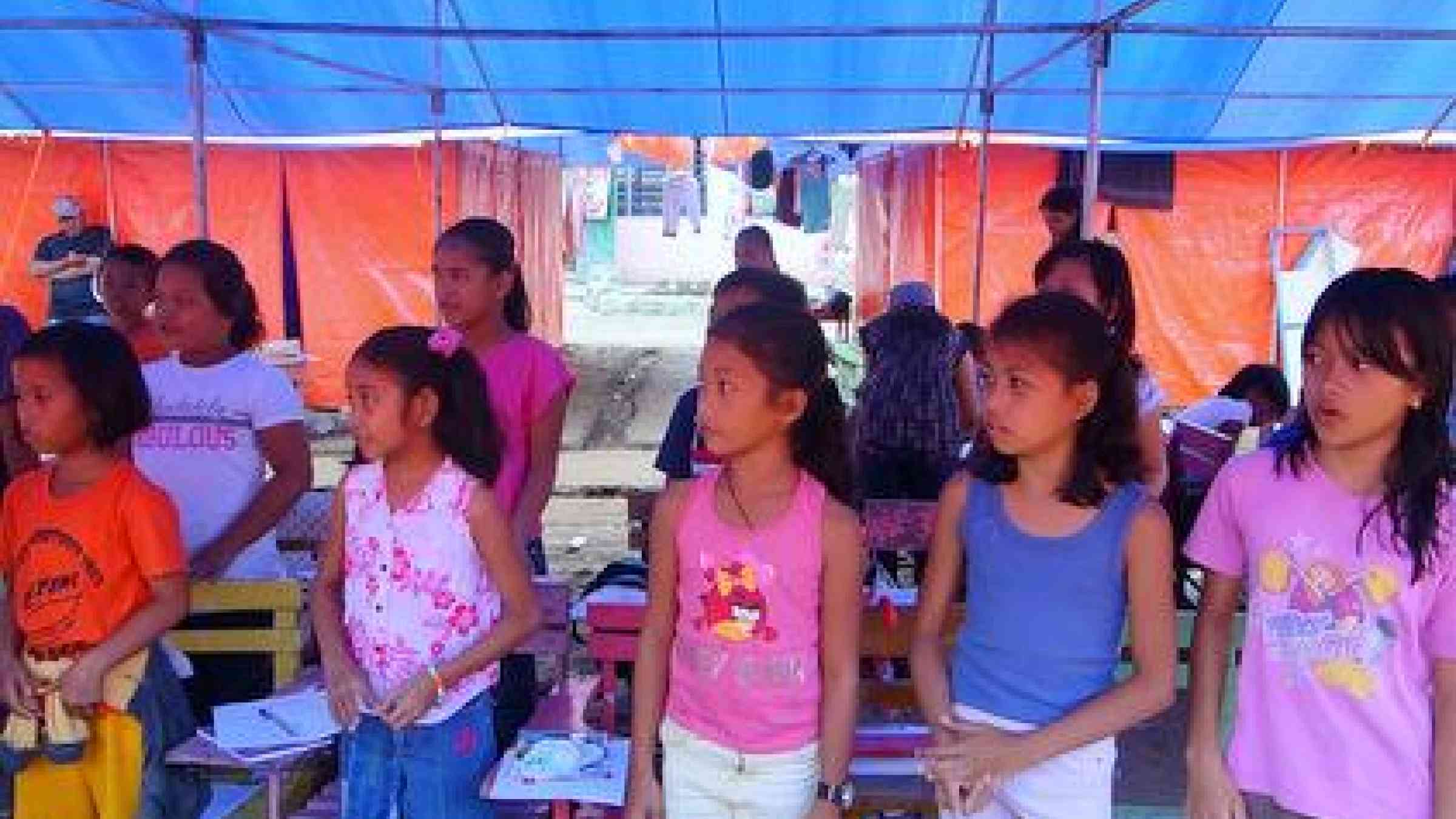
<b>Trying to get back to normal: </b>These schoolgirls are making the best of their makeshift classrooms.
Update

Pop idol Justin Bieber paid a surprise visit to the San Jose Elementary School in Tacloban this week. He stayed about 30 minutes, hugged the kids, sang a few songs, signed some autographs and landed on the front pages of all the Philippine newspapers. If nothing else, his visit brought a spotlight to bear on the precarious lives of thousands of children with no school to go to for the last four weeks. Over 600 schools were destroyed by Typhoon Haiyan. Despite a government instruction for classes to re-open on December 2, many, such as the Anibong Elementary School overlooking the ship-strewn shoreline of the neighbourhoods known as barangays 68 and 70, remain packed with evacuees.

United Nations Office for Disaster Risk Reduction - Regional Office for Asia and Pacific
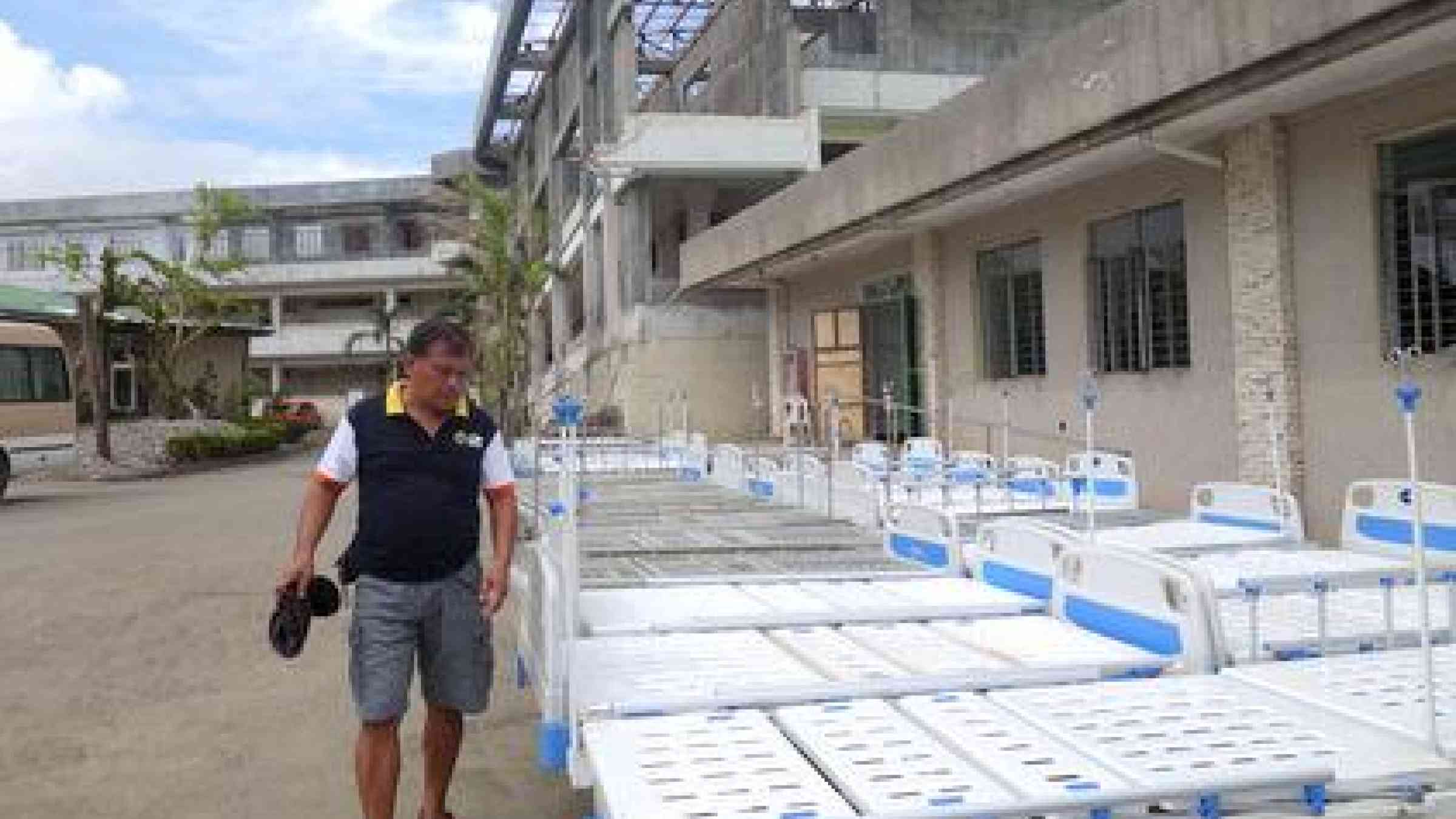
Dr. Cirilo Galindez inspects replacement beds for the flood-damaged hospital. Behind him looms the wreck of the concrete out-patients department which protected the main hospital from the worst of Typhoon Haiyan's fury.
Update

The ground floor patients including those in intensive care had a narrow escape. Indeed, as the tidal surge broke through the hospital’s perimeter wall security guards had to come and rescue the director of Leyte Island’s largest public hospital, the Eastern Visayas Regional Medical Center (EVRMC), as he struggled waist deep in water in his hospital residence overlooking the sea. Dr. Cirilo R. Galindez who is now on secondment from Luzon as acting hospital director, describes the frenetic activity following the slow realization that the hospital was about to be inundated by sea-water as a result of Typhoon Haiyan in the early dawn hours of November 8. “In about twenty minutes they had to move all the patients from the ground floor to the second floor including those in the intensive care unit. The staff did a superb job and there were no casualties among the patients,” he said.

United Nations Office for Disaster Risk Reduction - Regional Office for Asia and Pacific
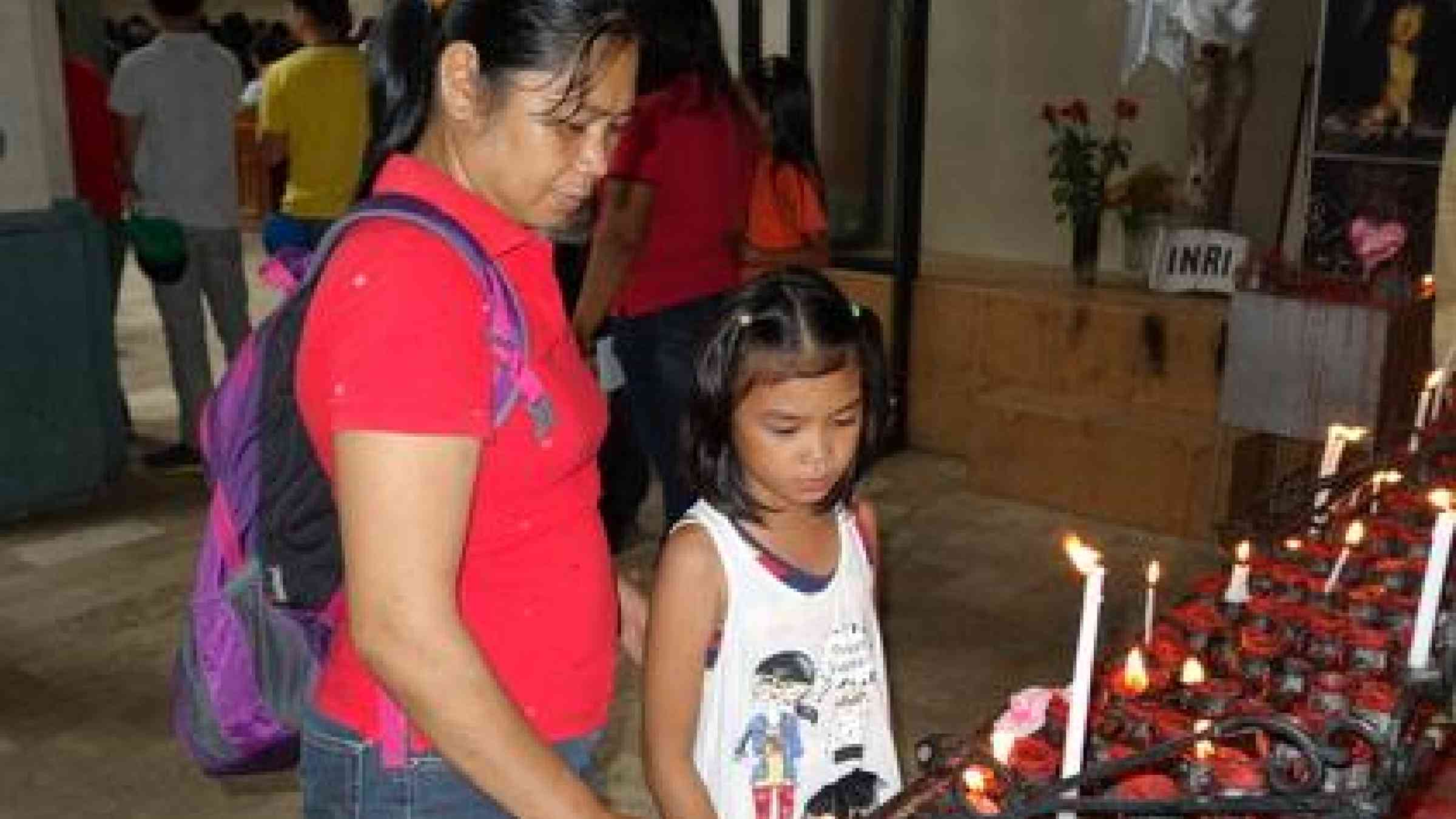
Yesterday was a day of remembrance in Tacloban; 30 days after Typhoon Haiyan a mother and her daughter light candles for those who did not survive the super typhoon.
Update

Sunday marked thirty days since Typhoon Haiyan (known as Yolanda locally) tried to rip the heart out of the Eastern Visayas region of the Philippines with winds from hell that sucked the sea along with them to take the lives of thousands and leave millions homeless. The strength of the Philippine people in the wake of one of the worst typhoons ever to make landfall, is something special to behold. Yesterday they even managed to turn on some Christmas lights in the centre of Tacloban, the commercial heart of the disaster zone, despite the continuing curfew and absence of street lighting. The predominantly Catholic city remembered its dead on the Second Sunday of Advent as hundreds packed into the partly roofless Church of Santa Ninõ to give thanks for the gift of life and to receive the only kind of psychological support available here for those who have been traumatized by the loss of family and friends: the age old solace of religion.

United Nations Office for Disaster Risk Reduction - Regional Office for Asia and Pacific
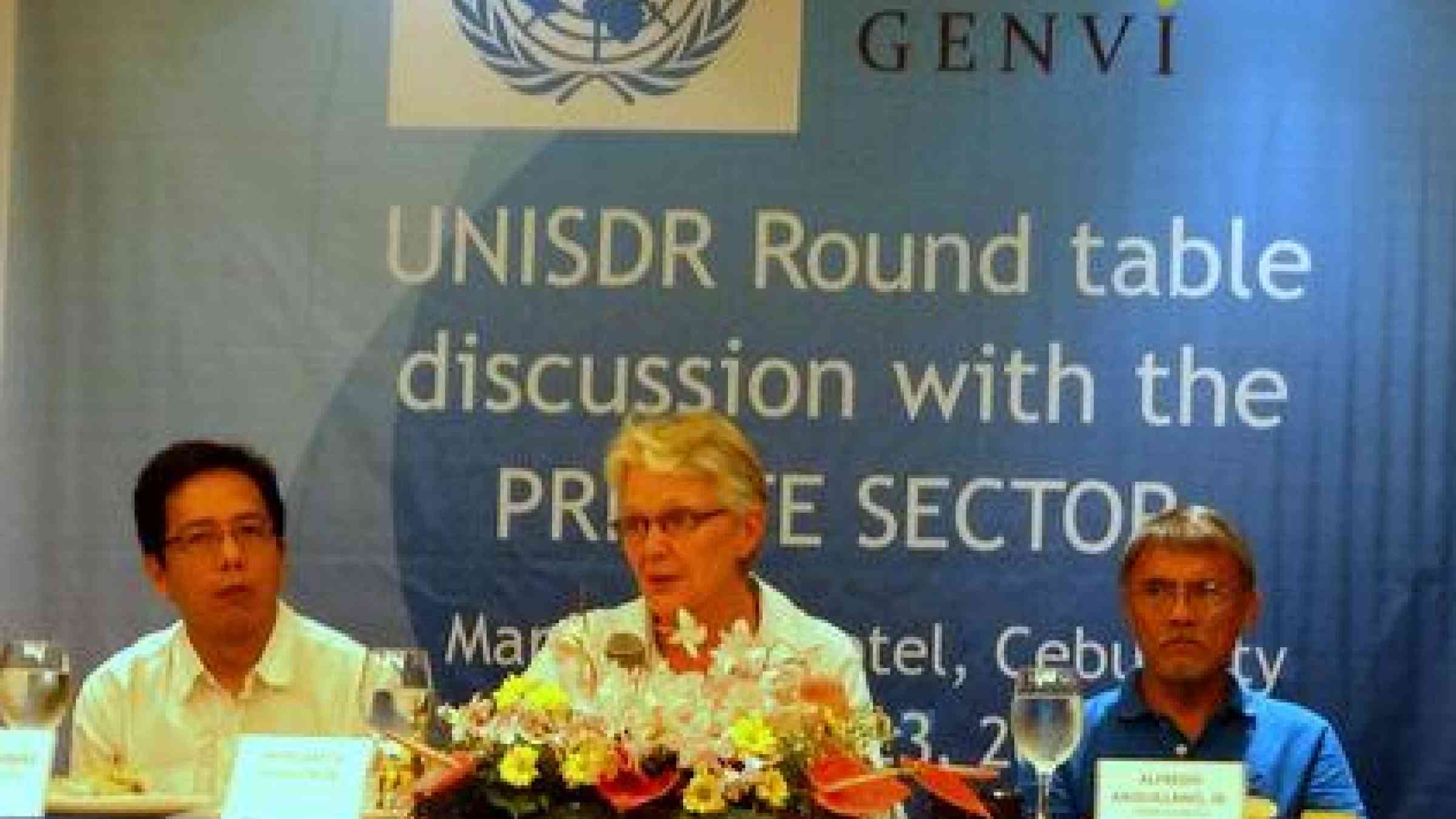
<b>'You have an opportunity to rebuild better and differently': </b>UNISDR Chief Ms Wahlström urges public and private sector leaders in Cebu to become a model of recovery partnership.
Update

Disaster risk reduction is emerging as central to the Philippines’ recovery and reconstruction plans in the wake of the devastating Typhoon Haiyan (known locally as Yolanda. One of several leaders supporting increased investment in resilient structures is Mayor Ian Christopher Escario of Bantayan municipality, who oversaw a mass evacuation that limited the number of deaths to 15 people out of 90,000 in the face of the typhoon. “We were able to evacuate 30,000 people a couple of days before using sirens and radio messages. People were informed but nobody could foresee the violence of the storm surge,” Mayor Escario said. “Now we need to invest more in resilient infrastructures as all the roofs of the buildings have been blown away. Economic losses are huge and we are still assessing the damages and will take the necessary lessons of what happened.”

United Nations Office for Disaster Risk Reduction - Regional Office for Asia and Pacific
<b>A changing city: </b>New York Air National Guard respond after Sandy, which has prompted a major review of the city's disaster management.
Update

Exactly a year ago, Sandy proved to be the most destructive hurricane of the 2012 Atlantic hurricane season, severely impacting lives and economies in seven countries. For the United States, it was the second-costliest hurricane in its history and affected the entire eastern seaboard, causing an alarming economic bill of up to $50 billion. New York City was one of the worst affected. On the anniversary of Hurricane Sandy this week, however, the city appears occupied with its future rather than its past. Heeding the signs of a changing climate, in June this year, New York City released its plan to protect the city from coastal hazards and climate change impacts called A Stronger, More Resilient New York.

United Nations Office for Disaster Risk Reduction - New York UNHQ Liaison Office
Children at a Philippines Elementary School practice an earthquake drill as part of efforts to strengthen awareness and preparedness in the quake-prone country.
Update

The death toll in Tuesday’s 7.2 earthquake in the Philippines has risen to 156 with 3.2 million people affected including 47,000 displaced. There have been 1,213 aftershocks recorded including 24 of which were felt. An assessment released today by the National Disaster Risk Reduction and Management Council cites damage or destruction of over 2,000 homes and damage to seaports, airports, churches, government/public buildings, hospitals and private establishments in the Provinces of Bohol, Cebu, Iloilo, Negros Occidental and Leyte. Two bodies were recovered yesterday from the inside the collapsed Congressman Castillo Memorial Hospital and city engineers declared three other hospitals in Cebu City unsafe to be occupied.

United Nations Office for Disaster Risk Reduction - Regional Office for Asia and Pacific
UNECE Executive Secretary Sven Alkalaj and UNISDR Chief Margareta Wahlström welcome the new risk sensitive housing strategy
Update

A meeting of ministers and heads of agencies for housing, urban development and land administration from 55 countries in Geneva this week adopted a new Strategy for Sustainable Housing which will boost implementation of the Hyogo Framework for Action, the current global agreement for reducing disaster risk, across wider Europe. The Ministerial Meeting on Housing and Land Management for the region covered by the UN Economic Commission for Europe (UNECE) recognized that “Natural as well as human-generated disasters, including those created by a changing climate, have resulted in large-scale damage to housing across the ECE region and present serious challenges for governments.” The Strategy calls for “common efforts by member States to develop frameworks for climate change adaptation and disaster risk reduction. This includes emergency preparedness, contingency planning and risk-prevention measures through building safer houses in safer places and locating hazardous industry and other activities at safe distances from housing.”

United Nations Office for Disaster Risk Reduction (UNDRR)

You might also find these helpful

Cover- Shutterstock main report
Publications
We produce a range of publications by collecting and analysing risk data through a range of tools, knowledge products, and mobilising like-minded partners.

Cheerful young black lady leading international group of protestors
Campaigns
Our communications and advocacy campaigns call for taking action today to protect people and prevent disasters from happening.
Media Centre Thumb
Media centre
Access to a range of multimedia resources related to disaster risk reduction, including news releases, photos, videos, and other materials.

WIN DRR Leadership Awards
DRR Awards
These awards not only celebrate exemplary contributions but also encourage efforts to build more resilient societies.