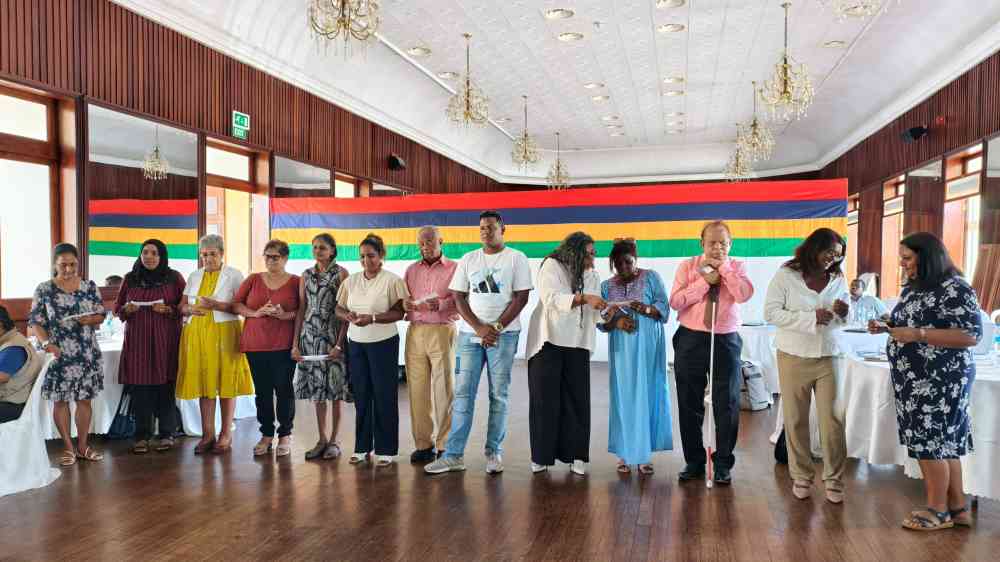
UNDRR at COP30
The Second World Summit for Social Development (WSSD) Political Declaration (2025) identified disaster risk reduction (DRR) as a cross-cutting pillar of inclusive and sustainable social development, essential for eradicating poverty, promoting equality, and safeguarding human well-being in an era of escalating risks.
Why DRR matters for social development
Disasters, climate change, pandemics, and economic instability are reversing decades of progress. More than 4 billion people lack access to social protection, while over 100 million are affected by disasters each year. These overlapping crises deepen inequality, disrupt livelihoods, and weaken social cohesion. Their impacts are not evenly distributed: women, children, older persons, persons with disabilities, and low-income households are disproportionately affected, often with limited access to services and recovery resources.
Between 2016 and 2020, reported global economic losses from disasters reached US$293 billion, but this only captures a fraction of the real cost. When cascading and ecosystem impacts are included, disasters are estimated to cost the global economy more than US$2.3 trillion annually. The destruction of infrastructure and productive assets erodes jobs and incomes, forcing many into long-term poverty cycles. Governments often must divert scarce public resources away from education and healthcare toward immediate disaster response and reconstruction.
Disasters can set off three spirals of unsustainable development—increasing debt and decreasing income, unsustainable risk transfer, and the costly cycle of respond–repeat. These spirals reinforce vulnerability by depleting household income, eroding fiscal stability, and locking societies into a pattern of rebuilding and relief rather than prevention and resilience. Left unchecked, they deepen inequality and make future crises more damaging and more expensive to recover from.
Nothing erodes development like disasters, which can destroy decades of progress in minutes. Building resilience must therefore be at the heart of our social contract.
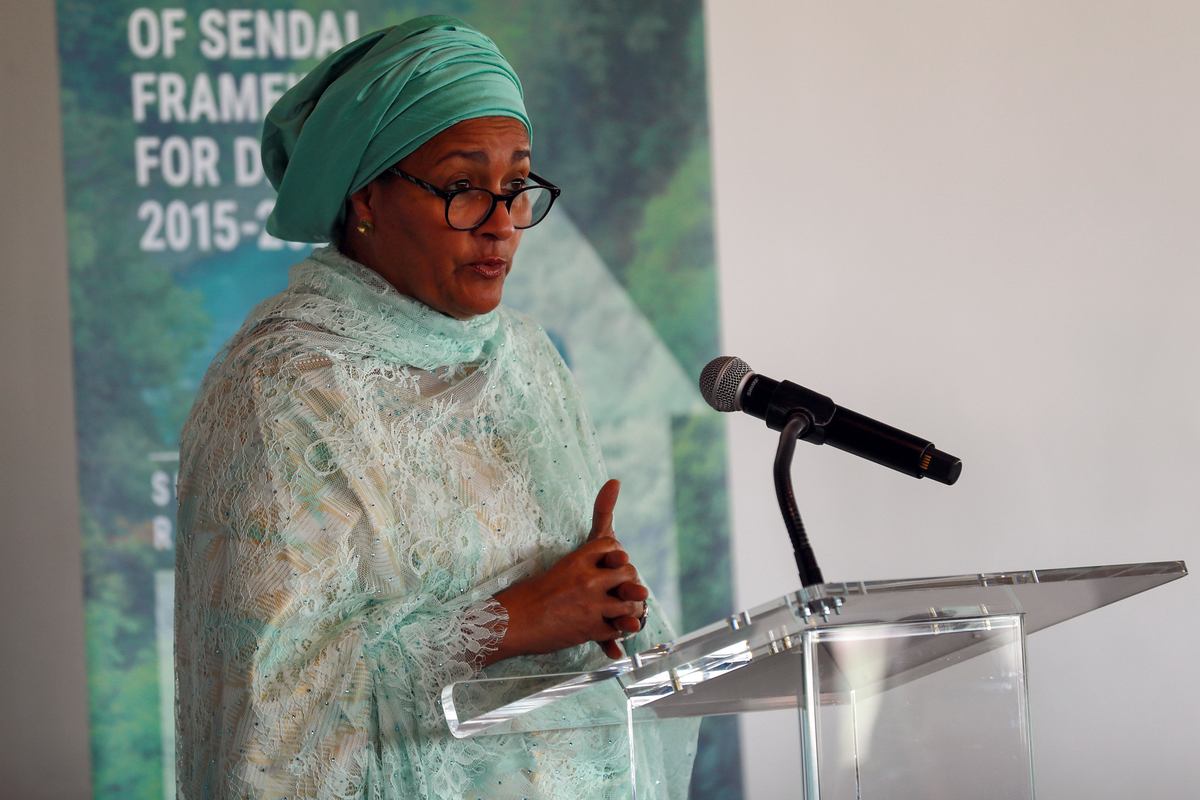
Amina J. Mohammed
United Nations Deputy Secretary-General
Disaster risk reduction is a necessary foundation for protecting lives, livelihoods, and development gains.
When embedded into social protection, employment, health, education, and housing policies, DRR enables governments and communities to anticipate, absorb, and recover from shocks without losing ground. Risk-informed policies and adaptive systems help prevent future shocks from driving people back into poverty and ensure that no one is left behind.
Facts and figures
Over 4 billion people still lack access to any form of social protection, leaving households unprotected when disasters strike.
A US$1 in disaster loss leads to an estimated US$2 decline in well-being, as lower productivity and disrupted services amplify the shock.
Low-income households take 56% longer to recover from disasters than wealthier ones, extending poverty cycles.
Climate-related disasters have pushed more than 70 million people back into extreme poverty since 2020.
In the Caribbean, hurricane destruction has increased unemployment by up to 13%, lasting several years after major events.
In Asia–Pacific, heat stress is projected to eliminate 30 million full-time jobs by 2030, disproportionately affecting women and informal workers.
Challenges in linking DRR and Social Development
The Midterm Review of the Sendai Framework found that while progress has been made, systemic gaps still prevent DRR from fully reinforcing sustainable and social development goals. Closing these gaps requires breaking silos, scaling up financing and ensuring inclusivity in DRR decision-making.

Priority 1: Understanding risk
Persistent data and capacity gaps limit understanding of how inequalities shape vulnerability and resilience. Disaggregated data by sex, age, disability, income, and geography are often incomplete. The social dimensions of risk, unequal access to health care, education, housing, and employment, are rarely captured in national risk assessments, leaving policies blind to who is most at risk and why.
Priority 2: Strengthening governance
Disaster risk reduction and social development strategies often remain siloed, resulting in fragmented planning and financing. Participation of at-risk groups in DRR governance is still limited, despite global commitments to inclusive decision-making and community-based resilience.

Priority 3: Investing in resilience
Financing for prevention and social resilience is inadequate. Investment flows are still skewed toward post-disaster response and reconstruction. More than half of low-income countries face debt distress, constraining fiscal space for risk-informed spending on social protection, education, and health systems.
Priority 4: Preparedness and Building Back Better
Adaptive and shock-responsive safety nets remain underdeveloped, preventing rapid support to households when disasters strike. Schools, health facilities, and community infrastructure are still highly vulnerable, prolonging recovery cycles and reinforcing poverty traps.
UNDRR’s support for social development
UNDRR helps Member States and partners strengthen the link between disaster risk reduction and social development, advancing risk-informed, inclusive, and equitable progress toward the 2030 Agenda and the WSSD commitments.

Risk-informed social protection systems and Anticipatory Action
- UNDRR helps countries embed risk considerations into social protection systems so that households are protected before, during, and after crises. Through shock-responsive safety nets, disaster-linked cash transfers, and risk-informed budget tagging, governments can prevent temporary shocks from becoming long-term poverty traps.
- UNDRR also promotes early-action triggers within social protection programmes, linking early-warning data to pre-arranged financing, to ensure that assistance reaches people faster when hazards threaten. Through initiatives such as the Early Warnings for All (EW4All) partnership, UNDRR supports countries in connecting early-warning systems to social protection schemes, enabling anticipatory action that protects lives and livelihoods before disaster strikes.
Inclusive and gender-responsive resilience
- UNDRR supports implementation of the Sendai Gender Action Plan (GAP) and works with national and local authorities to expand disability-inclusive and community-based DRR. By strengthening the production and use of sex-, age- and disability-disaggregated data, countries can design risk-reduction measures that respond to the needs of those most affected—especially women, children, older persons, and persons with disabilities.
- In countries such as Fiji and Cambodia, inclusive early-warning systems now ensure that at-risk groups receive timely, accessible information and can participate in decision-making.
Risk data, knowledge and evidence
- To ensure that social-sector investments are risk-informed, UNDRR supports the collection and analysis of disaggregated disaster-loss data, integrating it into policy and fiscal planning.
- Through initiatives like Disaster Risk and the 2030 Agenda, UNDRR provides guidance and tools to help ministries of social development, finance, and planning embed DRR into their programmes.
Investing in resilience
- UNDRR works with public and private partners to increase investment in resilient social infrastructure, including education, health, and housing.
- By applying the Principles for Resilient Infrastructure and promoting access to risk-transfer and insurance mechanisms, UNDRR helps safeguard essential services and reduce fiscal stress when disasters strike.
- Integrated National Financing Frameworks (INFFs) are used to align risk-reduction financing with national development priorities and ensure that prevention is factored into social budgets.
Policy coherence and governance
- UNDRR advocates for coherent national DRR and social development strategies, ensuring that risk reduction is mainstreamed across key sectors such as health, education, food security, and employment.
- It engages parliamentarians and local governments to strengthen legislation, budget allocations, and accountability for resilience, using tools such as the Toolkit for Parliamentarians.
- Through global forums including ECOSOC and the WSSD, UNDRR promotes risk-informed social development as a foundation for equality and sustainability.