
Bridging the last mile of early warning through inclusive disaster preparedness in Beau Bassin–Rose Hill, Mauritius
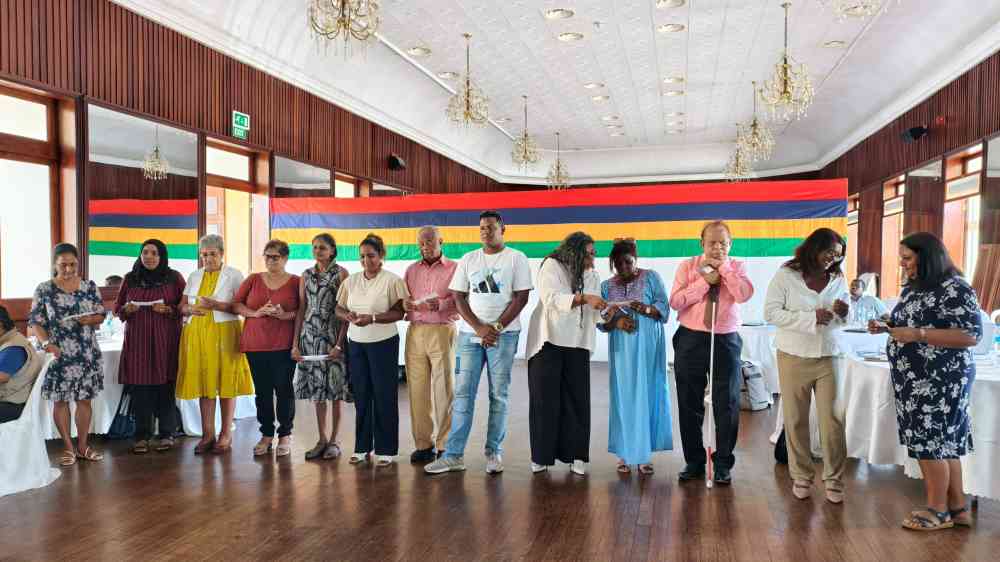
Participants take part in the “Game of Life” role-play exercise.
How do you explain a Class III cyclone warning to a child with an intellectual disability?
How do you plan an evacuation for a student who is deaf or blind?
How do you preserve dignity in an emergency shelter?
These questions shaped a capacity-building exercise hosted by the Municipal Council of Beau Bassin Rose Hill, in collaboration with the United Nations Office for Disaster Risk Reduction (UNDRR) under the Making Cities Resilient 2030 (MCR2030) initiative.
Held from 9–10 April 2026, the Gender and disability-inclusive Disaster Risk Reduction (DRR) capacity-building workshop on tropical cyclones and flash floods brought together Special Education Needs (SEN) educators, Local Disaster Management Coordinators (LDMCs) from across Mauritius and Organisations of Persons with Disabilities (OPDs). This workshop was co-financed by the Municipal Council of Beau Bassin—Rose Hill and CREWS Initiative under the Early Warnings for All Accelerator project.
Opening the event, Dr. N. Reetoo, Director of the Health & Wellness Division at the Ministry of Education and Human Resource, shifted the conversation from hazards to human impact:
Her message was clear: disaster risk systems are not failing because they do not exist but because they are not yet accessible to everyone.
“The gap is not in our systems, it is in making those systems accessible, understandable and humane. The Municipal Council of Beau Bassin–Rose Hill has demonstrated real leadership. It has not waited for a crisis to expose weaknesses. It has identified critical gaps and taken the initiative to address it. This is how resilience is built—locally, proactively and inclusively.”
Mauritius faces recurrent hydro-meteorological hazards. Tropical cyclones account for approximately 80% of disaster-related damages, while flooding contributes to around 20% of economic losses, particularly in dense urban areas.
Despite strong national disaster frameworks and early warning systems, translating risk information into accessible, practical, and learner-centred preparedness, remains a challenge, especially for persons with disabilities.
Beau Bassin–Rose Hill provides a strategic entry point to address this gap, under the auspices of its Local Disaster Risk Reduction and Management Strategy 2023-2030. The township hosts approximately one-third of all SEN schools in Mauritius, creating an opportunity to pilot and scale inclusive approaches nationwide.
As the first Resilience Hub under MCR2030 in Sub-Saharan Africa, Beau Bassin—Rose Hill is now positioned not only to strengthen its own systems, but to support peer learning and replication across the region.
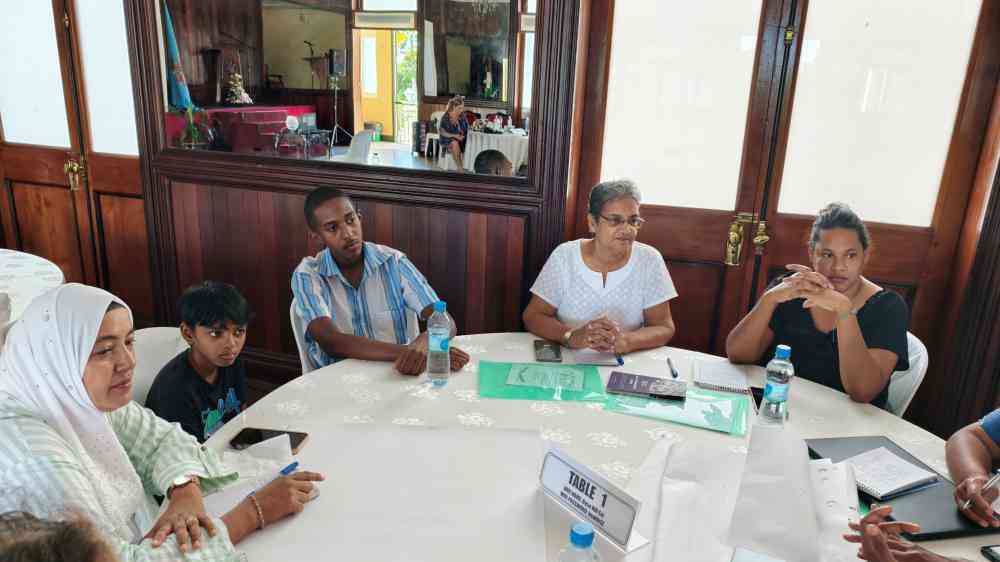
Participants from Special Education Needs (SEN) institutions, local authorities and OPDs during a gender and disability-inclusive disaster risk reduction exercise.
Participants worked collaboratively to design accessible DRR awareness sessions tailored to different types of disabilities. By the end, participants had developed replicable tools, that can be applied in schools, homes and communities. Participants are expected to replicate the approaches developed during the workshop within their respective institutions and communities, contributing to national-scale impact.
The initiative contributes to strengthening the “last mile” of early warning systems ensuring that risk information is not only available, but also understood and actionable for all.
As emphasized by Mrs. Katie Carlson-Akuno, UNDRR Gender and Disability Inclusion Consultant:
“Resilience must be inclusive, or it is not really resilience at all. MCR2030 supports cities to understand risk, plan and invest in resilience, and ultimately strengthen preparedness and response systems.”
In her address, Mrs. G. Batour, Mayor of Beau Bassin–Rose Hill, reinforced the importance of inclusive people-centred approaches:
“Preparedness is not only about systems and plans—it is about people. It is about ensuring that every individual understands the risks they face and knows how to respond safely. This workshop will be a beginning… an important step forward from simply raising awareness.”
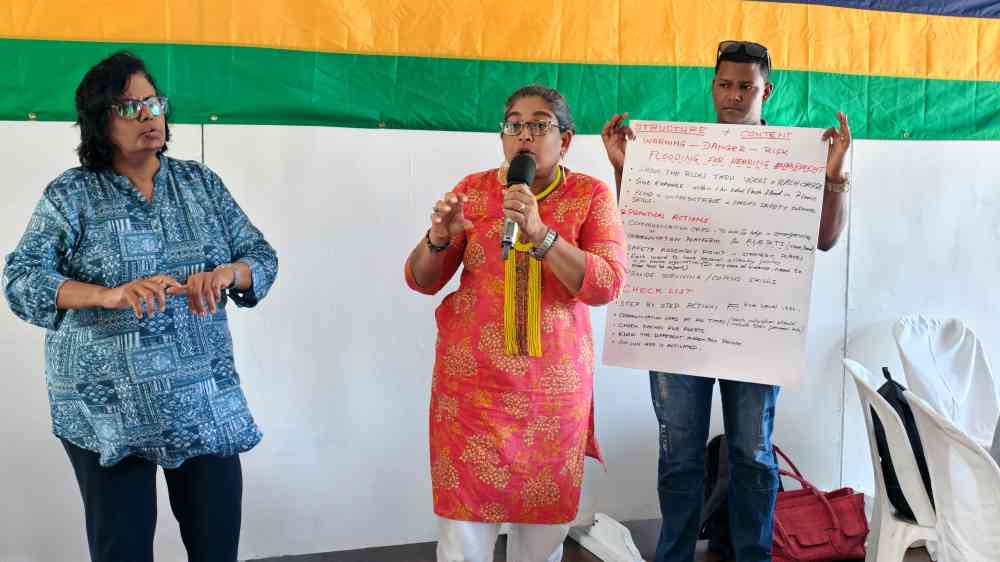
Participants present group work on accessible disaster risk awareness during a gender and disability-inclusive DRR exercise in Beau Bassin–Rose Hill, Mauritius, April 2026.
As a result of this capacity building exercise, the Municipal Council of Beau Bassin-Rose Hill developed guidelines for the delivering inclusive DRR awareness sessions within Special Education Needs institutions. The guidelines equip educators, facilitators and caregivers with practical tools to deliver accessible, participatory DRR sessions tailored to diverse needs, promoting inclusive communication, action-oriented messaging and gender-responsive approaches. With these inclusive tools, warnings will be able to reach more people.
“I rarely get to attend such kinds of workshops where I was able to give my input and see that it would make a difference. I sincerely believe that what has been started by the Municipality of Beau Bassion-Rose Hill will be the turning point in terms of inclusion for all the other localities of the island. A society which takes care of its vulnerable population is one which really cares.”
Ms. Koumaresi Chinnarassen, Member of L’Association pour la Protection des Droits des Handicapés (APDH)