
UNDRR brings local voices to the center at the 13th European Urban Resilience Forum
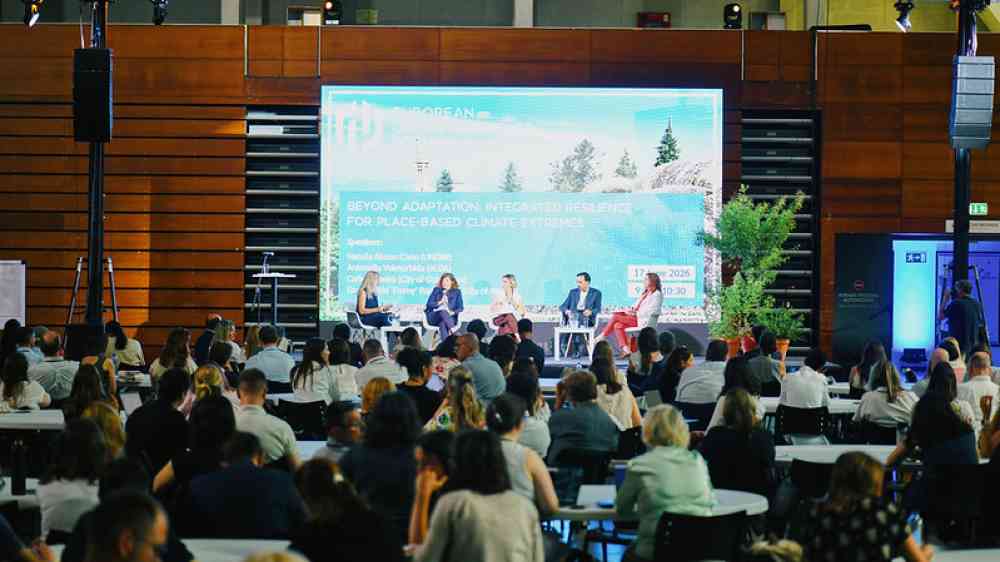
Portugal, 19 June 2026 — The 13th European Urban Resilience Forum (EURESFO), held in Guimarães, Portugal, brought together urban resilience practitioners, city leaders, and international partners to accelerate local action on disaster risk reduction (DRR), climate adaptation, and resilient urban governance. UNDRR's Regional Office for Europe and Central Asia (ROECA) played an active role throughout the Forum through the partnership of the Making Cities Resilient 2030 (MCR2030) Initiative, elevating the importance of locally led resilience at the highest level.
Local voices at the center of global ambition
ROECA Chief Natalia Alonso Cano joined the Forum's opening plenary, bringing UNDRR's regional leadership directly into the conversation on local resilience. Her intervention drew a clear line between global commitments and local action — and the gap that still needs to be closed.
Reflecting on the ambition embedded in the Sendai Framework for Disaster Risk Reduction, adopted by more than 180 countries in 2015, she underscored that its targets — reducing disaster mortality, limiting impacts on infrastructure and economies, and ensuring early warning systems for all — cannot be achieved without local resilience as the foundation.
"We will not achieve the Sendai targets if local resilience is not happening. And there are a lot of good initiatives happening at the local level — leadership in political choices, leadership in community participation, and many good practices. But the roots of resilience, like those of bamboo, are frequently unseen, not often perceived or valued.” She underscored. “The question is not whether local resilience is needed — we know it is. The question is how local knowledge, initiatives, and actions are actually shaping decisions at the national and global levels. That is the challenge."
Her call to action resonated with UNDRR's new Strategic Framework, which places locally led DRR at the heart of its global approach — recognizing that sustainable risk reduction must be rooted in the communities most exposed to disaster risk. With the Sendai Framework's 2030 deadline approaching and discussions already underway on its successor, Chief Alonso Cano issued a challenge to Forum participants: how can local voices and local action meaningfully shape the next global framework?
A first-of-its-kind exchange across the Western Balkans
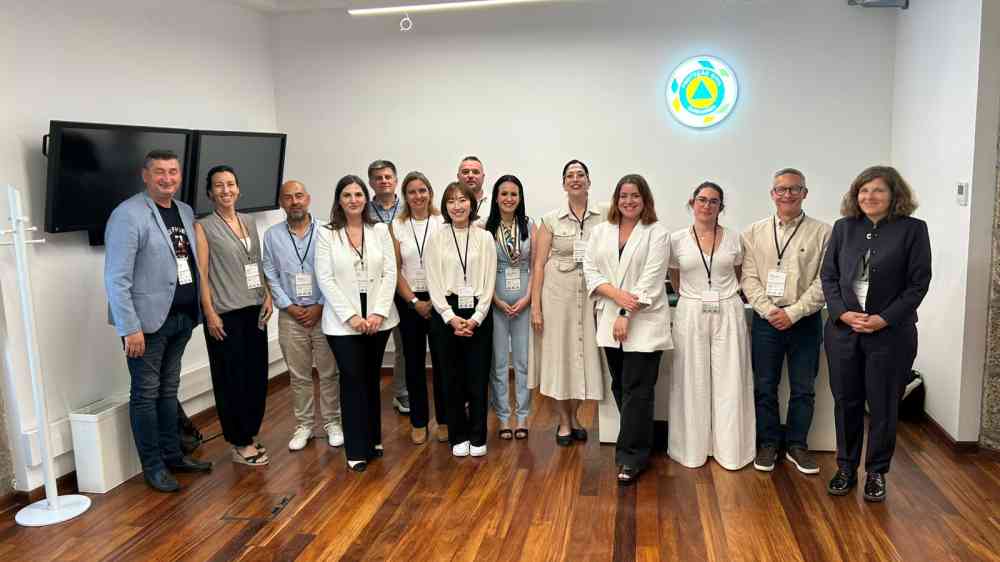
One of the Forum's most significant outcomes was a landmark city-to-city exchange between MCR2030 member cities from Albania, North Macedonia, and Serbia — brought together for the first time across borders under the Resilient Western Balkans initiative, funded by the Italian Agency for Development Cooperation (AICS) and implemented by UNDRR.
Five cities from the Western Balkans gathered alongside MCR2030 Resilience Hubs in Portugal (Amadora, Funchal, and Matosinhos) and the city of Guimarães, with support from partners including Konstantina Karydi of the Resilient Cities Catalyst / Climate Change Hub Greece. Facilitated by UNDRR, the exchange created a space for peer learning around shared urban resilience challenges: data gaps and risk information systems, coordination across different sectors and levels of government, and mobilizing financing for resilient infrastructure.
“As local governments, we are on the front line of responding to the growing impacts of disasters and climate change. The challenges we face are increasingly interconnected and transboundary in nature. This is why cooperation among Western Balkan countries and active engagement with the MCR2030 Resilience Hubs across Europe are of strategic importance. Such partnerships enable cities and municipalities to learn from one another, share innovative approaches, and strengthen capacities to reduce risks before disasters occur. Together, we can transform shared challenges into opportunities for stronger regional solidarity and resilience", underlined Dusan Todorovic, Head of the Defense and Emergency Management Department of the City of Kruševac.
The dialogue underscored the value of structured, cross-border peer learning — and pointed to opportunities for deeper collaboration. The city of Matosinhos proposed following up with a dedicated dialogue among Mayors, a format that could amplify the impact of these exchanges and anchor them in political commitment.
Inclusive resilience: bringing the right voices to the table
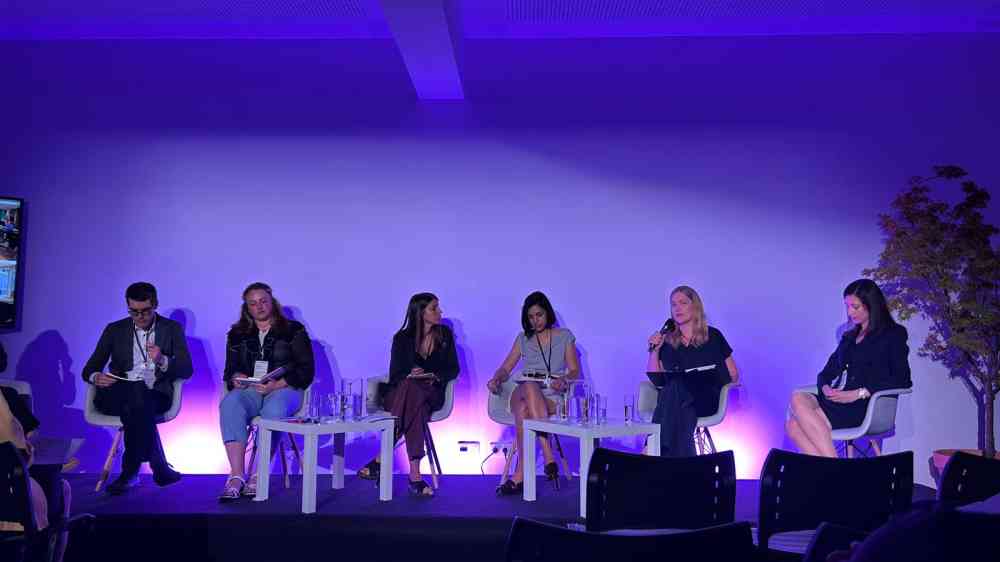
UNDRR also linked the Forum to its work on disability-inclusive disaster risk reduction in the Baltic States. Mari Tuulik of the Estonian Forum of People with Disabilities joined a session on "From Vulnerability to Active Citizenship: Fostering Inclusive Decision-Making Towards Just Adaptation" as a speaker connected through the European Disability Forum (EDF)'s READY Baltics project, a regional initiative strengthening disability inclusive civil protection and disaster risk reduction in Estonia, Latvia, and Lithuania.
Through the established partnership with EDF, UNDRR will support the project implementation of the MCR2030 Disaster Resilience Scorecard Annex for the Inclusion of Persons with Disabilities across all three countries in the coming months, providing a structured framework for cities to assess and strengthen disability-inclusive resilience planning. Reflecting on the project's kick-off meeting held in Brussels in April, Tuulik highlighted a principle that runs through all of UNDRR's work in the region: that meaningful inclusion starts with getting the right people to the table.
MCR2030 Regional Coordinating Committee convenes at the margins
On the sidelines of the Forum, UNDRR organized the MCR2030 Regional Coordinating Committee (RCC) meeting in hybrid format. More than 30 RCC members and observers participated, sharing progress on urban resilience initiatives across the region, discussing emerging priorities, and strengthening peer connections within the network. The gathering reflected the continued growth and dynamism of MCR2030's European and Central Asian membership, which now spans more than 230 cities and 14 Resilience Hubs across the region.
Accelerating momentum towards 2030
EURESFO 2026 reinforced a shared conviction: that the path to resilient cities runs through local governments, and that the remaining years of the Sendai Framework must be used to ensure local knowledge and action reach the global level. UNDRR reaffirmed its commitment to supporting cities in Europe and Central Asia through MCR2030, facilitating knowledge exchange, and working with partners — including ICLEI, AICS, UNDP, and Resilient Cities Catalyst — to translate local practice into durable systemic change.