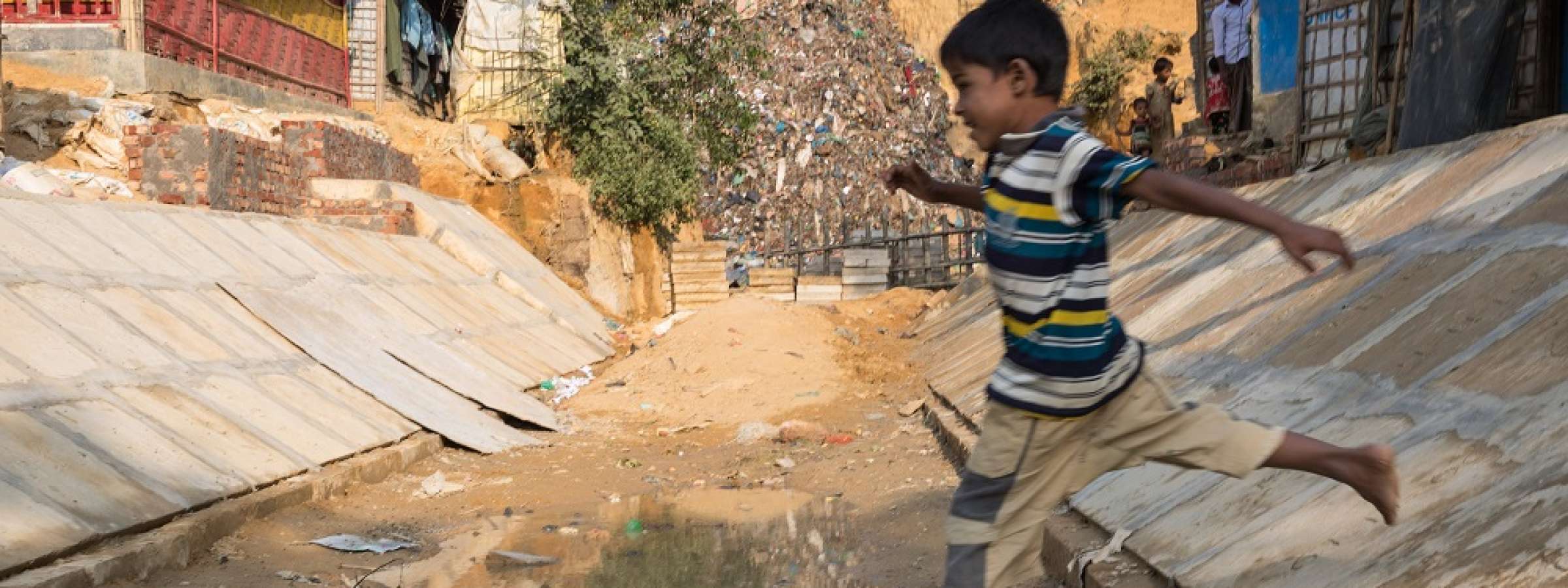
The need for effective disaster risk reduction (DRR) has never been more urgent. Protracted crises demand a comprehensive, integrated response that brings together humanitarian, development, and peacekeeping partners. DRR serves as a connector, bridging the urgent needs of today with the resilience-building efforts necessary for tomorrow. In line with its strategic framework, UNDRR leverages and amplifies investments in risk reduction in fragile and humanitarian contexts. By supporting national and international actors in generating robust evidence, fostering innovation, and promoting best practices, UNDRR paves the way for inclusive risk-informed decision-making that saves lives and strengthens communities, leaving no-one behind.
UNDRR’s support focuses on three critical areas:
- enhancing risk analysis and embedding DRR into strategic planning processes,
- implementing early warning systems and scaling-up anticipatory action,
- building capacities of national and local actors
Insights on integrating DRR in humanitarian efforts
To ease [the burden of escalating disaster costs], to reduce the risk of uninsurable losses, and to cut down on humanitarian needs, we need to invest in disaster risk reduction – properly and consistently".
Kamal Kishore
Special Representative of the United Nations Secretary-General for Disaster Risk Reduction, and Head of the UN Office for Disaster Risk Reduction (UNDRR)
In 2025, 305 million people around the world will require urgent humanitarian assistance and protection, as multiple crises escalate with devastating consequences for the people affected by them
Global Humanitarian Overview (GHO) 2025
Improved risk analysis and DRR in planning
UNDRR works with partners to improve risk analysis across the humanitarian, development and peace nexus and to empower decision-makers to collaborate across sectors and make risk-informed planning decisions.
Since 2022, UNDRR has improved risk analysis for humanitarian plans and cooperation frameworks in over two dozen countries (e.g. Somalia 2023, p. 51, Guatemala (see also Country Analysis p162), South Sudan CCA update 2023, p. 75).
For granular decision-support, UNDRR develops tailored analytics, including Risk Spotlights, Risk Profiles or Situational Analyses, as well as composite indices (e.g., INFORM sub-national in Bangladesh & South Sudan), systemic risks assessments, earthquake modelling, or community vulnerability assessments (e.g. Yemen).
Key risks identified can be addressed through closer integration of DRR approaches in humanitarian and development planning. Diagnostic prioritization tools such as the Checklist and Recommendations on Scaling up DRR in Humanitarian Action 2.0 have been used to support humanitarians. Launched in 2019, the checklist has been applied in almost 20 countries and operational humanitarian responses, including Haiti and Madagascar and shelter cluster programming.

Early warning and anticipatory action
Through its engagement in the Early Warnings for All Initiative, UNDRR works to strengthen early warning systems globally and advocates for their integration into national and local DRR strategies, including in fragile contexts.
By promoting timely information dissemination and international collaboration, UNDRR aims to enhance global resilience and minimize the impact of disasters through proactive risk management.
Anticipatory action (AA), or acting in advance of a shock, can offer benefits to communities and support wider DRR efforts. UNDRR advances AA by supporting the development, access and use of risk knowledge to inform decisions and strengthen preparedness. It supports AA actors through the scale-up of early warning systems, improved disaster tracking, knowledge sharing and support to Governments in identifying priorities and costings for anticipatory finance.
- Anticipatory Action (AA): Best Practices and Guiding Principles for Financial Protocols of AA Funds
- Anticipatory Finance: An Introductory Guide
- Briefing Note on Anticipatory Action: An Innovative Tool at the Intersection of Disaster Risk Reduction and Humanitarian Response
- Early Warning Systems and Early Action in Fragile, Conflict, and Violent Contexts: Addressing Growing Climate & Disaster Risks
- Early Warning Systems for displaced and mobile populations (forthcoming)

Building capacities of national and local actors
National and local actors in humanitarian and fragile context are challenged by a lack of resources, capacities and funding, forcing them to prioritize response over risk reduction. UNDRR’s ambition is to help break the cycle of disaster and response.
UNDRR works with national and local actors to build their resilience. The support includes, among others:
- Investing in local knowledge and capacities.
- Integrating Climate Change Adaptation (CCA) and Disaster Risk Reduction (DRR) into a sustainable development framework, aligning them better with the national adaptation goals.
- Build local ownership of risk analysis, early warning, anticipatory action and risk reduction in the most difficult contexts.
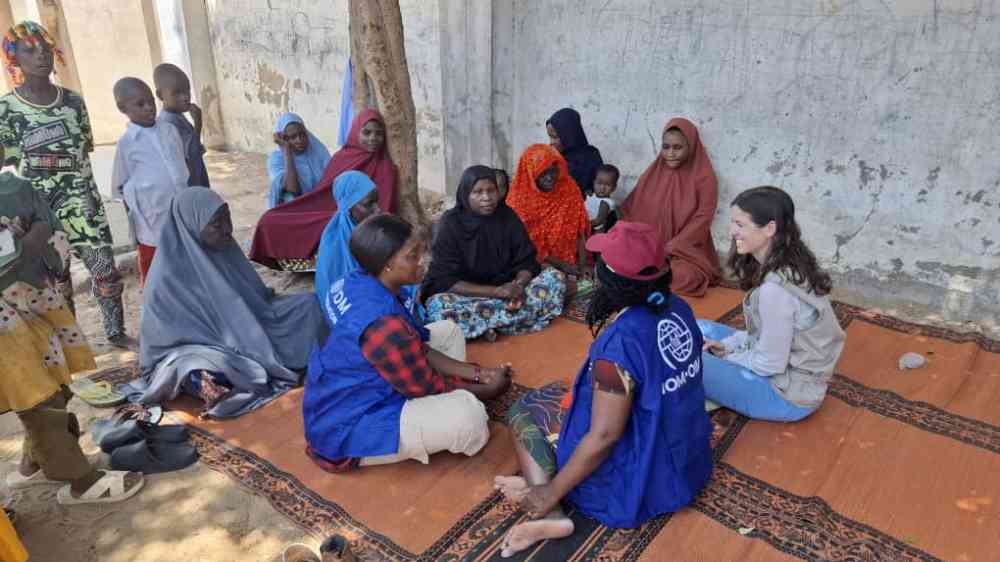
Perspectives on disaster displacement in humanitarian and fragile settings
Partnerships as the cornerstone of Humanitarian-Development-Peace collaboration
UNDRR works with UN entities as well as civil society stakeholders to position DRR as the humanitarian-development-peace nexus' unifying force. The UN Plan of Action on Disaster Risk Reduction and the 2030 Recommendations of the UN Senior Leadership Group on DRR for Resilience guides collaboration among UN partners while civil society is engaged through the Task Team on Scaling up DRR in Humanitarian and Fragile Contexts. UNDRR participates in humanitarian and development coordination mechanisms and platforms at such as the Joint Steering Committee to Advance Humanitarian and Development Collaboration and the Inter-Agency Standing Committee (IASC) climate sub group to advance consideration of DRR in key policy processes. At country-level UNDRR support UN-coordinated planning processes with multi-dimensional risk analysis, prioritisation, strategic planning and DRR financing.
Recent recorded events
HNPW 2026: Beyond relief: Building resilience through response
An online session exploring how technical support staff deployed during disaster response can strengthen both immediate response and long-term recovery by linking effectively with national and local systems.
A world in crisis: Building resilience in complex settings (GP2025 Thematic Session 4-2)
This session discusses how DRR can support peacebuilding and resilience in fragile settings through collaborative approaches across humanitarian, development and peace actors.
This session discusses how DRR can support peacebuilding and resilience in fragile settings through collaborative approaches across humanitarian, development and peace actors.
A scenario-driven session exploring how to embed DRR and environmental considerations into humanitarian response, with a focus on conflict settings and practical solutions.
This session highlights how humanitarian and development actors are integrating DRR and environmental considerations to enhance impact in crisis settings.
This webinar explores funding opportunities and practical pathways for integrating climate and DRR into humanitarian programming to enhance long-term resilience.
This session discusses how DRR can support peacebuilding and resilience in fragile settings through collaborative approaches across humanitarian, development and peace actors.