
How UNDRR is helping Syria lay the foundation for a resilient future
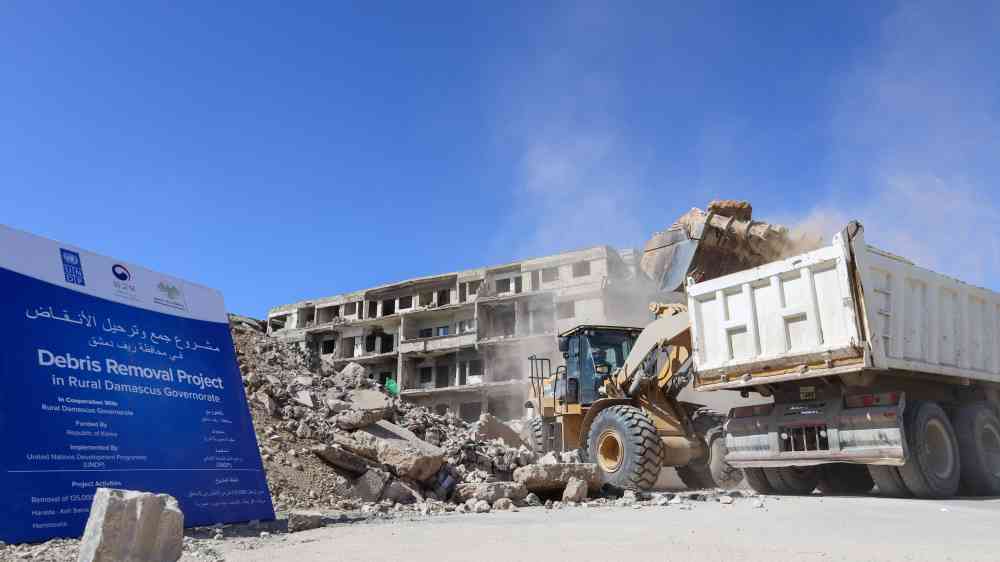
Syria’s reconstruction and recovery will take years, but it is a chance to Build Back Better and to embed resilience in all aspects of development.
Not too long ago, Syria was the world’s largest source of refugees. Years of conflict had destroyed entire towns and pushed millions to flee. Today, as the country seeks to rebuild under new leadership, many of those who fled are returning home. According to the UN Refugee Agency (UNHCR), as of December 2025, more than 1.2 million Syrians have voluntarily returned since December 2024, alongside over 1.9 million internally displaced people who have gone back to their areas of origin. Many more have expressed a desire to return.
The recovery and reconstruction needs in Syria are enormous and will require the mobilization of large amounts of funding, both domestically and internationally. To rebuild their lives, especially in areas that have been ravaged by war, people will need housing, employment, electricity, schools, and hospitals, to name a few essential services.
However, if these development projects are undertaken without considering current and future disaster risks, then all these investments could be lost to disasters. This makes disaster risk reduction critical to sustaining Syria’s long-term recovery.
Fortunately, Syria is already on solid footing, having created a new dedicated Ministry of Emergency and Disaster Management, which is now the lead national agency for implementing the Sendai Framework for Disaster Risk Reduction. Since last year, UNDRR has been supporting the new ministry to deepen its understanding of Syria’s disaster risks so it can address them before they lead to deadly and costly disasters, as well as make sure that Syria’s journey to recovery is risk-informed.
Building risk knowledge is the first priority in the Sendai Framework because it is foundational for informing all subsequent actions. But emerging from over 13 years of war, Syria lacked any information system or methodology for collecting and analyzing disaster-related data. That is why UNDRR prioritized supporting Syria in adopting the DELTA Resilience as the foundation of its national disaster loss accounting system. Launched in 2025 by UNDRR in collaboration with the World Meteorological Organization (WMO) and the United Nations Development Programme (UNDP), DELTA Resilience supports countries in establishing national disaster loss accounting systems by combining a digital solution with the methodologies, data governance arrangements and institutional capacities needed to collect, manage and analyze disaster impact data. By providing a common approach to disaster loss accounting, DELTA helps countries generate the evidence needed for risk-informed decision-making and resilience planning.
Syria became one of the earliest countries to implement DELTA Resilience, establishing a national disaster loss accounting system that is aligned with internationally recognized methodologies. The approach enables Syria to maintain sovereignty over its national data while strengthening coordination among the institutions responsible for collecting, validating and analyzing disaster information. DELTA Resilience also offers countries the unique ability to capture non-economic losses, such as those related to biological ecosystems or cultural heritage sites.
As Mr. Mohamad Diab, Head of the Early Warning Department at the Ministry of Emergency and Disaster Management, explained at a recent event, before DELTA Resilience, the country had “no system in place to systematically capture disaster impacts, despite the occurrence of numerous events.”
With the support of UNDRR, the new system is now being operationalized to consolidate disaster impact data and institutionalize its use. When this data is analyzed in combination with future risk projections, planners gain valuable insights to guide decision-making. Decisions such as what hazards to prioritize for disaster risk reduction measures, where to deploy them, and what groups and sectors to target. Moreover, by integrating risk knowledge into its economic recovery plans, Syria can ensure that its development is risk-informed, thus minimizing the creation of new risks and safeguarding lives, livelihoods and investments.
Looking ahead, UNDRR plans to scale up its support to Syria, not only to continue building its risk knowledge, but also to strengthen its capacity to act on this knowledge. Specifically, UNDRR plans to enhance Syria's disaster preparedness and anticipatory action programme, with a focus on establishing a national Multi-Hazard Early Warning System, aligned with the ‘Early Warnings for All’ initiative. To guide long-term resilience, UNDRR will assist national authorities in developing a disaster risk reduction policy framework and implementation roadmap informed by relevant and precise data.
Commenting on the work ahead and its potential, Ms. Sandra Amlang, Chief of UNDRR’s Regional Office for Arab States, said:
“As part of a One-UN effort, UNDRR is proud to support Syria at this pivotal moment in its history. The needs are great, but so is the potential to create a generational transformation by embedding resilience in all aspects of development moving forward. This starts with understanding risk in all its dimensions to inform decision-making. UNDRR is committed to working with all partners to help Syria lay the foundation for a brighter and more prosperous future.”