
Comprehensive disaster and climate risk management (CRM)
Turning policy coherence into action
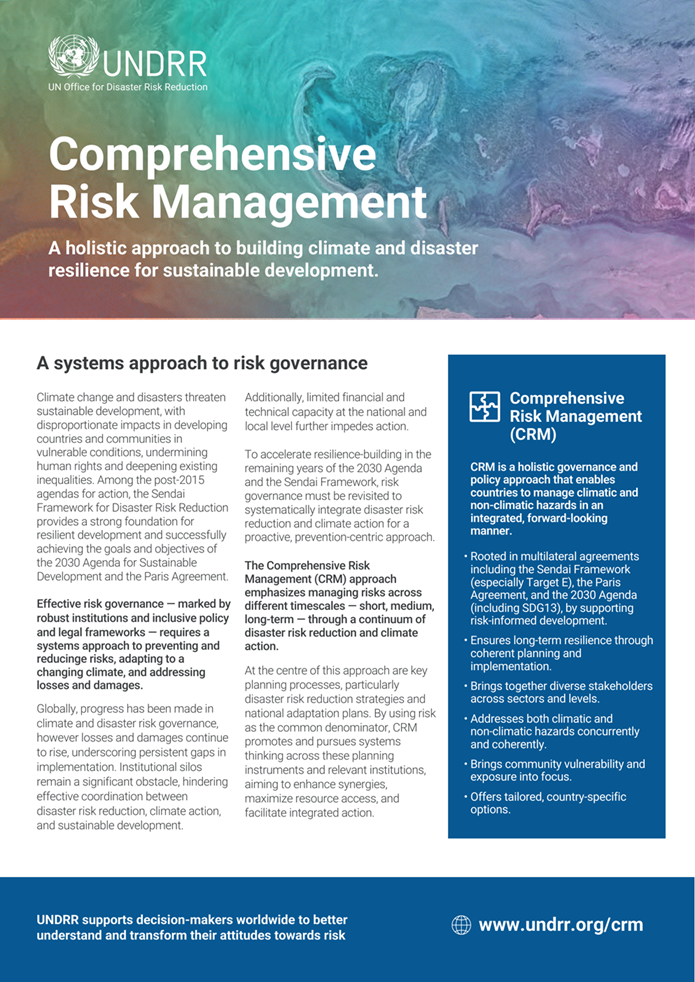
Effective risk governance, marked by robust institutions and inclusive policy and legal frameworks, requires a systems approach to preventing and reducing risks, adapting to a changing climate, and addressing losses and damages.
UNDRR seeks to secure more effective and efficient use of time, effort and resources and to deliver inclusive DRR and climate action, aligning global agendas and supporting countries to adopt and implement governance and financial systems to achieve their resilience goals. The UNDRR Strategic Framework 2026-2030 calls under objective 2.1 that "governments at all levels strengthen and implement multi-hazard disaster and climate risk governance frameworks".
By the end of 2025 - 141 countries reported national DRR strategies, representing over 70% of nations worldwide (See Global Status of National Disaster Risk Reduction Strategies).
A holistic approach to translate policy coherence into national and local action through CRM can be based on the following steps:
- Step 1: Policy analysis of DRR, climate action and sustainable development plans and policy frameworks at the global, national, sectoral, and sub-national levels.
- Step 2: Convening governmental bodies, academia, civil society and other key stakeholders engaged in resilience building to develop a shared understanding of gaps and opportunities in coherent actions.
- Step 3: Joint risk understanding to enhance knowledge and awareness of past, present and future impacts of climate change and disaster risk.
- Step 4: Coherent planning through developing joint or aligned DRR and climate change policies and plans, linking with relevant global processes and mechanisms.
- Step 5: Implementation and finance by facilitating an enabling environment for the implementation of coherent policies and plans, including linking with sectors and financing options.
UNDRR Support
Our support on the CRM approach is centred around three pillars: guidance & technical resources, capacity development, and research & analysis. Explore them in the tabs below and find further information for each.

- Capacity development
Capacity development
Capacity development is linked with other UNDRR’s areas of support including the Global Risk Assessment Framework, disaster tracking systems and Sendai Framework Monitoring. The approach is also relevant for Humanitarian Response Planning and UN Sustainable Development Cooperation Frameworks.
Thought leadership - online course
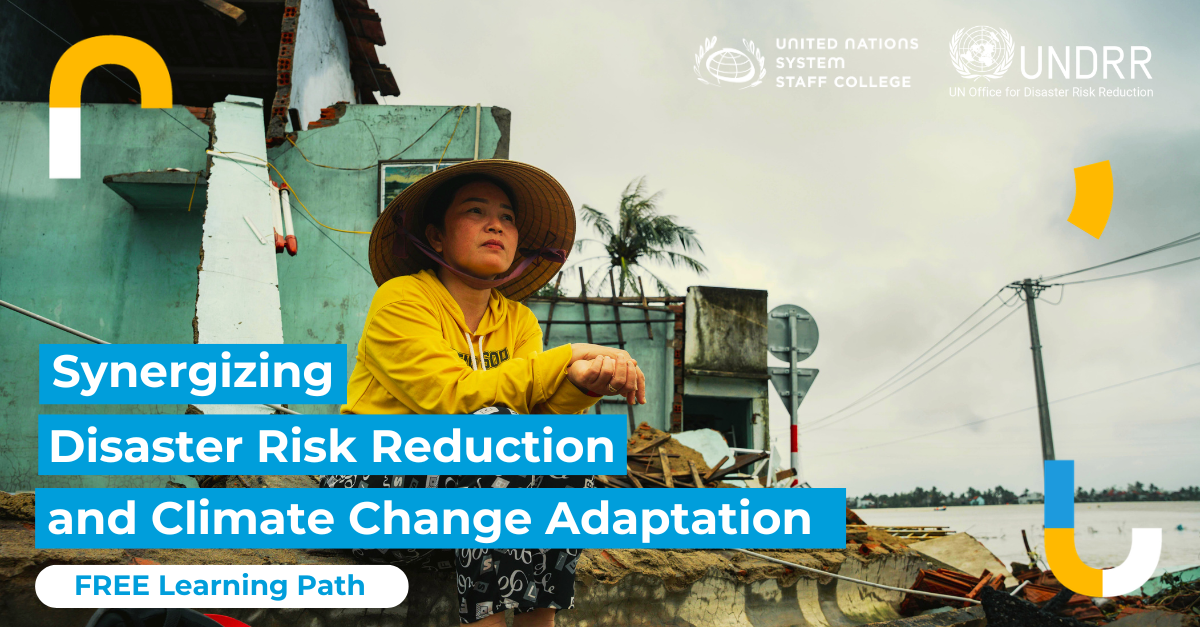
Over 12,500 registrations by August 2026 / 98.4% average recommendation rate / Spanish and French versions coming soon.
12,500+ registrations and counting...
Synergizing Disaster Risk Reduction and Climate Action Learning Path
In this online course, developed in partnership with the United Nations System Staff College (UNSSC), the core principles of harnessing disaster risk reduction (DRR) and climate change adaptation (CCA) are explored, drawing on lessons from leaders at the forefront of comprehensive disaster and climate risk management. This expanded two-module learning path provides practical guidance on integrating disaster risk reduction (DRR) and climate action through CRM. Combining foundational knowledge with real-world examples, it equips participants to strengthen resilience and coherent risk management strategies.
Support to countries from regional to national and local levels.
In 2025, UNDRR supported 38 countries to ensure an integrated implementation of disaster risk reduction and climate change adaptation plans. Cumulatively, 66 countries have received UNDRR support to ensure an integrated implementation of disaster risk reduction and climate change adaptation plans during the 2024-2025 biennium (UNDRR Annual Report 2025).
Explore UNDRR's support to countries through the map below. By clicking on each countries, further details such as country spotlights and country specific analysis can be viewed.

- Guidance and technical resources
Guidance and technical resources
 Developing or updating national multi-hazard disaster risk reduction strategiesRead publication
 Application of climate information for comprehensive risk managementRead publication
 Comprehensive risk assessment and planning in the context of climate changeRead publication
 Promoting synergy and alignment: between climate change adaptation and disaster risk reduction in the context of National Adaptation Plans (DRR4NAPs)Read publication
 Nature-based solutions for comprehensive disaster and climate risk management: Toolkit for integrated planning and implementation of disaster risk reduction and climate change adaptationRead publication
Words into Action guidelines (selected)
- Developing national disaster risk reduction strategies
- Implementation guide for local disaster risk reduction and resilience strategies
- National focal points, national platforms and local platforms for DRR
- Nature-based solutions for disaster risk reduction
Other
- Research and analysis
Research and analysis
National policy landscape analysesPolicy briefs
- Loss and damage
- Disaster risk reduction and climate change
- Nature for resilience
- Gender-responsive DRR
Additional resources
Advocacy, coordination and engagements
UNDRR further leverages its engagement in formal and intergovernmental processes at the global level to guide national and local planning, and applies country experiences to inform global processes – thereby creating a policy-practice feedback loop. Key UNFCCC Constituent Bodies relevant to CRM include the Adaptation Committee (AC), Least Developed Countries Expert Group (LEG), and the Executive Committee of the Warsaw International Mechanism (WIM) for Loss and Damage, including in its Technical Expert Group on Comprehensive Risk Management (TEG-CRM). CRM also constitutes a concrete UNDRR offering to the Santiago Network and the Fund for responding to Loss and Damage (FRLD) .
CRM contributes to global networks as well; for instance, UNDRR offers CRM as a programmatic approach to help the Risk-Informed Early Action Partnership (REAP) achieve its Target 1; UNDRR co-leads the working group.
The programme follows a partnership approach to planning and implementation to ensure outputs are operationalized by governments and partners organisations, including those engaged in sectoral risk management and adaptation(e.g. agrifood and environment sectors). UNDRR also actively participates in relevant UN inter-agency mechanisms and initiatives for climate change adaptation and disaster risk reduction to identify gaps and complement efforts.
Contact the UNDRR Bonn Office
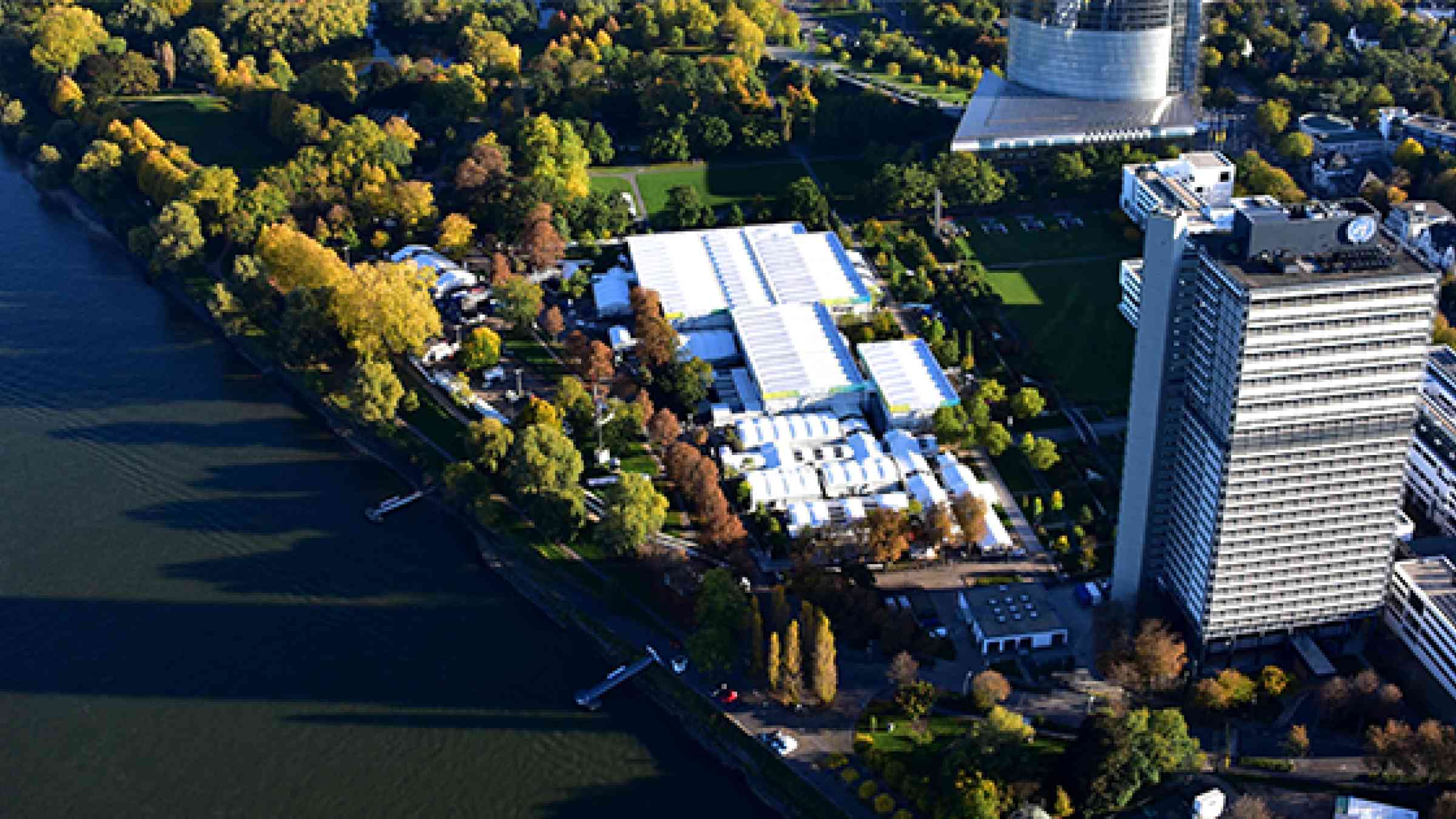
Today, more than ever, achieving sustainable development and successfully reducing disaster risk through the implementation of the Sendai Framework for Disaster Risk Reduction depends on policy coherence across sectors and on aligning disaster risk reduction with climate action. By monitoring targets and related indicators of the Sendai Framework, the UNDRR Bonn Office advocates and promotes synergies between DRR, climate action and ultimately sustainable development.
BONN, GERMANY
UNDRR Office in Bonn
UN Campus
Platz der Vereinten Nationen 1
53113 Bonn
Germany
Phone: +49 228 8152000
Email: [email protected]
Web: www.undrr.org/bonn
Related content

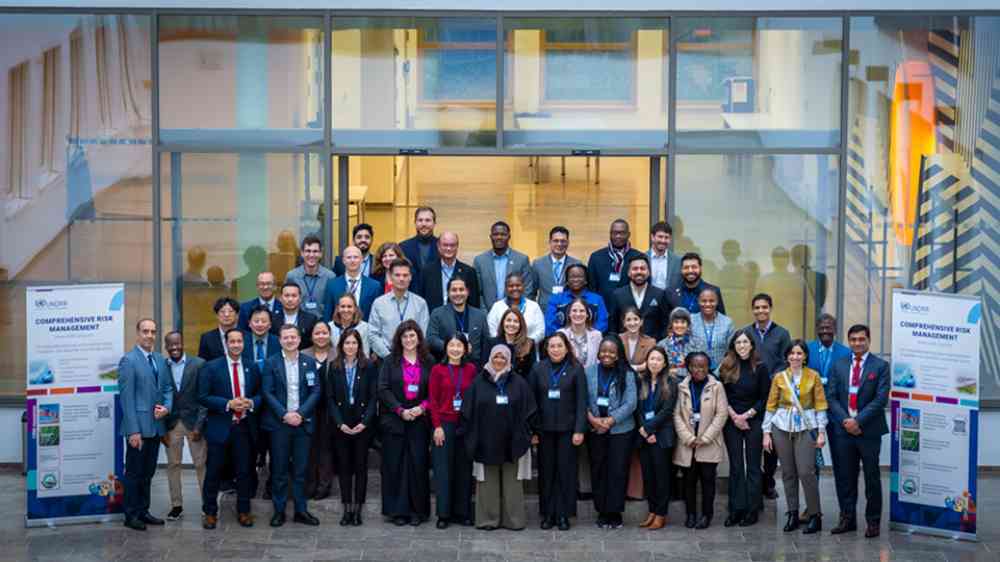
At COP30, CRM was selected as a solution to accelerate climate action under the COP 30 Global Climate Action Agenda, led by UNDRR and the Risk-informed Early Action Partnership (REAP).