2025 Global Status of National Disaster Risk Reduction Strategies
2025 Global Status of National Disaster Risk Reduction Strategies

Disaster risk reduction (DRR) is not merely a technical endeavour; it is a fundamental pillar of good governance. It reflects a government's capacity to protect its people, infrastructure, and economy from the growing complexity of risks in today’s world.
Among the seven global targets of the Sendai Framework for Disaster Risk Reduction, Target E stands out as a critical enabler. It calls for the substantial increase in the number of countries with national and local DRR strategies. While the 2020 deadline for Target E has passed, the journey continues. Strategies alone are not enough—what matters is turning plans into action. As risks grow more systemic and interconnected, the effectiveness of implementation has become a key measure of governance.
The recommendations of the 2023 Status Report on Target E and the Midterm Review of the Sendai Framework underscored this reality. Both reports highlighted the urgent need to strengthen governance mechanisms at all levels —national, local, and regional— to effectively reduce and manage risks in an increasingly complex global landscape.
Continued efforts have been made by governments since 2020 in shifting focus from developing towards implementing national DRR strategies and in demonstrating the value and impact of national and local DRR strategies. This compilation of impact stories highlights how national and local DRR strategies are being brought to life. It showcases governance in action: how countries are navigating complex challenges, leveraging partnerships, and translating policy into concrete outcomes and impacts.
Overview of progress on national disaster risk reduction strategies
The Sendai Framework Midterm Review (MTR) process in 2023 identified that, while progress has been made in achieving the Sendai Framework priorities, this progress has not been equitable across regions, between national and local levels, and within different country groupings facing unique vulnerabilities.
At the national level, the number of countries with national strategies for disaster risk reduction aligned with the Sendai Framework for Disaster Risk Reduction 2015–2030 has risen significantly over the years, increasing from 57 in 2015 to 131 in 2023 (Figure 1), representing 67 per cent of nations worldwide reporting having national DRR strategies in place.
At the local level, a total of 110 countries reported by 2023 having local governments that adopt and implement disaster risk reduction strategies in line with national strategies (Figure 2). This represents an increase of more than double the number reported in 2015, when only 50 countries indicated the existence of such local strategies. Among these countries, the average proportion of local governments with local disaster risk reduction strategies improved from 68 per cent in 2015 to 73 per cent in 2023.
Figure 1: Number of countries reporting having national DRR strategies. Source: Sendai Framework Monitor (SFM), October 2024
Figure 2. Number of countries reporting local DRR strategies. Source: SMF, October 2024

Small Island Developing States (SIDS), Least developed Countries (LDCs) and Landlocked Developing Countries (LLDCs)
Small Island Developing States (SIDS), Least developed Countries (LDCs) and Landlocked Developing Countries (LLDCs) face unique challenges that have limited progress towards achieving the Sendai Framework goals.
- Small Island Developing States (SIDS): As of March 2024, 24 out of 38 SIDS (64 per cent) reported having national DRR strategies in place. Challenges remain in disaster and climate risk data collection, risk analytics, and access to financial and technical resources for implementation. The Antigua and Barbuda Agenda for SIDS (ABAS), as the successor framework to the SAMOA Pathway, prioritizes DRR for SIDS and encourages stronger DRR governance efforts. UNDRR and UN partners are actively supporting SIDS in implementing their national DRR strategies in line with National Adaptation Plans and in developing legislative frameworks and financial tools for DRR.
- Least Developed Countries (LDCs): As of March 2024, 27 LDCs (60 per cent) reported having national DRR strategies in place. The Doha Programme of Action emphasizes the need for risk-informed development in LDCs. A significant portion of disaster-related funding in LDCs remains focused on response rather than prevention. International support for capacity building, technology transfer, and risk-informed investments is crucial for LDCs.
- Landlocked Developing Countries (LLDCs): Seventy-five per cent of LLDCs reported having national DRR strategies in place. Focus areas include strengthening infrastructure resilience and early warning systems. The need for tailored DRR strategies and enhanced support for LLDCs was highlighted by the Midterm Review of the Sendai Framework.
Figure 3. National DRR strategies in countries in special situations. Source: SFM, October 2024
Figure 4. Regional variation of national DRR strategy. Source: Sendai Framework Monitor, October 2024
Regional progress on national DRR strategies varies (Figure 4). The Asia and Pacific region has the highest percentage of countries reporting in the Sendai Framework Monitor having national DRR strategies (85 per cent), followed by the Americas and the Caribbean (69 per cent), Arab States (68 per cent), Europe and Central Asia (64 per cent), and Africa (55 per cent).
- Asia and Pacific: The region has shown strong progress in developing and implementing national DRR strategies, often integrating them with climate change adaptation efforts.
- Africa: Many countries have established national DRR frameworks, but challenges remain in resource allocation, capacity-building, and translating strategies into effective local action. Regional collaboration is also growing.
- Americas and the Caribbean: National DRR strategies are in place in many countries. SIDS in this region are particularly vulnerable and focus on resilient infrastructures and early warning in their national DRR strategies.
- Europe and Central Asia: A significant number of countries have national DRR strategies and coordination mechanisms, with a strong focus on multi-stakeholder approaches, integrating DRR into development policies and promoting transboundary cooperation in DRR. Quite a few are in the process of updating/reviewing their strategy to better align with the growing and challenging new risk landscape.
- Arab States: Efforts are underway to strengthen national DRR frameworks, recognizing the increasing impacts of climate-related hazards. Regional cooperation is important due to shared risks.
Strengthening holistic disaster risk governance in the face of systemic threats
While the number of countries with national DRR strategies has increased significantly, the quality of these strategies and their effective implementation at all levels remain critical priority areas for improvement.
Globally, there is a growing trend toward more integrative and holistic national disaster risk reduction (DRR) strategies that account for the complex, interconnected nature of modern hazards. Guided by the Sendai Framework for Disaster Risk Reduction and the Sustainable Development Goals, this approach encourages countries to address risk in all its dimensions. Countries are increasingly recognizing that effective DRR must must move beyond traditional models and address emerging challenges such as climate change, water security, displacement, and biological hazards.
Internal displacements by disasters in millions. Source: IDMC, 2025
- Climate change: It is widely recognized as a risk multiplier, intensifying extreme weather events and exacerbating vulnerabilities. As a result, national DRR strategies are increasingly integrating and aligning with climate adaptation plans, ensuring coherence between policy frameworks and enabling better long-term resilience.
- Water-related risks: The role of water-related risks —through floods, droughts, or access to safe drinking water— has become a central concern, prompting integrated water resource management as part of DRR planning.
- Displacement: Linked to disasters and climate-related events, displacement is also receiving more attention. In 2024, disasters caused 45.8 million displacements, more than double the annual average of the past decade (IDMC, 2025). National strategies now increasingly incorporate mobility, relocation planning, and protection of vulnerable populations.
- Transboundary cooperation: Reducing and addressing cross-border common hazards is emerging as a growing consideration in national DRR strategies.
- Biological hazards: The COVID-19 pandemic underscored the urgency and relevance to adopt multi-hazard DRR strategies that address all risks, including biological and health emergencies, leading governments to adopt more inclusive health and emergency preparedness measures.

From cooperation to implementation: enhancing DRR through strategic partnerships
Multi-stakeholder and cross-sectoral collaboration at the government level is driving the shift towards multi-hazard disaster risk reduction (DRR) strategies. This coordinated engagement among ministries, agencies, civil society, academia, and the private sector is widely recognized as essential to the successful development and implementation of DRR strategies that build resilience.
Engagement and cooperation with the UN community in risk-informing United Nations Sustainable Development Cooperation Frameworks (UNSDCFs) have proven effective in anchoring DRR in national development policy, making it more strategic and cross-sectoral. Risk-informed UNSDCFs can also serve as joint resource mobilization tools for DRR and resilience investments and help countries access international funding, such as climate finance from the Green Climate Fund (GCF) and technical assistance from UN agencies.
Regional frameworks for DRR significantly boost effective DRR governance and the development and implementation of national DRR strategies. The Asia and Pacific region exemplifies how regional frameworks, such as the Pacific Resilience Framework (PRF) and the ASEAN Agreement on Disaster Management and Emergency Response (AADMER), promote a comprehensive, integrated approach addressing disaster risk reduction, climate change adaptation, and sustainable development in a unified manner. Given the extreme vulnerability of Pacific Island Countries to climate-related hazards such as sea-level rise, cyclones, and droughts, the PRF emphasizes inclusive risk governance, strengthened early warning systems, and resilient infrastructure, while aligning national strategies with community priorities and traditional knowledge.
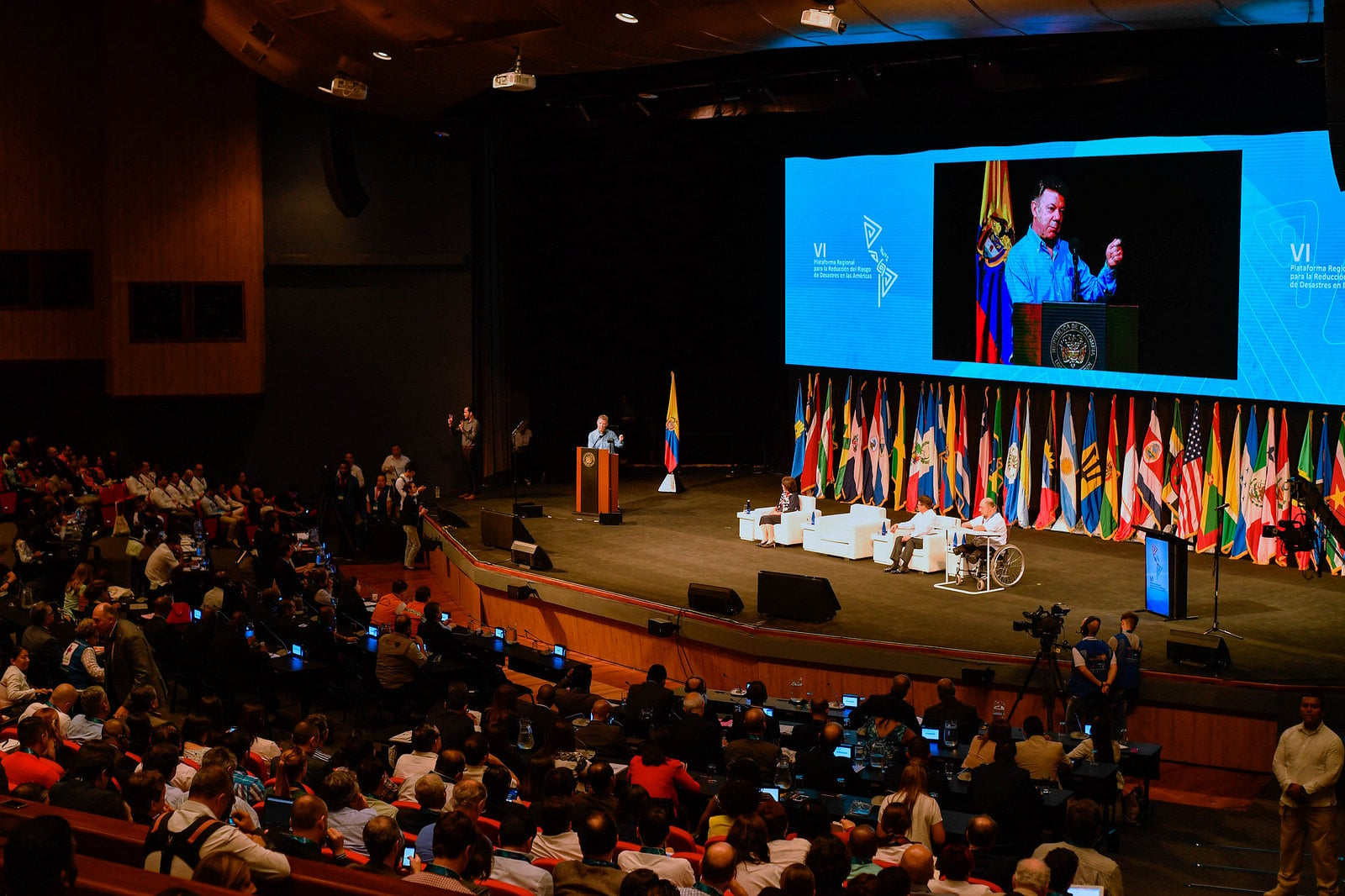
With the adoption of regional DRR action plans and priorities and the regular monitoring of their implementation, Regional Platforms for DRR continue to represent unique mechanisms to renew political commitment to DRR at the regional level. They effectively equip national governments with relevant DRR knowledge, understanding, and capacity to trigger the required political push and resource allocation to implement national DRR strategies effectively towards resilience at national and local levels.
The role and support of regional intergovernmental organizations and Regional Economic Communities (RECs) are also essential, as they effectively influence and motivate their respective Member States to accelerate the implementation of the Sendai Framework at regional and national levels, including the development and implementation of national DRR strategies.
Way forward
Target E of the Sendai Framework for Disaster Risk Reduction, which called for all countries to develop and implement national and local disaster risk reduction (DRR) strategies by 2020, represented a critical milestone. It however was not an end in itself and, rather, marked the beginning of a continuous process aimed at strengthening disaster risk governance and building adaptive resilience over time.
While many countries achieved Target E by adopting national DRR strategies by 2020 and have since pursued effective implementation with concrete impacts and deliveries on the ground, the evolving and increasingly complex, interconnected, and systemic nature of risks —driven by climate change, biological hazards, water-related threats, and displacement— demands that these strategies remain dynamic, forward-looking, anticipatory, and adaptive.
Recognizing this, many countries are now taking proactive steps to review and enhance their strategies. A growing and effective practice in this context is the use of peer review mechanisms, such as those facilitated by the United Nations Office for Disaster Risk Reduction (UNDRR). These participatory and collaborative approaches enable countries to assess the coherence and robustness of their strategies against the guiding principles of the Sendai Framework and the evolving global risk landscape. They also promote mutual learning, knowledge exchange, cross-country learning and capacity-strengthening across institutions and countries.
The sustained relevance and effectiveness of DRR strategies rely on a regular review, inclusive stakeholder engagement, and alignment with the rapidly evolving risk environment. These strategies must be underpinned by a strong political commitment and leadership to prioritize DRR as part of national development planning, boost dedicated, predictable and sustainable budgetary allocations, and associated with robust capacity building efforts, monitoring, evaluation and learning mechanisms to keep DRR efforts adaptative and effective.
By promoting coherence across sectors and engaging a broad range of actors, national DRR strategies are becoming more holistic, inclusive, and future-oriented. This evolution underscores a fundamental understanding that resilience can only be built through collaboration, shared responsibility, and integrated governance at all levels.
The global community, along with national governments, are pursuing efforts towards achieving the targets of the Sendai Framework through to 2030. Achieving these goals will require accelerated efforts to overcome remaining challenges and ensure that national and local DRR strategies are effectively implemented, ultimately contributing to enhanced resilience across all regions and communities.
Developing national disaster risk reduction strategies
The Words into Action guidelines on "Developing national disaster risk reduction strategies" are designed to support countries in developing a national disaster risk reduction strategy that is aligned with the Sendai Framework.
Impact stories
This section features impact stories showcasing how national DRR strategies have been implemented and evolved in recent years to strengthen governance and build resilience in communities and countries facing disaster and climate-related risks.