
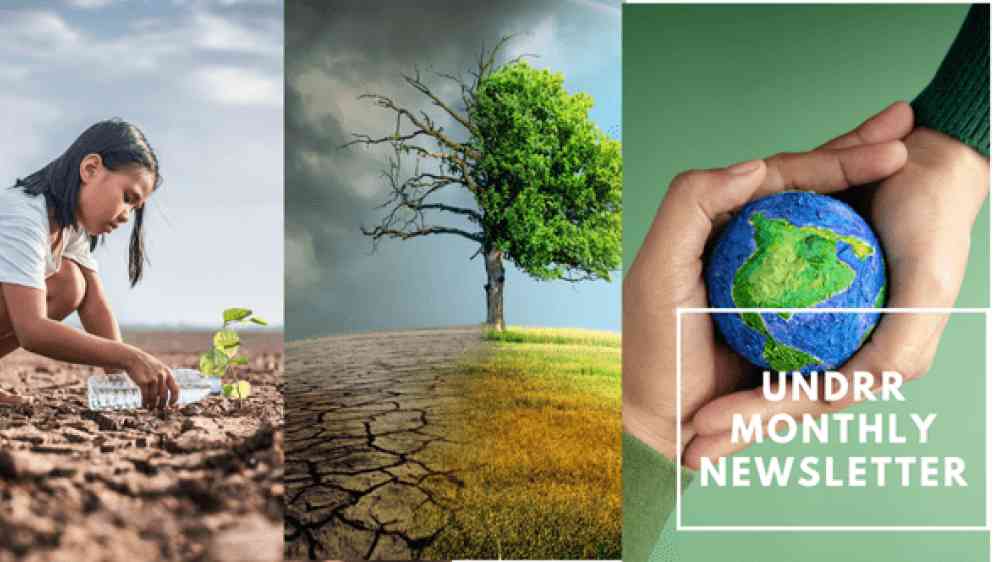
This is a reproduction of the UNDRR monthly newsletter. Get this update and other newsletters here.
This month from UNDRR: Hurricane Melissa, 10 years of WTAD, G20 Ministerial Meeting, UNDRR prepares for COP30, "Stop Disasters" game a hit, Financing resilience in Central America, Niger advances EW4All, and much more
Caribbean reels from Hurricane Melissa
Hurricane Melissa has ravaged the Caribbean, inflicting especially severe devastation across Jamaica, Haiti, and Cuba. The UN Secretary-General emphasised that international support to Jamaica is crucial at this time to deal with the loss and damage from the hurricane. SRSG Kamal Kishore said the disaster highlights the importance of end-to-end early warning systems and called for collective support to Build Back Better.
Commemorating 10 years of World Tsunami Awareness Day
As we approach World Tsunami Awareness Day (WTAD) on 5 November, UNDRR hosted an advocacy event in Geneva with the Permanent Mission of Japan, which featured a screening of the film Tsunami Ladies, with nearly 100 participants from more than 50 countries. This event builds momentum for the day itself, which will be marked by a commemoration event at the United Nations Headquarters in New York.
Please visit the WTAD page to access social media assets and key messages for the day, including the UN Secretary-General’s message, and learn about other events around the world.
G20 Ministerial Meeting advances resilience financing
On 13 October, the International Day for Disaster Risk Reduction, the South African Presidency of the G20 held a Ministerial Meeting, which issued a declaration on Disaster Risk Reduction. The Ministerial Declaration marks a significant step forward in aligning the world's largest economies on a coordinated approach to disaster risk.
Most notably, the declaration endorsed the seven Voluntary High-Level Principles for Investing in Disaster Risk Reduction and recognised the Recovery Readiness Assessment Framework as a valuable tool to support proactive recovery planning.
UNDRR prepares for COP30
Ahead of the 30th Conference of the Parties (COP30), scheduled for November in Belém, Brazil, UNDRR issued its call to action to advocate for resilience in the face of mounting climate risks. As noted by the UN Secretary-General, “as the climate crisis deepens and costs climb, the world must move much faster to match rising needs.”
UNDRR will push at COP30 for greater investments in resilience and proven climate change adaptation methods, such as scaling up early warning systems. To inform deliberations at the conference, UNDRR will be releasing with the World Meteorological Organization (WMO) its annual report on the Global Status of Multi-Hazard Early Warning Systems.
How UNDRR is future-proofing UN action
A new impact story highlights how UNDRR is working with UN Country Teams and humanitarian partners to ensure that development and humanitarian efforts are more resilient and sustainable. When plans are guided by an understanding of current and future risks, humanitarian action can reduce vulnerabilities while it responds to immediate needs, and development gains remain resilient in the face of disasters. This work is highlighted through three country examples: Somalia, Guatemala, and Yemen.
New guidance on integrating biodiversity and DRR
The triple planetary crisis of climate change, biodiversity loss and pollution is increasing disaster and environmental risks. To break silos and support more coherent and impactful action, UNDRR launched an updated guide on Integrating Disaster Risk Reduction and Biodiversity. The updated guidance provides practical recommendations for governments to enhance DRR within national biodiversity strategies and action plans (NBSAPs). The launch was accompanied by a global webinar on the topic with the UN’s Environment Management Group, which brought together experts to share national experiences.
Urban Heat Resilience in Europe and Central Asia
Building on the strong momentum of the first edition, Flames of Change II: Urban Action on extreme heat across Europe and Central Asia was published this month. This report is a collaboration of the MCR2030 Regional Coordinating Committee for Europe and Central Asia and was developed in response to the UN Secretary-General’s Call to Action on Extreme Heat.
It complements the MCR2030 Urban Heat Risk Management Resource Package by showcasing how local authorities across the region are leading efforts to address urban extreme heat through urban planning, early warning systems, and strengthened institutional capacities. It highlights common challenges and scalable solutions, offering valuable insights for other local governments seeking to build heat-resilient cities.
"Stop Disasters" game expands and is an Expo Hit
UNDRR's educational game "Stop Disasters" expanded its reach by adding new language options, bringing the total to 11 languages, alongside new educational learning spaces. This expansion aims to make interactive risk reduction education accessible to millions more players globally.
The game was a major attraction at UNDRR’s “Disasters are not natural” exhibit at the UN Pavilion at World Expo 2025 in Osaka, Japan, proving to be an engaging way for visitors to learn about building more resilient communities.
DELTA Resilience launch in the Arab Region
The new disaster data tracking system, DELTA Resilience, was launched in the Arab region this month to accelerate the collection and use of disaster loss and damage data across sectors and population groups.
Eighteen Arab countries convened in Doha, Qatar, for the regional launch workshop to learn about the “DELTA,” which stands for Disaster & Hazardous Events, Losses and Damages Tracking and Analysis. By enabling better data management, the new system supports evidence-based policy making and provides the factual basis needed to prioritize resilience investments across the region.
Financing resilience in Central America and the Dominican Republic
An article by the UNDRR Regional Office for the Americas and the Caribbean and partners highlights progress and challenges to increase investment in disaster risk reduction in Central America and the Dominican Republic. It notes the value of the Regional Strategy for Financial Management of Disaster Risk Reduction, developed under the framework of the Central American Integration System (SICA), as a key step towards risk-informing development in the region
Niger advances Early Warnings for All
To mark the International Day for Disaster Risk Reduction, Niger launched its National Early Warnings for All Roadmap in a ceremony in Niamey on 13 October. The launch was followed by a handover of equipment for the Centre Opérationnel de Veille, d’Alerte et de Conduite des Crises (COVACC), which will serve as a central hub for risk information, monitoring, and coordination of early actions. The renovation of the COVACC Situation Room was funded by the Government of Italy and implemented with technical support from the UNDRR Regional Office for Africa and the CIMA Foundation, as part of the Africa Multi-Hazard Early Warning and Early Action System (AMHEWAS).