
Risk-proofing the future: How UNDRR is embedding risk knowledge in UN action
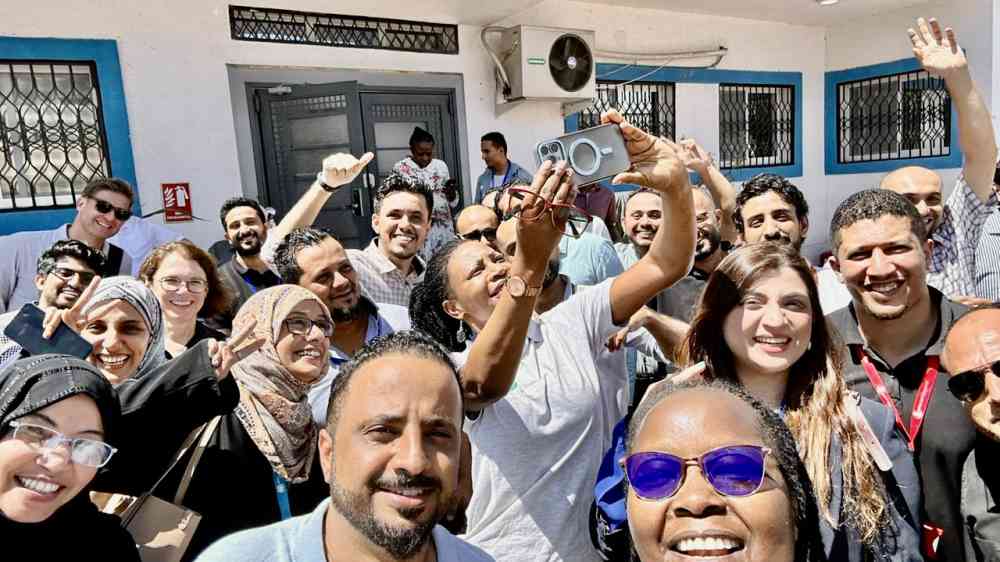
Group photo of risk analysis participants in Aden, Yemen
In the world’s most fragile regions, risks rarely occur in isolation. A drought can deepen hunger, which can fuel conflict, which can overwhelm health systems. Yet for years, responses to these interconnected crises were fragmented - humanitarian teams rushed to meet immediate needs, development planners looked to the future, and peacebuilders focused on addressing conflict. Each worked in isolation. The result was fragmented analysis and siloed responses that did not address underlying and shared vulnerabilities. But change is underway.
Over the past four years, with funding support from Germany and the United States, the United Nations Office for Disaster Risk Reduction (UNDRR) has been working to make disaster risks – in its three dimensions of hazard, exposure and vulnerability - visible to planners and help them connect the dots across humanitarian, development and peacebuilding contexts.
Integrating an understanding of current and future risks into UN plans and decisions is key to reducing the risk of disasters, which rob countries of development gains, increase humanitarian needs, and undermine peacebuilding efforts.
A Global footprint of support
Between 2021 and 2025, UNDRR embarked on a collaborative effort, working with the United Nations Office for the Coordination of Humanitarian Affairs (OCHA) and UN Resident Coordinator Offices (RCOs), to support integrated risk analysis and planning in:
- 11 Humanitarian Planning Contexts: Cameroon, Central African Republic, El Salvador, Ethiopia, Guatemala, Honduras, Niger, Somalia, Sudan, South Sudan, and Yemen.
- 14 UN Sustainable Development Cooperation Frameworks: El Salvador, Ethiopia, Guatemala, Haiti, Indonesia, Lao People's Democratic Republic, Mozambique, Panama, Peru, Somalia, Sudan, South Sudan, Timor-Leste, and Viet Nam.
Country snapshots of risk-informed action in practice
Somalia: One risk picture, one roadmap
In Somalia, where nearly half the population is affected by conflict, floods, drought, disease outbreaks and displacement, UNDRR convened humanitarian, development and government partners to analyse three priority risk areas: climate change, conflict, and socioeconomic stressors, in an integrated way.
The group overlaid climate projections, water availability data, and humanitarian response footprints to generate a shared understanding of how these risks intersect. Among several key insights, they found that emergency borehole drilling in displacement areas - while addressing immediate water needs - could inadvertently deplete groundwater reserves, undermining agricultural productivity and long-term drought resilience.
This and other findings informed a sequenced roadmap of actions, ranging from disaster risk reduction and preparedness to anticipatory action, early warning, resilience building, and climate adaptation.
Impact: A shared risk picture informed both humanitarian and development planning as captured in the 2025 Humanitarian Needs and Response Plan and the Theory of Change of the new United Nations Cooperation Framework (2026–2030). Tangible entry points identified to break recurrent drought–flood–conflict cycles, thus offering real hope for lasting resilience.
Guatemala: stress-testing the future
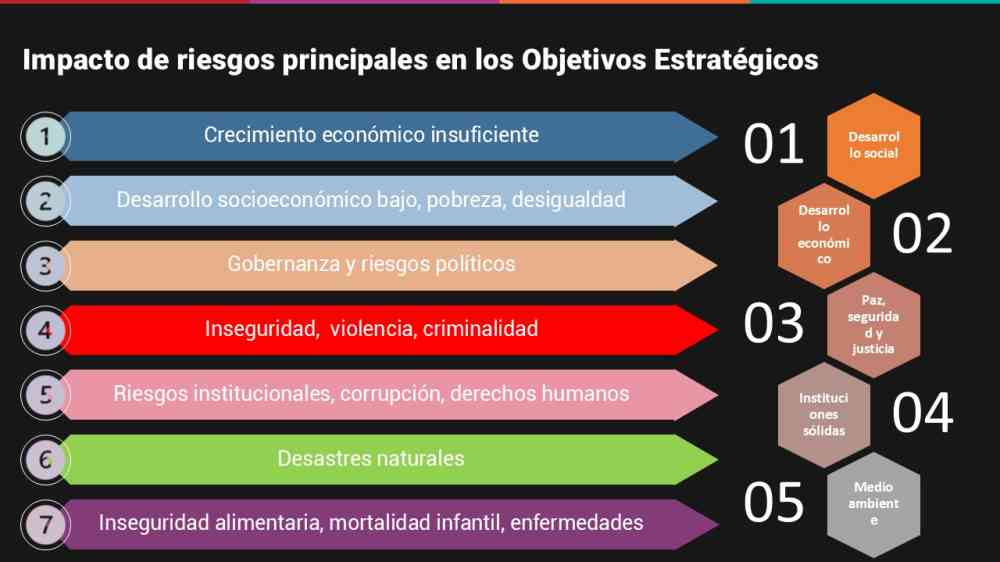
Analysis of main risks to development in Guatemala
In Guatemala, UNDRR supported 18 United Nations entities in envisioning future risks. Under the leadership of the UN Resident Coordinator’s Office, agencies updated the country’s Multidimensional Risk Analysis, which is a crucial part of the Common Country Analysis.
They explored seven key risk areas and stress-tested them against the “Six Transitions” pathways for achieving the Sustainable Development Goals (SDGs): (1) food systems; (2) energy access and affordability; (3) digital connectivity; (4) education; (5) jobs and social protection; and (6) climate change, biodiversity loss and pollution.
The analysis surfaced a range of critical insights. For example, it highlighted that migrants in transit and rural communities were among the most vulnerable, while sectors such as health, security, and gender empowerment emerged as particularly influential levers for driving resilience and inclusive development.
Impact: The insights gained from this exercise helped sharpen inter-agency alignment and informed Guatemala’s second Common Country Analysis since 2021, which in turn guided the development of the United Nations Cooperation Framework.
Yemen: local voices lead the way

Scoring of different hazards as part of the risk analysis to inform humanitarian planning in Yemen
In Aden, Yemen, UNDRR collaborated with OCHA and the UN Development Coordination Office to bring together local NGOs and UN agencies for a joint risk analysis. The exercise focused on identifying hazards and building scenarios to inform humanitarian planning in a highly complex and volatile context.
For the first time, local NGOs and UN agencies jointly explored Yemen’s complex risk landscape. Local actors played a central role in shaping risk assumptions and response strategies, ensuring that the analysis reflected on-the-ground realities.
Impact: Humanitarian planning became guided by a better understanding of Yemen’s complex risks, thus more able to address both immediate needs and long-term vulnerabilities. Strengthened ties with local authorities also laid the groundwork for more effective implementation of disaster risk reduction priorities.
Looking ahead and scaling impact
With less than five years to achieve the Sendai Framework for Disaster Risk Reduction and the 2030 Agenda, UNDRR is accelerating its efforts to ensure that all UN development and humanitarian planning is informed by a better understanding of risks. Key priorities include:
Doing more with less: in line with UN80 reforms to reduce duplication and costs, UNDRR will seek to further leverage UN-coordinated planning processes as entry points to inject risk knowledge. This includes expanding joint risk analyses with humanitarian and development partners and positioning disaster risk reduction as the connective tissue across the humanitarian-development-peace nexus.
Supporting decision-making: Translating analysis findings to insights that inform decision-making, including the prioritisation of actions, mobilising financing, and enabling adaptive risk management.
Leveling up analytics: Strengthen the use of quantitative methods, introduce resilience metrics, map risk reduction activities, and pilot AI-assisted tools for dynamic, exploratory risk analysis.
Aligning country-level work: To maximise impact, UNDRR will work to harmonise disaster risk reduction efforts across UN agencies, ensuring a coherent and connected approach at the country level.
UNDRR is helping transform how the UN system understands and addresses risk, moving from reactive responses to proactive, integrated planning. By embedding risk understanding into core UN activities - from humanitarian response to development support - UNDRR is not only helping prevent disasters before they occur but also ensuring that recovery and development efforts are more resilient and sustainable. This shift is essential to reducing the global burden of disasters and achieving the promise of the 2030 Agenda.