
Testing coordination before hazards become disasters
Across Africa, climate-related hazards place growing pressure on communities. For Angola, Côte d'Ivoire and Zambia, floods and droughts have been identified as significant and recurring hazards, with risks projected to evolve under changing climatic conditions, including under the 2026/2027 El Niño. As climate-related hazards intensify across the continent, effective action and coordination based on early warning information becomes more critical than ever before.
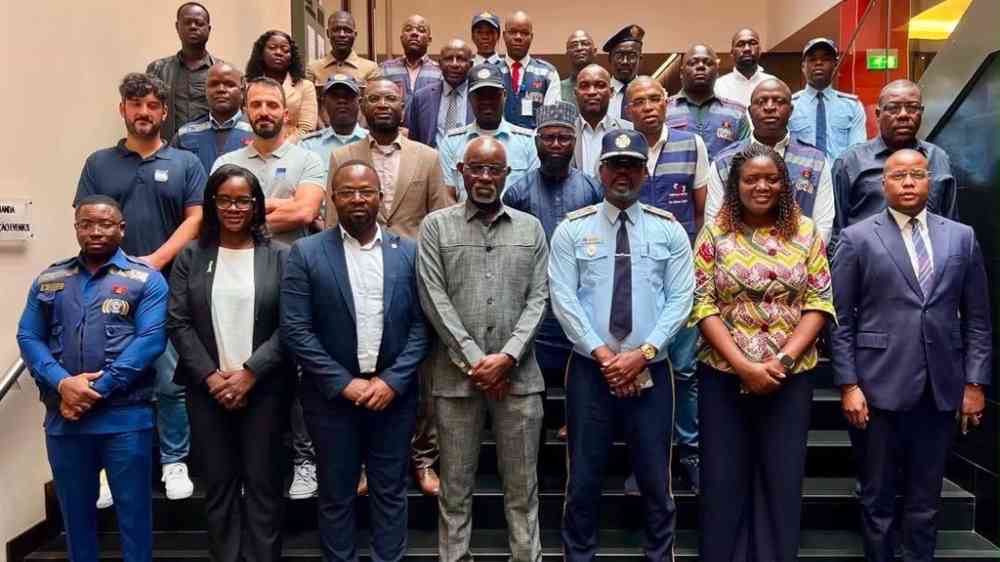
In July 2026, the United Nations Office for Disaster Risk Reduction (UNDRR) Regional Office for Africa, co-organized three discussion-based exercises (DBXs) in Angola, Côte d'Ivoire and Zambia. DBXs are a type of simulation exercise designed to surface strengths, gaps, and bottlenecks in the early warning value chain. They emphasize sequencing and timing, allowing participants to examine how their collaboration efforts are affected as new information becomes available.
The three DBXs convened separate groups of national stakeholders to explore how continental early warning information can support preparedness. While all the exercises shared a common methodology, each was tailored to the hazard profiles and institutional arrangements of each country.
The exercises were convened under the Disaster Risk Reduction Capacity Building in Africa programme funded by the Government of Italy. They were facilitated with support from the African Union Commission and the CIMA Research Foundation. At national level, they were co-organized by the Civil Protection and Firefighters Service of Angola (SPCB), the National Platform for Risk Reduction and Disaster Management (PN-RRC) in Côte d'Ivoire, and the Disaster Risk Management Division (DRMD) in Zambia.
In Angola, participants worked through a flood scenario reflecting the country's exposure to heavy rainfall and riverine flooding. In Côte d'Ivoire and Zambia, the exercises centered on drought conditions, enabling participants to examine how early warning information can support decision-making in the face of slow-onset hazards.
By simulating realistic disaster scenarios in a low-risk environment, the exercises enabled stakeholders to test existing procedures, clarify institutional roles and examine how information flows between technical agencies, disaster management authorities and key decision makers, and towards the communities who rely on these warnings and advisories to take action. The discussions helped identify where warning information may be delayed, misunderstood or insufficiently linked to decision-making processes, providing a basis for strengthening preparedness plans and standard operating procedures.
A key focus of the exercise was familiarizing national stakeholders with the early warning products created by the African Multi-Hazard Early Warning and Early Action System (AMHEWAS) programme . Drawing on forecasts and information from its continental network, AMHEWAS provides its Member States with forecasting products, which support the monitoring of evolving hazards. These include products like the Continental Watch, a multi-hazard early warning bulletin for emerging fast-onset weather risks, and the Africa Drought Watch, which provides information on rainfall deficits, vegetation stress and evolving drought patterns.support the monitoring of evolving hazards. These include products like the Continental Watch, a multi-hazard early warning bulletin for emerging fast-onset weather risks, and the Africa Drought Watch, which provides information on rainfall deficits, vegetation stress and evolving drought patterns.
“This simulation has opened our eyes to drought hazards. Drought has not been well understood in Côte d'Ivoire, as we are mostly affected by flood events. This exercise has helped us learn more about drought monitoring, and helped us to understand how to take ownership of AMHEWAS products. Like the Aeronautical Meteorological Airport Development And Operations Company (SODEXAM) and other organisations here, we are working out how to support decision-making in the country with high-quality hydrological data.”
- Mr. Ouattara Almamy, Deputy Director of Hydrological Studies, Hydrology Directorate of the Ministry of Hydrology, Health, and Sanitation of Côte d'Ivoire.
The DBXs demonstrated to participants how continental products can provide an additional layer of hazard and vulnerability data for improved preparedness, particularly for transboundary hazards. By combining AMHEWAS information with national forecasts and local observations, decision-makers will have a more comprehensive understanding of emerging risks, and will be able to take action earlier.
"[This DXB] will help to develop Zambia's national anticipatory action framework, especially with the country's trigger thresholds, and with formulating and achieving wider stakeholder consultation. This exercise will also enrich further discussions around drought protocols at the regional and continental levels, for which we have pledged to provide early warnings for each and every population at risk by 2030."
- Mr. Likezo Musobani, Director in charge of Disaster Risk Management, Disaster Risk Management Division of Zambia
The relevance of these exercises is underscored by the ongoing El Niño 2026/2027 event. During the Twenty-first African Continental Climate Outlook Forum (ACCOF-21), stakeholders stated that African countries must move their focus from simply producing and disseminating forecasts to fostering a continental coordinated system, ensuring that information from various regions will be co-produced and shared. These DBXs help to foster coordinated systems not only on the continental level but also at the national level. Effective coordination cannot be assumed, it must constantly be practiced and improved.
The importance of strengthening coordination and preparedness was also highlighted at the Africa Early Warnings Forum, held in Addis Ababa in September 2026. The Forum featured a plenary on the implications of the anticipated 2026-2027 El Niño event, during which experts and government officials emphasized that early warning systems must not only generate forecasts, but also ensure that warnings lead to timely and effective early action. The Forum culminated in the Addis Ababa Call to Action on Early Warnings in Africa, which calls for stronger, more coordinated early warning systems across the continent. The best way to ensure that systems are coordinated and ready to respond is by constantly exercising them. By simulating real-world disaster scenarios, these discussion-based exercises help transform plans and forecasts into effective early action.