
Sendai Framework Monitor reporting guidance
Step-by-step guidance for national focal points reporting against the seven global targets of the Sendai Framework.
What is the Sendai Framework Monitor?
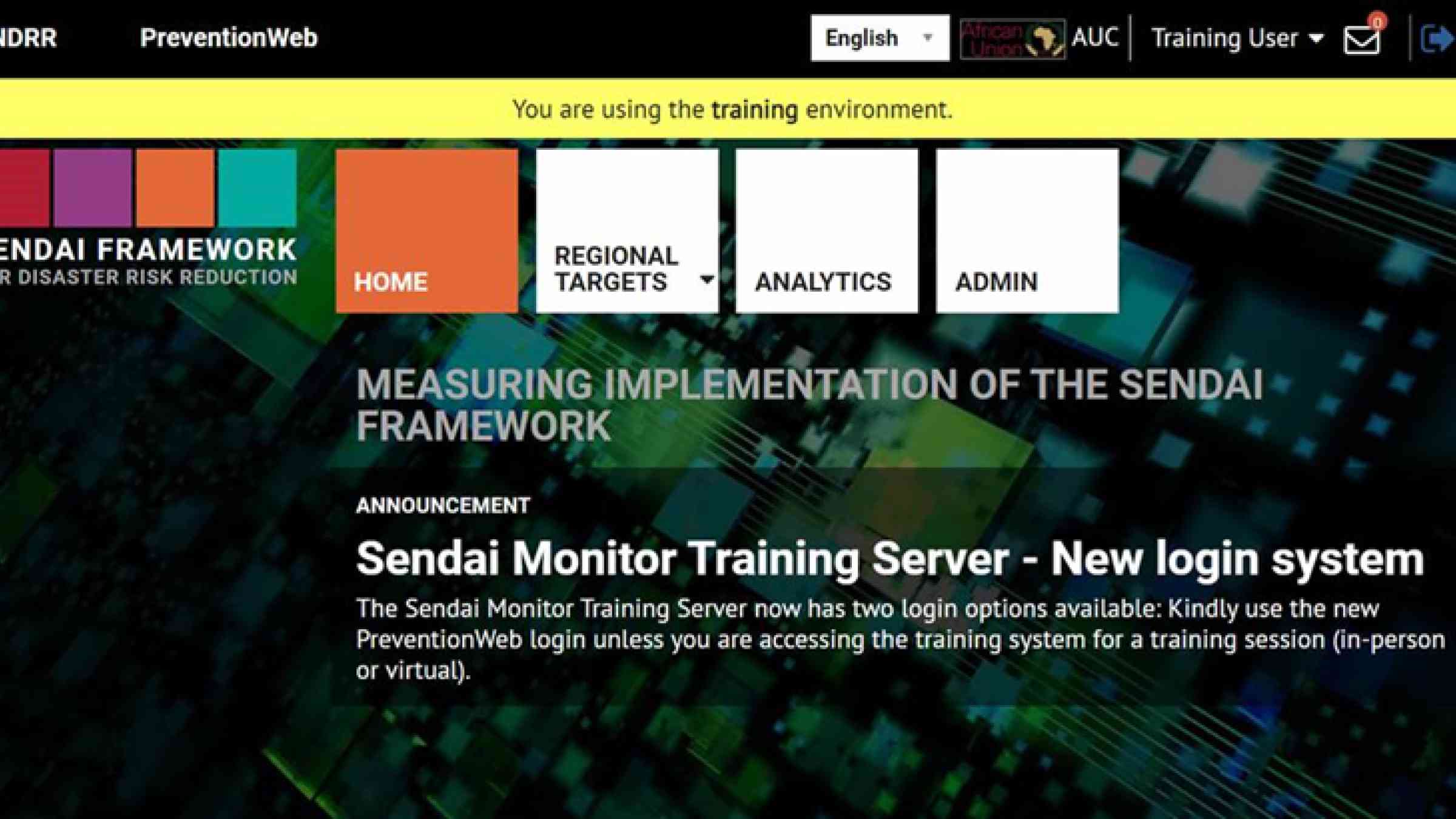
The Sendai Framework Monitor (SFM) is the global online tool for countries to report on progress in implementing the Sendai Framework for Disaster Risk Reduction 2015–2030. Developed through extensive consultation with Member States and other stakeholders, it was launched in 2018 to support systematic monitoring of progress towards the Framework's seven global targets and 38 global indicators.
Main modules of SFM
The SFM consists of three main modules:
- Global targets and indicators: This module enables countries to report data against the seven global targets and 38 indicators agreed by Member States. Several of these indicators are also used to monitor progress towards the Sustainable Development Goals (SDGs), helping to ensure consistency between Sendai Framework and SDG reporting.
- Custum targets and indicators: Countries can define and monitor their own nationally determined targets and indicators. This allows the SFM to complement global monitoring with country-specific priorities and can support the monitoring of national and local disaster risk reduction strategies.
- Analytics: The publicly accessible Analytics module turns validated country data into charts, maps and tables. Users can explore and compare progress by target, indicator, year, country and region, providing a transparent picture of progress in disaster risk reduction over time.
Before you start
Reporting on the Sendai Framework is country-owned and led by national governments. Countries determine how to organize their national reporting process, which institutions contribute data, and who is authorized to enter and validate information in the system.
Reporting usually requires contributions from several government institutions. Depending on the target, relevant data may come from national disaster management authorities, national statistical offices, line ministries and other government agencies responsible for sectors such as health, infrastructure, agriculture, education, finance or the environment. The national Sendai Framework Monitor (SFM) focal point or coordinator plays an important role in bringing these contributions together and ensuring a coordinated national reporting process.
Before entering data, countries are encouraged to identify the national institutions and data sources needed for each of the seven Sendai Framework targets and to agree on responsibilities for compiling, reviewing and validating the information. The Technical Guidance for Monitoring and Reporting on Progress in Achieving the Global Targets of the Sendai Framework provides definitions, methodologies and data requirements for the 38 global indicators.
Who reports and how access works
Each country designates a national focal point or SFM Coordinator who oversees the national reporting process. The Coordinator can involve other ministries, agencies and institutions that hold the data needed for reporting across the seven Sendai Framework targets.
The SFM provides two main user roles:
- Coordinators have overall responsibility for national reporting in the SFM. They can enter and edit metadata, set up data disaggregation, assign reporting responsibilities to Contributors, and participate in the validation of reported data.
- Contributors are users authorized by the Coordinator to report data for specific targets. They can enter and edit data for their assigned targets and self-validate and approve the data they enter.
This allows reporting responsibilities to be distributed across relevant government institutions while maintaining overall coordination of the national reporting process.
Access to the SFM is restricted to authorized users. If you are expected to contribute to your country's reporting but do not yet have access, contact your country's SFM Coordinator. If your country needs to designate or update its Coordinator, or you are unsure whom to contact, please contact the relevant UNDRR Regional Office for assistance.
The reporting cycle
The Sendai Framework Monitor is designed for continuous reporting. Countries can enter, review and update their data as national information becomes available, including revising data for previous years and updating baseline information.
To support timely and consistent global reporting, UNDRR has established two key reporting milestones each year:
- 31 March – Start reporting: Countries are encouraged to start reporting data for all Sendai Framework targets for the previous calendar year. Reporting and updates for earlier years can also be made, together with any necessary updates to baseline information.
- 30 September – Continue and complete reporting: Countries are encouraged to continue and complete reporting for all targets for the previous year and to update data for any earlier years as needed. Data reported by this milestone also feeds into the global monitoring of the Sustainable Development Goals (SDGs) for the Sendai Framework indicators that are shared with the SDG indicator framework.
Countries do not need to wait for these milestones to report. The SFM remains available for reporting and updates throughout the year, and countries are encouraged to keep their national data as complete and up to date as possible.
Reporting is therefore more than an international reporting exercise. Maintaining complete and up-to-date SFM data provides governments with an evidence base for tracking disaster impacts, identifying trends and gaps, informing disaster risk reduction priorities and investments, and monitoring progress over time.
Video guidance
Eleven short video tutorials cover the Sendai Framework Monitor end to end: four general tutorials (introduction, metadata, reporting tips, and the analytics module) plus one video for each of the seven global targets. Watch them on the training page.
Explore the Sendai Framework Monitor
You are here
Reporting guidance
Step-by-step guidance for national focal points reporting against the seven global targets.