
Egypt advances risk-informed development cooperation to strengthen resilience and protect development gains
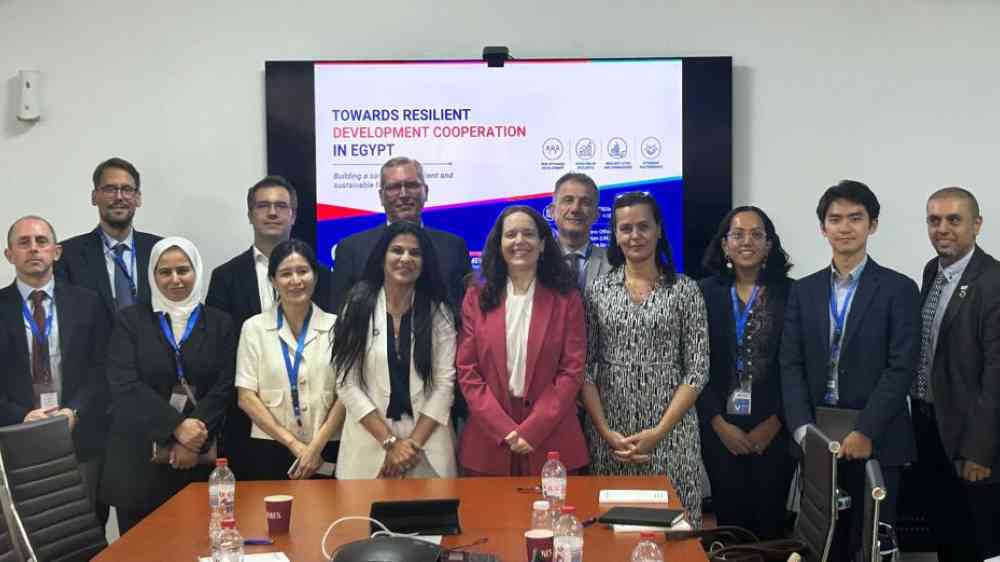
As climate change, rapid urbanization, and environmental pressures reshape Egypt's risk landscape, strengthening resilience has become increasingly important for safeguarding development gains, public investments, and sustainable economic growth.
To advance this agenda, the United Nations Office for Disaster Risk Reduction (UNDRR) convened representatives from the Embassies of Japan, Australia, Canada, Germany, Italy, Kuwait, Norway, the Republic of Korea, the United Kingdom, and the United States of America, alongside the United Nations system, and other key stakeholders for a high-level dialogue on Towards Resilient Development Cooperation in Egypt. The dialogue explored how disaster and climate risk considerations can be more effectively integrated into development cooperation, financing, and investment decisions while marking nearly two decades of UNDRR engagement in Egypt.
Understanding Egypt's evolving risk landscape
The dialogue opened with an evidence-based overview of Egypt's evolving risk landscape, highlighting how climate change, rapid urbanization, environmental degradation, and socio-economic pressures are increasing the country's exposure to complex and interconnected risks.
UNDRR presented key findings on Egypt's disaster risk profile, identifying flash floods, coastal flooding, extreme heat, earthquakes, and the growing impacts of sea-level rise, coastal erosion, rapid urban expansion, and cascading infrastructure failures as some of the country's most pressing challenges. While Egypt has made significant progress in strengthening flood protection infrastructure and advancing national disaster risk reduction policies, discussions also highlighted opportunities to strengthen comprehensive early warning systems, disaster risk financing, locally led resilience, and risk information systems to better support development planning and investment.
"Resilience is not a separate development agenda; it is the foundation upon which sustainable development is built. As climate and disaster risks continue to evolve, integrating risk information into development planning, financing and investment is essential to safeguard development gains and protect the most vulnerable. Through nearly two decades of partnership in Egypt, UNDRR remains committed to supporting national efforts to advance risk-informed development and strengthen resilience for generations to come," said Sandra Amlang, Chief of the UNDRR Regional Office for Arab States.
Strengthening risk-informed development through partnership
The dialogue created a platform for diplomatic missions, development cooperation agencies, the United Nations system, Egyptian national institutions, and development partners to exchange perspectives on Egypt's evolving risk landscape and identify practical opportunities for integrating resilience into development cooperation. Participants explored how stronger coordination can help align investments, strengthen resilience across sectors, and better protect long-term development gains.
The event featured keynote remarks from Elena Panova, United Nations Resident Coordinator in Egypt, followed by an ambassadorial dialogue chaired by Sandra Amlang. Together, participants examined practical opportunities to strengthen cooperation, align resilience investments, and integrate disaster risk considerations into existing and future development programmes and financing mechanisms.
"Egypt has made significant progress in advancing sustainable development, yet the country's evolving risk landscape reminds us that development gains cannot be sustained without systematically integrating disaster and climate risk into planning and investment. From sea-level rise and coastal erosion to extreme heat and water scarcity, these challenges require collective action and risk-informed solutions. The United Nations Sustainable Development Cooperation Framework provides an important platform to ensure resilience is embedded across our joint efforts, enabling development that protects people, economies, and future generations," said Elena Panova, United Nations Resident Coordinator in Egypt.
A shared vision for resilient development
Participants agreed that strengthening resilience requires coordinated action across governments, development partners, diplomatic missions, the United Nations system, international financial institutions, academia, the private sector, and civil society. They discussed practical entry points for integrating resilience considerations into development programmes, financing mechanisms, and public investment while strengthening collaboration around a shared understanding of risk.
The discussion reaffirmed that building resilience is a shared responsibility. By working together around common priorities and evidence-based risk information, partners can better protect development gains, reduce future losses, and support more resilient, inclusive, and sustainable development in Egypt.
Looking ahead
The dialogue concluded with a shared commitment to advancing risk-informed development cooperation through stronger partnerships, evidence-based decision-making, and sustained investment in resilience.
As Egypt continues to address increasingly interconnected disaster and climate risks, integrating resilience into development planning, cooperation, financing, and investment will be critical to protecting lives, safeguarding development gains, and ensuring that future development is not only sustainable, but also risk-informed and resilient.