UNDRR News

The latest news from the United Nations Office for Disaster Risk Reduction (UNDRR), the lead UN agency for the coordination of disaster risk reduction (DRR).

United Nations Office for Disaster Risk Reduction – Regional Office for the Americas and the Caribbean

Engaging persons with disabilities on local disaster resilience planning
Update
New tool provides pathway for inclusion

A new MCR2030 tool enables local governments to design, formulate, and implement disaster resilience strategies that are more inclusive of the perspectives and capacities of persons with disabilities

United Nations Office for Disaster Risk Reduction – Regional Office for the Americas and the Caribbean
United Nations Office for Disaster Risk Reduction - Office in Incheon for Northeast Asia and Global Education and Training Institute for Disaster Risk Reduction
Making Cities Resilient 2030 (MCR2030)
Park area in Campinas, Brazil
Feature
Climate resilience: an investment not a cost

Severe storms and flooding almost 20 years ago proved a turning point for Campinas. Since then, the Brazilian city has emerged as a global leader of climate resilient urban development

United Nations Office for Disaster Risk Reduction – Regional Office for the Americas and the Caribbean
United Nations Office for Disaster Risk Reduction - Office in Incheon for Northeast Asia and Global Education and Training Institute for Disaster Risk Reduction
Making Cities Resilient 2030 (MCR2030)
Prefeitura do Município de Campinas, São Paulo
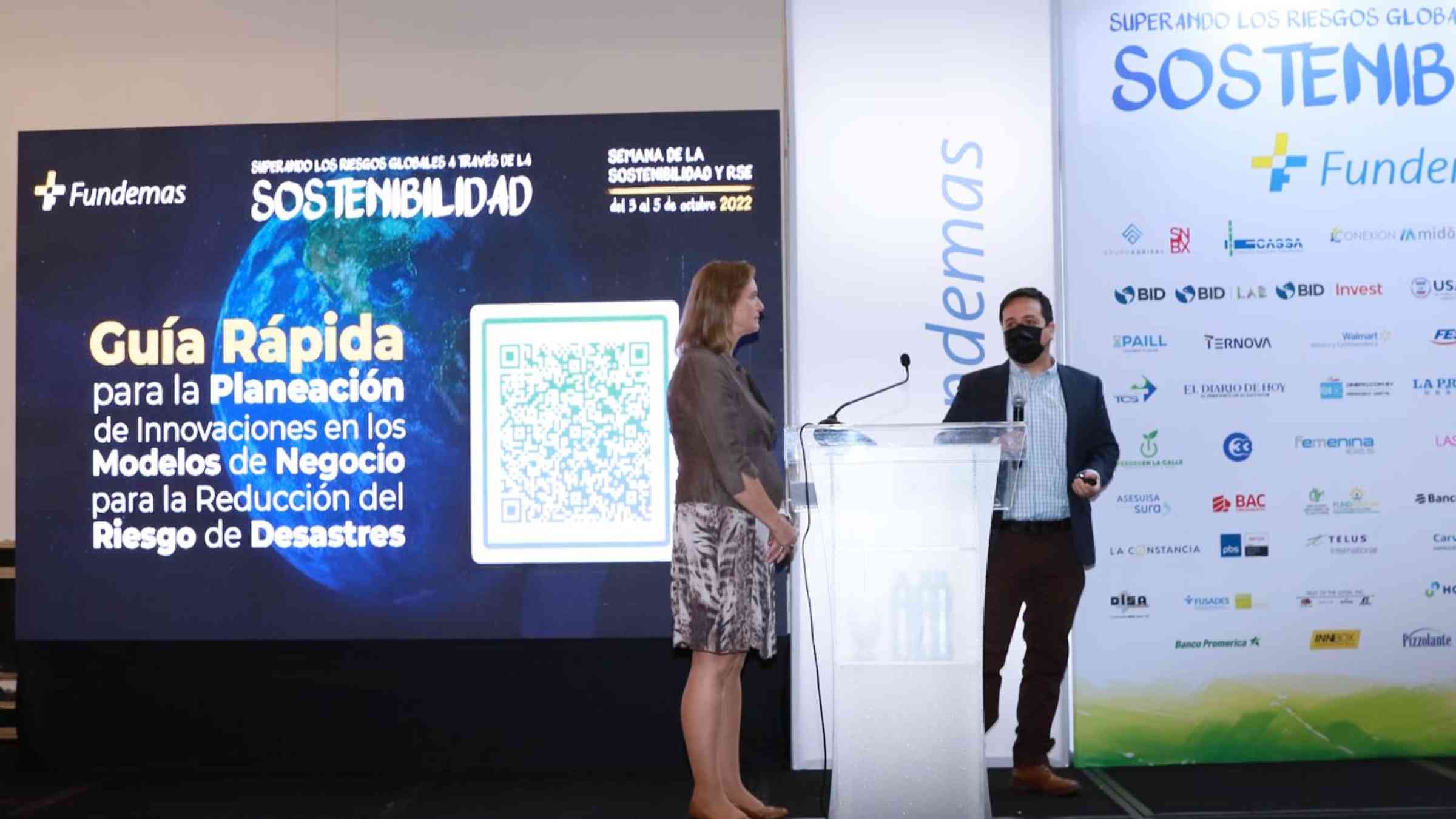
Presentan guía de innovación del sector privado para reducción del riesgo de desastres en El Salvador
Update
Private sector innovation guide for disaster risk reduction presented in El Salvador

The guide was commissioned by UNDRR and developed in collaboration between the TRANSFORM project of the University of Waterloo, Canada, with ARISE networks in Central America and twenty companies in the region who provided input to the document.

United Nations Office for Disaster Risk Reduction – Regional Office for the Americas and the Caribbean
Urban garden planting in Mexico City
Feature
Mexico City focuses on solutions and scale

Mexico City has built a comprehensive risk governance system enabling it to scale up climate resilience action across the metropolitan area

United Nations Office for Disaster Risk Reduction – Regional Office for the Americas and the Caribbean
Making Cities Resilient 2030 (MCR2030)
United Nations Office for Disaster Risk Reduction - Office in Incheon for Northeast Asia and Global Education and Training Institute for Disaster Risk Reduction
Federal District of Mexico City
Medalla Brasil
Update
UNDRR decorated by the government of Brazil

Brazil is one of the countries in the region with highest investment rates in research and development in terms of disaster risk reduction.

United Nations Office for Disaster Risk Reduction – Regional Office for the Americas and the Caribbean
Speightstown, Barbados
Feature
A Caribbean at the forefront of early warning systems

UN Secretary-General António Guterres urged all countries to achieve 100 per cent coverage of their populations by early warning systems within the next five years.

United Nations Office for Disaster Risk Reduction – Regional Office for the Americas and the Caribbean
Lanzamiento RP23
Update
Open registration for RP23

The launch of the RP23 marked the start of the 5th Risk Reduction Week, in commemoration of the International Day for Disaster Risk Reduction.

United Nations Office for Disaster Risk Reduction – Regional Office for the Americas and the Caribbean
Sistema Nacional de Emergencias
 Regional Early Warning Systems Consortium (REWSC) Meeting
Press release
The Caribbean consolidates its partnership for advancing multi hazard early warning systems in the region

The REWSC is an excellent study case of governance mechanisms on how regional and global organizations coordinate actions aiming to increase the efficiency of EWS with a multi-hazard approach in the context of systemic risk and complexity.

United Nations Office for Disaster Risk Reduction – Regional Office for the Americas and the Caribbean
Caribbean Disaster Emergency Management Agency
The Climate Risk & Early Warning Systems Initiative (CREWS)
Concept Note - Catalysing a decade of disaster preparedness action in Latin America and the Caribbean
Press release
EU and UNDRR mark 10 years of partnership in Latin America and the Caribbean

The European Union, through its Disaster Preparedness Programme (DP) under the Civil Protection and Humanitarian Aid department (ECHO), has invested more than 321 million euros in 34 countries.

United Nations Office for Disaster Risk Reduction – Regional Office for the Americas and the Caribbean
European Commission’s Directorate-General for European Civil Protection and Humanitarian Aid Operations (DG ECHO)
Caribbean Regional Workshop on Measuring Effectiveness of Early Warning Systems through Sendai Framework Target (g) and Custom Indicators
Update
Trinidad and Tobago gears up to increase resilience to disasters

Using the structures incorporated in the Sendai Framework for Disaster Risk Reduction (2015-2030), Trinidad and Tobago is taking a comprehensive overview of hazards, risks and uncertainties to inform its decision-making and planning.

United Nations Office for Disaster Risk Reduction – Regional Office for the Americas and the Caribbean

You might also find these helpful

Cover- Shutterstock main report
Publications
We produce a range of publications by collecting and analysing risk data through a range of tools, knowledge products, and mobilising like-minded partners.

Cheerful young black lady leading international group of protestors
Campaigns
Our communications and advocacy campaigns call for taking action today to protect people and prevent disasters from happening.

Media Centre Thumb
Media centre
Access to a range of multimedia resources related to disaster risk reduction, including news releases, photos, videos, and other materials.
WIN DRR Leadership Awards
DRR Awards
These awards not only celebrate exemplary contributions but also encourage efforts to build more resilient societies.