
New initiative launched to boost early warnings and disaster resilience in the Western Balkans
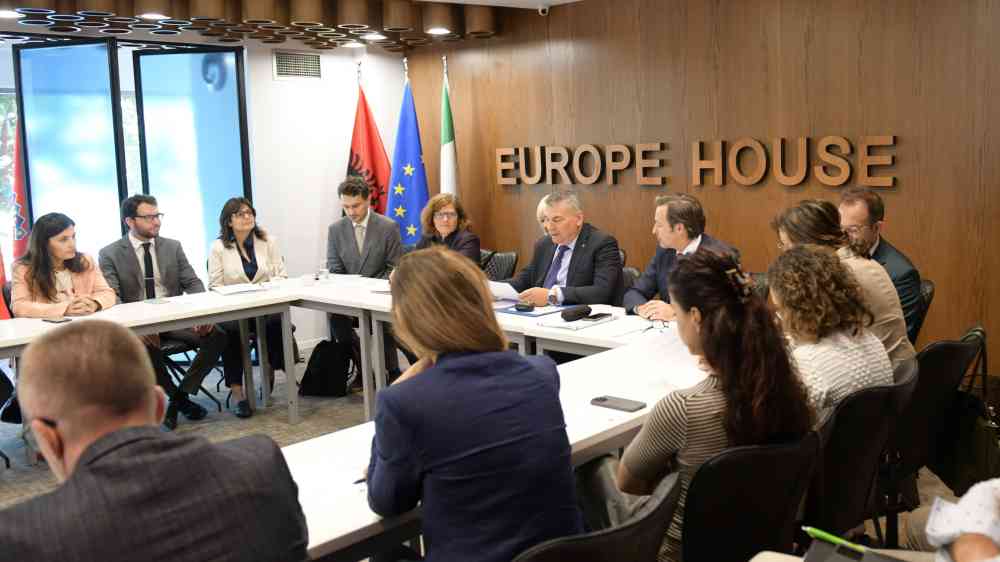
Tirana/Brussels, 19 September 2025 - A new three-year initiative to boost disaster and climate resilience in the Western Balkans was launched this week. Focusing on Albania, North Macedonia, and Serbia, with the generous support of the Government of Italy and implemented by UNDRR and partners, the project aims to accelerate a set of targeted risk reduction actions. This includes improving risk knowledge, governance, and early warning systems, while fostering transboundary cooperation.
Delegates convened in Tirana on Wednesday to kick off the Initiative, with Mr. Haki Çako, General Director of National Civil Protection Agency of Albania highlighting that
"Disasters have no borders- international cooperation and strengthening local capacities are the key to stand resilient against crisis."
H.E. Marco Alberti, Ambassador of Italy to Albania said,
"We are here to talk about how to prevent natural disasters, we are here to talk about mitigating the impact of disasters, to help institutions saving human lives. We aim to improve early warning systems, the sooner the better. The sooner we are able to give prompt responses, the lower the impact of disasters will be. This project is important as it involves the Italian Civil Protection which has a long consolidated history, and AICS, also an example of the flexibility and operability of the Italian cooperation."
The initiative gets underway as the region experiences a growing range of disaster and climate-related risks, including floods, earthquakes, wildfires, droughts, and extreme weather events. Europe is the fastest-warming continent, and 2024 was the warmest year on record. Proactive risk management is therefore essential, and the project will bring together national disaster management authorities, local governments, civil society, and regional organizations and UN agencies.
"A key objective of this initiative is to promote risk-informed investments and integrate disaster risk into the decisions of financial planners and budget authorities,"
added Ms. Natalia Alonso Cano, Chief of the Regional Office for Europe and Central Asia at UNDRR and she invited all partners to collaborate to make the Initiative a success.
Key focus areas include:
- Enhanced early warning systems through real-time data platforms and disaster loss tracking.
- Strengthened risk governance by integrating disaster risk reduction (DRR) and climate adaptation into national planning and financing.
- Empowered local communities through strategic DRR planning and urban resilience initiatives.
The project, titled "Strengthening Transboundary Collaboration, Disaster Risk Reduction Capacities and Early Warning Systems in the Western Balkans", will run until 2028. Regional collaboration will underpin all areas, including leveraging the expertise of the Italian Civil Protection and aligning with EU mechanisms and accession criteria for coordinated disaster risk reduction strategies. This initiative marks a significant step toward a safer, more resilient Western Balkans.