Advancing gender and disability inclusive risk knowledge in Burundi
Burundi faces multiple natural hazards, including floods, landslides, droughts, and epidemics. The majority of the country’s displacement is caused by disasters, which, combined with reliance on agriculture and limited spatial planning, severely affect rural livelihoods and the nation’s development trajectory. Despite advances in hazard monitoring and forecasting to lessen the impacts of these hazards, there are key structural challenges with the production, access, and operational use of risk knowledge. One significant challenge is insufficient data on gender, and disability in relation to vulnerability and exposure.
“Data does not always capture complex realities such as gender-based violence, unequal access to resources, or sociocultural constraints. Women are still too rarely involved in the design of data collection tools
- Léopoldine Kamenge, Environmental Focal Point and Member of the Executive Committee of CAFOB (Collectif des Associations et ONGs Féminines du Burundi)
“Official disaster reports in Burundi—do not disaggregate data by type of disability. We know the number of victims, but not the number of people with disabilities among them ... Without data, people with disabilities are not included on priority evacuation lists, do not receive appropriate equipment, and are absent from contingency plans.”
- Rémy Ndereyimana, Executive Secretary of the Fédération des Associations des Personnes Handicapées du Burundi (FAPHB).
To respond to this obstacle, the United Nations Office for Disaster Risk Reduction (UNDRR) supported Burundi to improve reporting on the Sendai Framework Monitoring (SFM), and to enhance the use of inclusive risk knowledge in early warning systems. These were co-organized by the Civil Protection Programme of the Government of Burundi, and UNDRR, while also supporting efforts to accelerate the implementation of the Early Warnings for All initiative (EW4All).
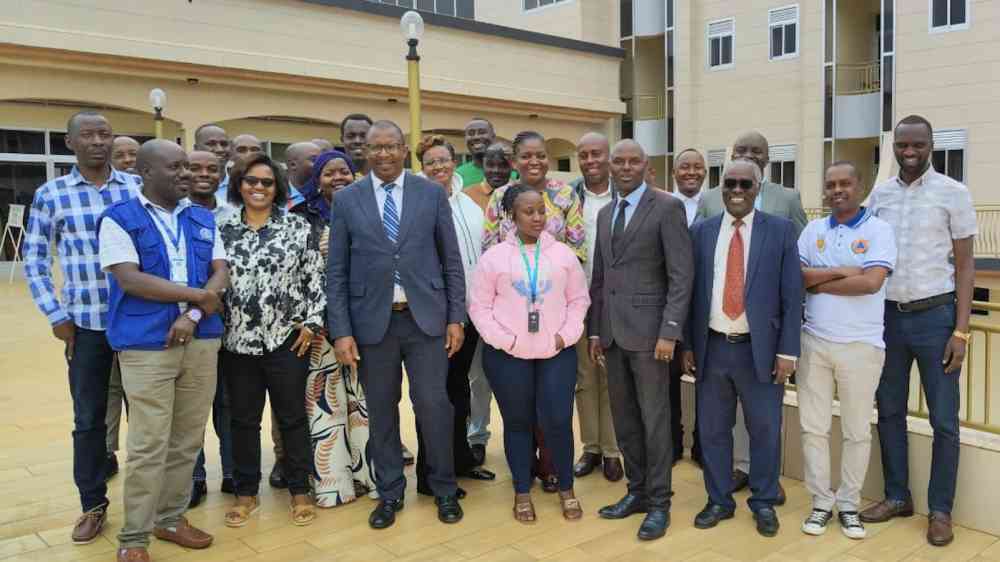
These activities were conducted in February and March 2026 under the project “Implementing the Sendai Gender Action Plan in Burundi and Kenya”, which was funded by the Government of Japan. The project enhanced the availability and use of disaggregated gender and disability data to mainstream gender and disability responsive disaster risk reduction (DRR) into policies, strategies, and national plans in both countries. During its implementation, the project enhanced both countries to design effective, localized solutions to address the challenges that often limit the quality and availability of gender and disability data. In Burundi, participants were represented from government institutions, UN agencies, development partners, and academia. Participating organizations for women and persons with disabilities included Le Collectif des Associations et ONGs Féminines du Burundi (CAFOB), Association des Femmes Rapatriées du Burundi (AFRABU), Fédération des Associations des Personnes Handicapées du Burundi, and Albinos Sans Frontières.
Through a collaborative process, participants co‑developed and validated a national action plan to improve SFM reporting and enhance data disaggregation for Burundi. The national roadmap establishes measures such as the development and adoption of standard operating procedures for SFM reporting, assigning institutions specific targets, and providing targeted technical training on disaggregation and data quality. These objectives advance the long‑term goals of institutionalizing SFM reporting within national planning, budgeting, and monitoring cycles, and establishing an integrated national disaster loss and impact database for Burundi.
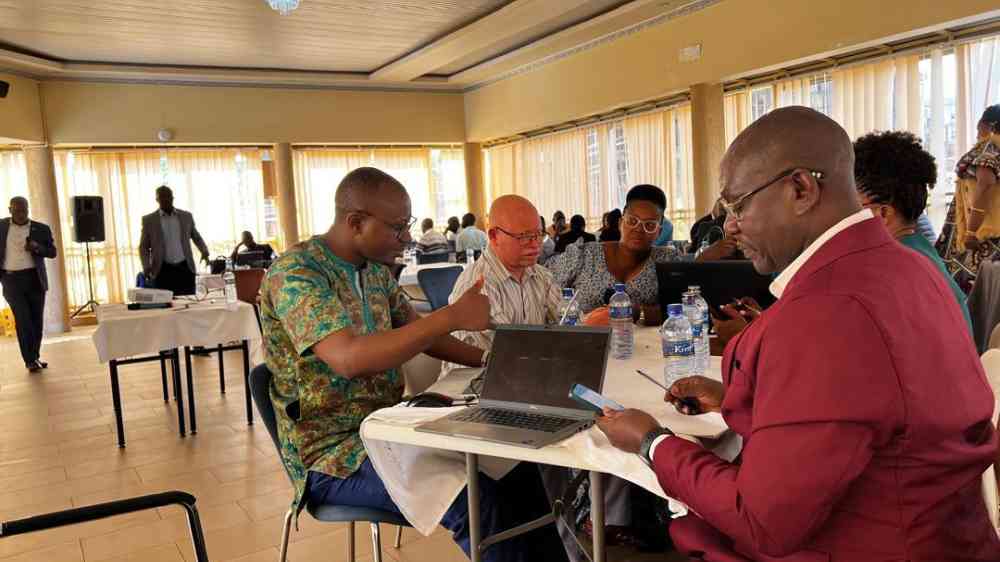
The risk knowledge activities, were conducted jointly with the International Organization for Migration (IOM) which included group exercises on exposure and vulnerability analysis, discussions on integrating gender, disability, and human mobility considerations into risk assessments, and practical demonstrations of risk information platforms. Institutions improved their coordination, creating stronger linkages for data sharing and decision‑making. Participants also identified critical gaps in risk data governance and interoperability, which will guide future efforts to harmonize information flows.