
Africa Working Group on disaster risk reduction centers around inclusion
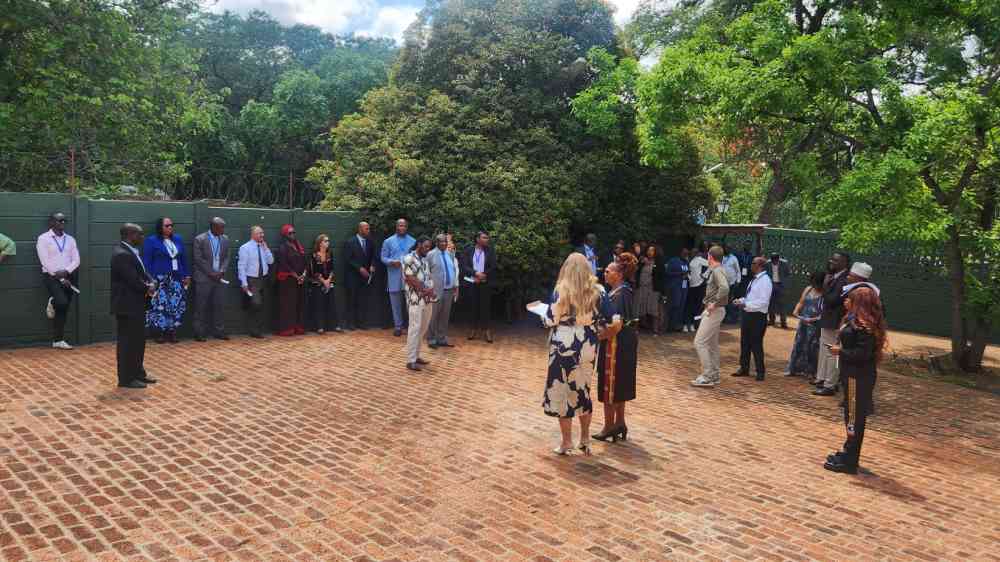
The 23rd session of the Africa Working Group on Disaster Risk Reduction (AWGDRR), took place from 11 to 13 November 2025.
Among the highlights were two sessions that placed inclusion and equity at the center of DRR efforts. The session "Broadening early warning through a whole society lens" gathered participants to explore the four pillars of the Early Warnings for All initiative (EW4ALL); risk knowledge, monitoring and forecasting, warning dissemination, and preparedness and response. This session identified key barriers to inclusive early warning systems and proposed practical strategies. It also emphasized the need for policy alignment, investment, and partnerships to meet the 2027 EW4All milestone.
In addition, the session on "Inclusive DRR in Action" focused on tackling inequalities in risk and resilience, providing a powerful platform to examine how disaster disproportionately impacts diverse groups, in particular women and persons with disabilities.
Through an interactive exercise co-designed with the Federation of Organizations of Disabled People in Zimbabwe (FODPZ), participants experienced firsthand the barriers faced by excluded groups, as well as the unique skills and knowledge that excluded groups often hold that remain untapped in DRR planning processes. The session also featured an introductory scene-setting presentation with key data points illustrating the real costs of exclusion, as well as a dynamic discussion on how DRR systems can be made more equitable.
This AWGDRR underscored that inclusion in DRR must go beyond simply inviting diverse groups to participate. True inclusion requires addressing the structural barriers, unequal power relations, and everyday forms of exclusion that shape how individuals and communities experience risk and resilience. Understanding exclusion is the critical first step toward designing DRR systems that work for everyone. By recognizing who is left out, why they are excluded, and how exclusion manifests, practitioners can create systems that are accessible, equitable, and responsive to different needs. This ensures that no one and no place is left behind when disaster strikes.
"UNDRR is committed to implementing the UN Disability Inclusion Strategy in Africa to ensure disability inclusive DRR."
- Amjad Abbashar, Chief, UNDRR Regional Office for Africa.
The AWGDRR was held under the theme "Moving from commitments to action: delivering on the Windhoek Declaration and the Africa Common Position to the Global Platform for Disaster Risk Reduction 2025." The session brought together Member States, regional bodies, civil society, and technical experts to accelerate progress on disaster risk reduction across the continent.
"At the AWGDRR, inclusion is not a thematic add-on - it is the compass. When gender equality and disability rights guide our risk governance, Africa moves from commitment to action, and from resilience on paper to resilience in people's lives."
- Elisa Ravengai, Disability and Inclusion Specialist, FODPZ.
The insights and recommendations from the AWGDRR inclusion-related sessions will inform the development of the new 2025-2030 implementation matrix for the Programme of Action for the Sendai Framework in Africa. By placing inclusion at the heart of DRR, Africa is charting a path toward resilience that is truly equitable and sustainable.
A participant from the Zambia Federation of Disability Organizations (ZAFOD) noted that:
"One of my strongest reflections from the AWGDRR is that meaningful progress in disaster risk reduction requires intentional inclusion. Persons with disabilities continue to face disproportionate risks during disasters, yet their voices remain underrepresented. The discussions in Victoria Falls highlighted the urgent need for disability to be embedded across disaster risk governance, and I was encouraged to see it reflected in the draft Programme of Action for the next phase beginning in 2026. True resilience can only be achieved when no one is left behind."
- Ruth Zulu, Zambia Federation of Disability Organizations (ZAFOD)