
Arab states join forces to strengthen SME resilience and expand regional cooperation at the Arab SMEs Summit in Baghdad
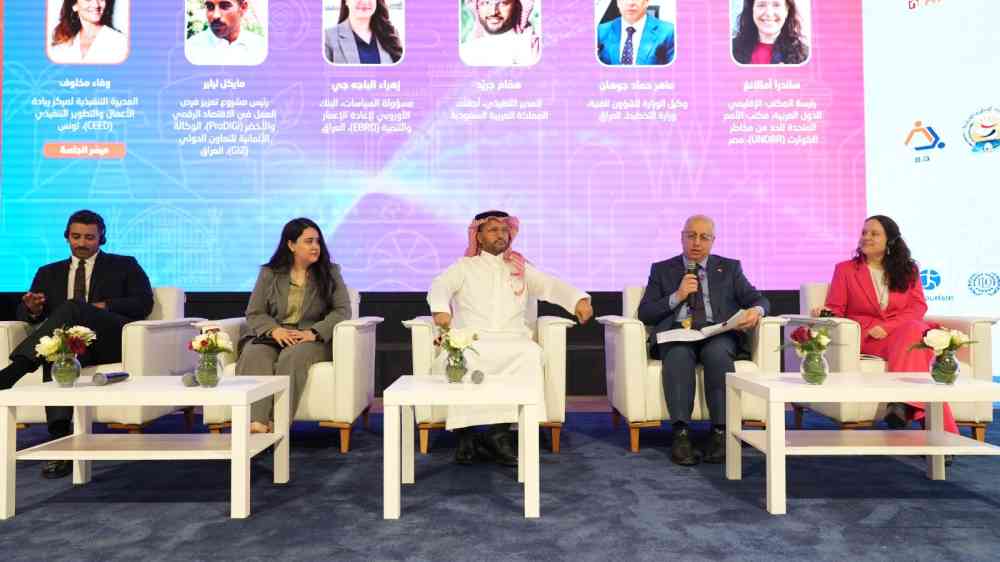
How can small and medium-sized enterprises (SMEs) better anticipate risks, maintain operations during disasters, and protect the livelihoods that depend on them?
This question brought together representatives from Syria, Palestine, Lebanon, Tunisia, Iraq, Yemen and Egypt for the regional workshop “Building Risk-Informed and Resilient SMEs in the Arab Region,” held on 18–19 November 2026 during the Arab SMEs Summit in Baghdad.
Led by the United Nations Office for Disaster Risk Reduction (UNDRR) as a partner-led side event, the workshop provided a platform to exchange regional experiences, introduce practical resilience tools, and strengthen cooperation among governments, development partners, and the private sector.
Across the Arab region, SMEs form the backbone of local economies but face growing exposure to climate-related hazards, disasters, and economic disruptions. Strengthening their preparedness is therefore essential not only to protecting individual businesses but also to safeguarding employment, supply chains, and economic stability.
Strengthening regional cooperation and practical preparedness
The opening session featured Dr. Tarik Alami, Acting Deputy Executive Secretary for Programme Support at ESCWA; Pascal Andrea Rintjens, IOM Chief of Mission in Iraq; and Sandra Amlang, Chief of UNDRR's Regional Office for Arab States. Their contributions highlighted the importance of joint regional efforts to advance SME resilience.
Dr. Ahmed Riyad, Co-Chair of ARISE UAE, explored regional trends, challenges, and opportunities for strengthening economic resilience through private-sector engagement.
During the first day, UNDRR introduced the SME Disaster Resilience Strategic Framework for 2026–2030, alongside its Resilience Maturity Assessment (ReMA) tool, and Business Continuity Planning methodology. These approaches help businesses identify vulnerabilities, assess their preparedness, and plan for disruptions before they occur.
The second day moved from assessment to application, featuring an interactive demonstration of ReMA, exchanges on regional experiences and discussions on financing resilience through banks, chambers of commerce, and development partners. Participants also explored opportunities to expand these approaches across the Arab region.
Building on Iraq's experience
A key contribution was the presentation by UNDRR and IOM of their collaborative process for developing Iraq's SME Resilience Roadmap, building on their joint national workshop held in Baghdad on 16–17 November.
The initiative aims to strengthen risk-informed business practices and develop a practical framework adapted to Iraq's priorities, with the ambition to replicate and adapt the approach in other Arab States.
This exchange illustrated how national experiences can inform regional cooperation, while highlighting the importance of sustained partnerships and practical support for businesses facing increasingly complex risks.
Translating knowledge into lasting action
Reflecting on the workshop's broader significance, Sandra Amlang, Chief of UNDRR's Regional Office for Arab States, emphasized:
"The knowledge and awareness gained through this regional workshop must extend beyond those gathered here today. Our collective responsibility is to translate this learning into practical action, share it with more businesses and institutions, and build on this momentum to maximize our support to SMEs across the Arab region."
Amlang further underscored the importance of integrating disaster risk reduction and business continuity into everyday business practices to help enterprises anticipate risks, protect livelihoods and strengthen economic resilience. She expressed appreciation to Iraq's Ministry of Planning, IOM, and ESCWA for their support and collaboration.
The workshop concluded with remarks from Iraq's Deputy Minister of Planning, marking the close of two days of technical exchange and regional dialogue.
By connecting national experiences with practical tools and regional partnerships, the workshop highlighted opportunities to make disaster resilience an integral part of SME development, ensuring that businesses across the Arab region are better equipped to withstand future shocks and sustain the livelihoods they support.