
Algeria advances multi-hazard early warning systems through national workshop
How can early warnings translate into timely action that protects lives and livelihoods?
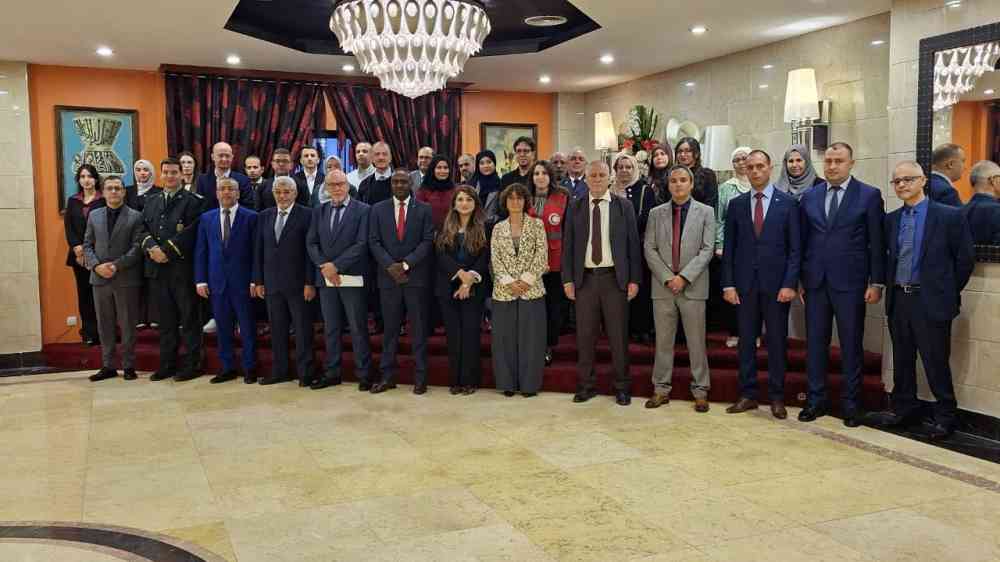
This question was at the heart of Algeria's national launch workshop for the Early Warnings for All (EW4All) initiative, held on 8–9 November 2026 in Algiers, ffollowed by a government-organized field visit scheduled for 10 November
Bringing together national institutions, technical experts, and international partners, the workshop focused on strengthening Algeria's capacity to anticipate, communicate, and respond to multiple hazards, while advancing the global goal of ensuring everyone is protected by early warning systems by 2027.
Addressing an increasingly complex risk landscape
From floods and wildfires to earthquakes, droughts and extreme temperatures, Algeria faces a range of interconnected hazards. Past disasters, including the 2001 Bab El Oued floods, the 2003 Boumerdès earthquake and the severe wildfire seasons of 2021 and 2022, underscore the importance of timely, accessible, and actionable warnings.
Building on Algeria's existing disaster risk management institutions and technical capacities, the workshop provided a platform to examine how national systems can better connect risk knowledge, hazard monitoring, warning communication, and preparedness.
From identifying gaps to defining priorities
Working across the four pillars of Early Warnings for All, participants examined the foundations of effective multi-hazard early warning systems:
- Disaster risk knowledge, led by the United Nations Office for Disaster Risk Reduction (UNDRR).
- Detection, monitoring and forecasting, led by the World Meteorological Organization (WMO).
- Warning dissemination and communication, led by the International Telecommunication Union (ITU).
- Preparedness and response, led by the International Federation of Red Cross and Red Crescent Societies (IFRC).
Using the EW4All Minimum Core Capabilities Checklists, technical working groups assessed existing capacities and identified gaps across the four pillars, providing a structured basis for prioritizing actions according to urgency, feasibility, and their potential to protect lives and livelihoods.
The technical assessment covered disaster risk data and information sharing, hazard monitoring and impact-based forecasting, and public warning dissemination through mechanisms such as the Common Alerting Protocol (CAP), cell broadcast, and location-based SMS. Discussions also examined telecommunications resilience, institutional coordination, and community preparedness, with an emphasis on accessible warnings and inclusive response capabilities.
Building a national roadmap for 2027–2030
A central focus of the workshop was laying the groundwork for Algeria's costed National EW4All Roadmap for 2027–2030.
Furthermore, it aims to validate the gap analysis, agree on national coordination arrangements, and identify priority actions across the four EW4All pillars. These findings are expected to inform an integrated, costed national roadmap, outlining institutional responsibilities, implementation timelines, and resource requirements to strengthen early warning systems from national to local levels.
The proposed roadmap will bring together priorities across all four pillars into a coordinated framework, identifying responsibilities, resource requirements, and immediate, medium-term, and longer-term actions.
The workshop also addressed national coordination arrangements and the importance of engaging civil society, the private sector, and local communities to ensure that early warning systems are inclusive, people-centred, and responsive to different needs.
A government-organized field visit on 10 November was planned to complement the technical discussions by examining early warning, preparedness, and response arrangements in practice.
Turning early warnings into early action
Algeria's national launch process reflects a broader priority of the Early Warnings for All initiative: moving beyond the availability of warning information to ensuring that people and institutions can act on it.
By linking risk knowledge with forecasting, effective communication, and community preparedness, the initiative seeks to support a more coordinated and inclusive approach to disaster risk reduction, where warnings lead to timely action before hazards become disasters.