
Morocco advances national early warning systems to protect communities from natural hazards
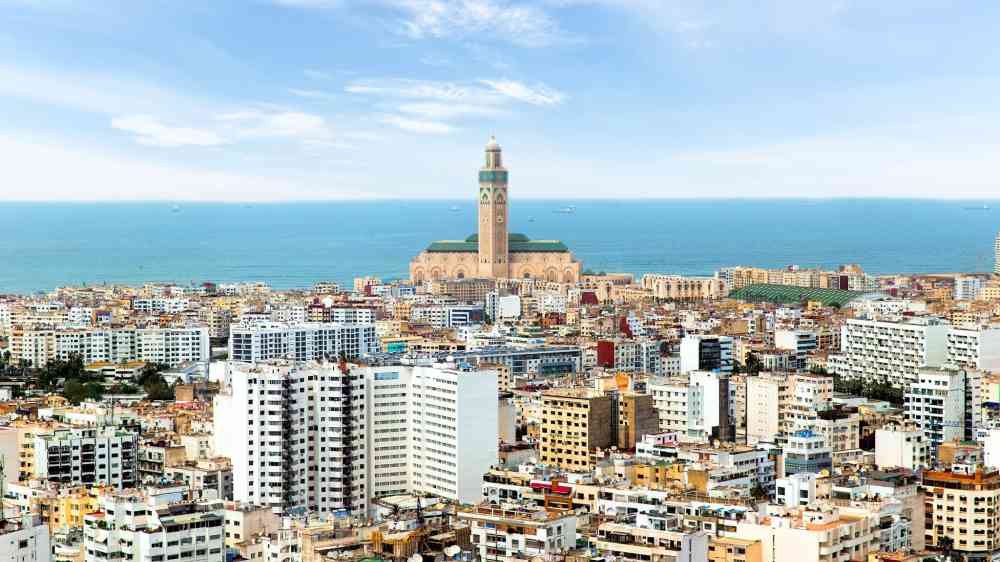
Morocco has taken another significant step towards strengthening its national multi-hazard early warning system, bringing together government institutions, United Nations agencies, technical organizations, academia, civil society and development partners to agree on a national roadmap for the implementation of the Early Warnings for All (EW4All) initiative.
Held in Casablanca, the three-day national consultation marked the culmination of a series of technical consultations launched earlier this year and reaffirmed Morocco's commitment to ensuring that everyone is protected by effective, people-centred early warning systems.
Jointly organized by the Directorate General of Meteorology (DGM) and the Directorate of Natural Risk Management (DGRN), with the support of the United Nations Office for Disaster Risk Reduction (UNDRR), the World Meteorological Organization (WMO), the International Federation of Red Cross and Red Crescent Societies (IFRC) and the International Telecommunication Union (ITU), the consultation brought together experts from across sectors to strengthen national coordination and define priorities for implementation.
From assessment to action
The consultation built on four thematic workshops held in May 2026, which examined each pillar of the Early Warnings for All initiative: risk knowledge, observations and forecasting, warning dissemination and communication, and preparedness and response.
The workshops assessed Morocco's existing capacities, identified priority gaps and developed recommendations to strengthen the country's early warning system for multiple hazards, including floods, droughts, heatwaves, heavy rainfall, cold waves, snowfall and wildfires.
The Casablanca meeting transformed these technical findings into a shared national roadmap and operational action plan, providing a coordinated framework for implementation across institutions.
Strengthening resilience through partnership
Participants emphasized that effective early warning systems rely not only on accurate forecasting but also on strong governance, institutional coordination and timely communication that enables people to act before hazards become disasters.
Discussions focused on strengthening risk knowledge, improving forecasting capacities, enhancing warning dissemination, reinforcing institutional coordination and ensuring that early warning information reaches communities in a timely, accessible and actionable manner.
Cross-cutting priorities, including inclusion, communication, research, youth engagement, capacity development, monitoring and evaluation were also identified as essential elements for building a sustainable and people-centred national early warning system.
In opening remarks delivered on behalf of Sandra Amlang, Chief of the UNDRR Regional Office for Arab States, UNDRR commended Morocco's continued commitment to strengthening disaster resilience and advancing the Early Warnings for All initiative. She said:
"As climate change increases the frequency and intensity of hazards such as floods, droughts, heatwaves and wildfires, strengthening risk knowledge, forecasting, communication and preparedness is essential to protect lives, livelihoods and development gains."
She further emphasized that early warning systems must remain people-centred, inclusive and accessible, ensuring that no one is left behind, particularly those most exposed to disaster and climate risks.
A roadmap for safer and more resilient communities
The consultation concluded with the endorsement of Morocco's national EW4All roadmap and operational action plan, marking an important transition from assessment to implementation. Participants also adopted the Casablanca Declaration, reaffirming their shared commitment to strengthening Morocco's multi-hazard early warning system in line with international standards and the United Nations Secretary-General's vision of ensuring that everyone on Earth is protected by early warning systems by 2027.
As climate-related hazards continue to intensify across the region, Morocco's efforts demonstrate how national leadership, strong partnerships and coordinated action can accelerate progress towards safer, more resilient communities. Through continued investment in risk knowledge, governance, preparedness and early warning systems, the country is helping to ensure that people receive timely warnings, and have the capacity to act before disasters strike.