
Lebanon marks World Tsunami Awareness Day with national workshop on coastal resilience, science, and youth engagement
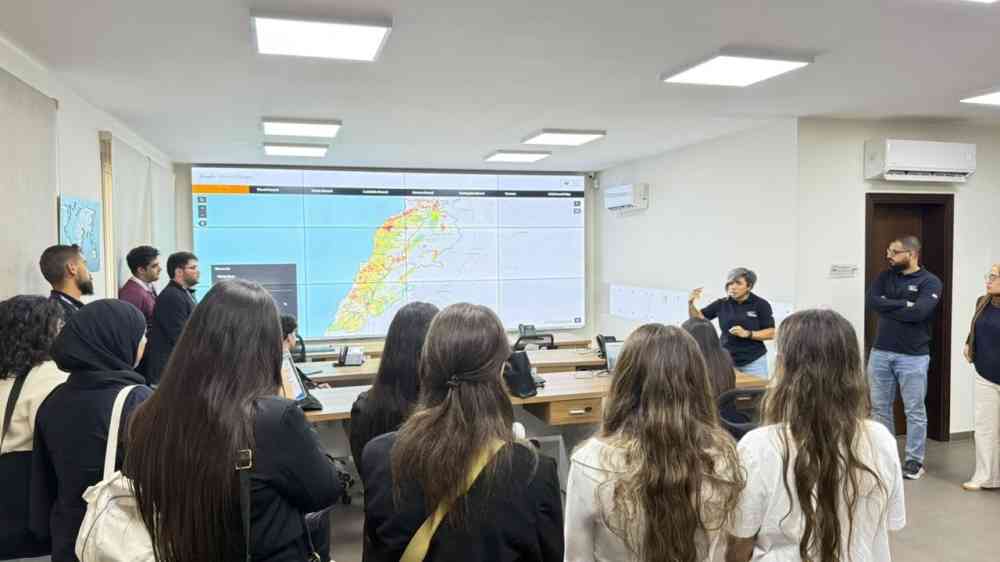
Marking World Tsunami Awareness Day on 5 November 2026, the United Nations Office for Disaster Risk Reduction (UNDRR), through its Regional Office for Arab States, joined national institutions, researchers, academics, and university students in Lebanon for a national workshop focused on strengthening coastal resilience through science, early warning, and youth engagement.
Organized in cooperation with Lebanon's National Council for Scientific Research (CNRS-L) and the National Disaster Risk Management Unit, in partnership with the Arab Science and Technology Advisory Group for Disaster Risk Reduction (Arab STAG), the workshop brought together more than 80 students, accompanied by their professors, from 12 Lebanese universities. Through scientific discussions and an interactive student competition, participants explored how scientific knowledge and early warnings can be translated into practical solutions for disaster preparedness and anticipatory action.
Understanding coastal risks through science
Lebanon's Mediterranean coastline is home to communities, economic activities, critical infrastructure, and essential services. However, coastal areas face multiple and interconnected hazards, including sea-level rise, coastal flooding, extreme weather events, and tsunamis.
The workshop highlighted the importance of understanding coastal risks through an integrated assessment of hazards, exposure, vulnerability, and the capacities of communities and institutions to prepare for and respond to potential impacts.
Discussions explored the contributions of scientific research, geophysical monitoring, remote sensing, hazard mapping, and emerging technologies to strengthening risk knowledge and supporting informed decision-making.
Particular attention was given to Lebanon's national scientific capacities, including the work of the National Council for Scientific Research through its National Center for Geophysics and National Center for Natural Hazards and Early Warning.
Participants examined how scientific data and monitoring systems can inform early warning mechanisms, guide preparedness measures, and support national and local authorities in reducing disaster risks.
From early warning to anticipatory action
A central theme of the workshop was the need to move beyond hazard detection and forecasting to ensure that early warnings translate into timely, coordinated, and inclusive action.
Discussions highlighted the importance of accessible warning communication, clearly defined institutional responsibilities, community preparedness, and the capacity to act before hazards escalate into disasters.
Emphasizing this connection, Rania Hammad, External Relations Officer at UNDRR , stated in her opening remarks:
"The success of an early warning system is measured not only by its ability to predict hazards or issue warnings, but by its ability to translate those warnings into early actions that protect lives and reduce losses."
This message reflected the objectives of the Early Warnings for All initiative and the Sendai Framework for Disaster Risk Reduction 2015–2030, underscoring that effective early warning systems require more than accurate forecasts. They depend equally on whether warnings reach people at risk, are understood, and lead to timely protective action.
Empowering youth through practical solutions
A key highlight of the national workshop was the interactive student competition, "From Early Warning to Early Action," which encouraged participants to apply scientific knowledge to a realistic coastal risk scenario.
Students were presented with a hypothetical situation in which a Lebanese coastal community receives an early warning of potential coastal flooding. Working through the scenario, they explored how warnings could reach all residents, including persons with disabilities and groups at heightened risk, what early measures local authorities could undertake, and how communities could protect schools, hospitals, critical infrastructure, and essential services.
The winning student teams were awarded a site visit to the National Center for Marine Sciences of CNRS-L , offering an opportunity to engage more closely with scientific research and its applications to coastal risk understanding and resilience.
Highlighting the importance of connecting scientific innovation with community needs, Dr. Chadi Abdallah, Secretary-General of Lebanon's National Council for Scientific Research (CNRS-L) , emphasized in his opening remarks:
"What we are looking for today is not only the best technical idea, but the best way to connect science with people, early warning with action, and knowledge with responsibility."
Drawing on perspectives from engineering, environmental sciences, technology, communication, and social sciences, the competition encouraged students to develop practical and innovative approaches to coastal disaster risk reduction.
The participation of students from 12 Lebanese universities demonstrated the potential of youth engagement, interdisciplinary collaboration, and academic innovation to strengthen preparedness and contribute to more resilient communities.
Connecting science, institutions, and communities
Beyond strengthening technical knowledge, the workshop underscored the importance of collaboration among scientific institutions, universities, government authorities, media, and local communities in translating risk information into effective preparedness and anticipatory action.
It provided a platform for connecting scientific expertise with practical disaster risk reduction approaches while encouraging young people to contribute their knowledge, creativity, and perspectives to addressing Lebanon's coastal challenges.
The discussions also reinforced the importance of investing in people and institutions alongside technological advances, recognizing that sustainable resilience depends on scientific understanding, public awareness, institutional coordination, and collective action.
As Lebanon marked World Tsunami Awareness Day, the workshop delivered a powerful reminder: the true value of science lies not only in understanding the risks we face, but in empowering the next generation to turn that knowledge into action that protects lives and shapes a safer future.
Through this national engagement, UNDRR and its partners reaffirmed the importance of strengthening scientific collaboration, empowering young people, and fostering a shared commitment to protecting coastal communities from future disaster risks.