
Egypt hosts World Tsunami Awareness Day 2025 commemoration and Multi-Hazard Resilience Forum
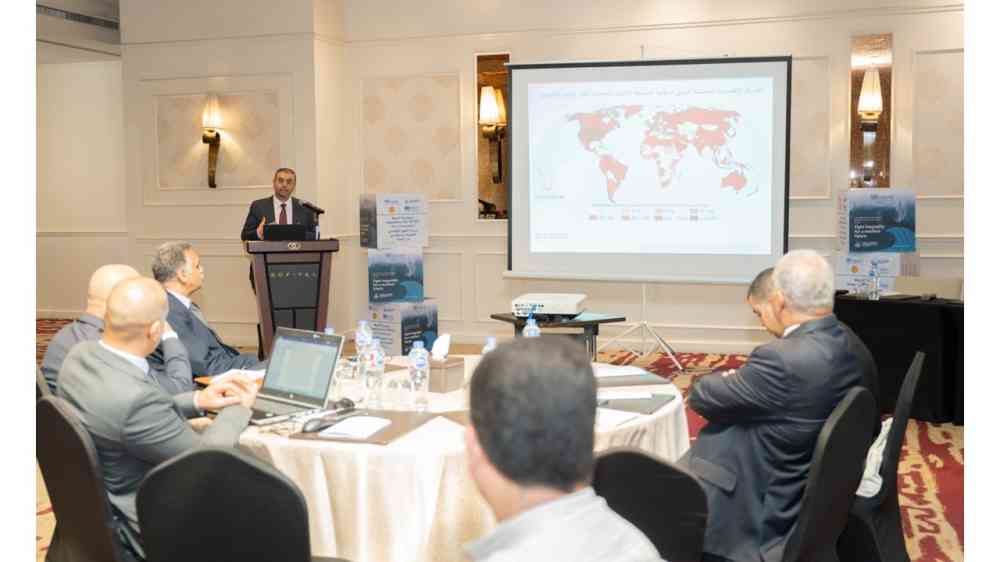
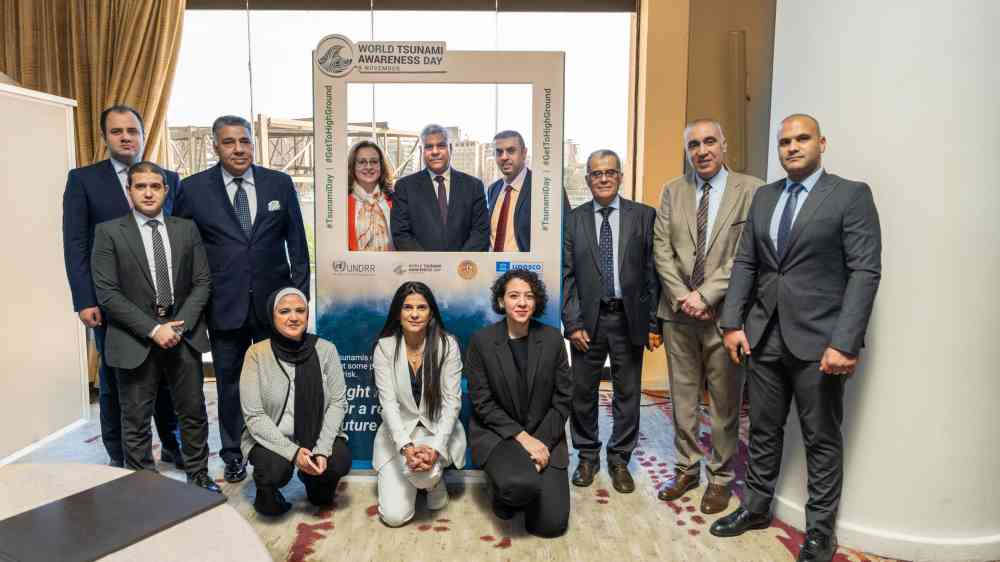
More than 60 representatives from government, UN agencies, donors, and the media unite to advance risk awareness and preparedness.
Cairo, 9 November 2025 – The United Nations Office for Disaster Risk Reduction Regional Office for Arab States (UNDRR ROAS), in collaboration with the Government of Egypt’s National Committee for Crisis and Disaster Management under the Cabinet and UNESCO, successfully commemorated World Tsunami Awareness Day (WTAD) through a Multi-Hazard Resilience Forum held in Cairo under the global theme “Be Tsunami Ready: Invest in Tsunami Preparedness.”
The event brought together over 60 participants, including representatives from government ministries, hydrometeorological and research institutions, academia, United Nations agencies, diplomatic missions, donors, and media outlets. The forum served as a platform to enhance national awareness of tsunami and coastal hazards and to strengthen collaboration on early warning systems, education, and preparedness within Egypt and the wider Arab region.
Advancing multi-hazard preparedness and education
The event opened with remarks from representatives of the Government of Egypt, UNDRR, UNESCO, and the League of Arab States, emphasizing the importance of early warning systems and education in building resilience.
Panel discussions focused on Egypt’s coastal and climate risk landscape, covering tsunami risk, storm surges, sea-level rise, flash floods, extreme heat, and sand and dust storms.
Major Mohammed Abul Maasoud, the representative of the Government of Egypt reaffirmed the country's commitment to advancing risk-informed planning and whole-of-government preparedness, noting that national coordination between hydromet, civil protection, and education authorities is essential for safeguarding communities along Egypt’s coastlines.
From early warning to early action
A key session, titled “From Early Warning to Early Action for Coastal and Climate Hazards,” featured technical contributions from:
- Egyptian Meteorological Authority (EMA) – on multi-hazard early warning and extreme heat management;
- National Institute of Oceanography and Fisheries (NIOF) – on tsunami and coastal monitoring;
- National Research Institute of Astronomy and Geophysics (NRIAG) – on seismic and tsunamigenic risk;
- Egyptian Shore Protection Authority – on coastal defense and inundation risk;
- Ministry of Water Resources and Irrigation – on flash-flood management and data sharing; and
- National Committee for Crisis and Disaster Management under the Cabinet – as lead discussant.
These discussions underscored the need for data-driven preparedness and cross-sectoral collaboration to ensure that risk information translates into early, actionable responses.
Education as the foundation for resilience
The second panel, “Education and Public Awareness for Risk-Smart Communities,” showcased the ongoing UNESCO–UNDRR collaboration to integrate disaster risk reduction into national education systems, aligned with the League of Arab States’ regional roadmap endorsed in Bahrain.
Speakers from the Ministry of Environment, the Ministry of Agriculture and Land Reclamation, Arab Academy for Science, and Technology and Maritime Transport (AASTMT), shared national efforts to promote school safety, teacher training, and community preparedness.
Highlighting the role of education, Raidan Al Saqqaf, Deputy Chief of UNDRR ROAS, stated:
“Building resilience begins in classrooms and communities. The integration of disaster risk reduction into education and public awareness is not just about preparedness, it is about empowering people with the knowledge and tools to protect their lives and livelihoods before disasters strike.”
Media engagement and partnerships
National media representatives attended the forum and contributed to the discussions, emphasizing the importance of risk communication and public awareness in reaching communities at all levels.
The event concluded with a networking session that encouraged partnerships among government, UN agencies, donors, and civil society to advance early warning-to-early action systems and DRR in education.
Cairo Communiqué capturing next steps, including:
- Updating the national DRR-in-Education Action Plan aligned with the LAS roadmap;
- Designing pilot school drills and CAP-aligned risk messages; and
- Mobilizing donor engagement for technical and financial support to enhance coastal and climate resilience.
- A Regional Model for Multi-Hazard Awareness
The Cairo commemoration of WTAD 2025 highlighted Egypt’s leadership in advancing multi-hazard resilience and disaster preparedness in the Arab region. The forum demonstrated how collaboration among government, academia, the private sector, and the media can accelerate progress toward achieving the Sendai Framework for Disaster Risk Reduction (2015–2030) and the Early Warnings for All initiative.
About World Tsunami Awareness Day
Established by the UN General Assembly in 2015, World Tsunami Awareness Day promotes understanding of tsunami risk and supports the global call to invest in prevention and preparedness. The 2025 theme: “Be Tsunami Ready: Invest in Tsunami Preparedness” emphasized the shared responsibility of governments, partners, and communities to build a safer, more resilient world.