
São Tomé’s Água Grande District advances local disaster resilience
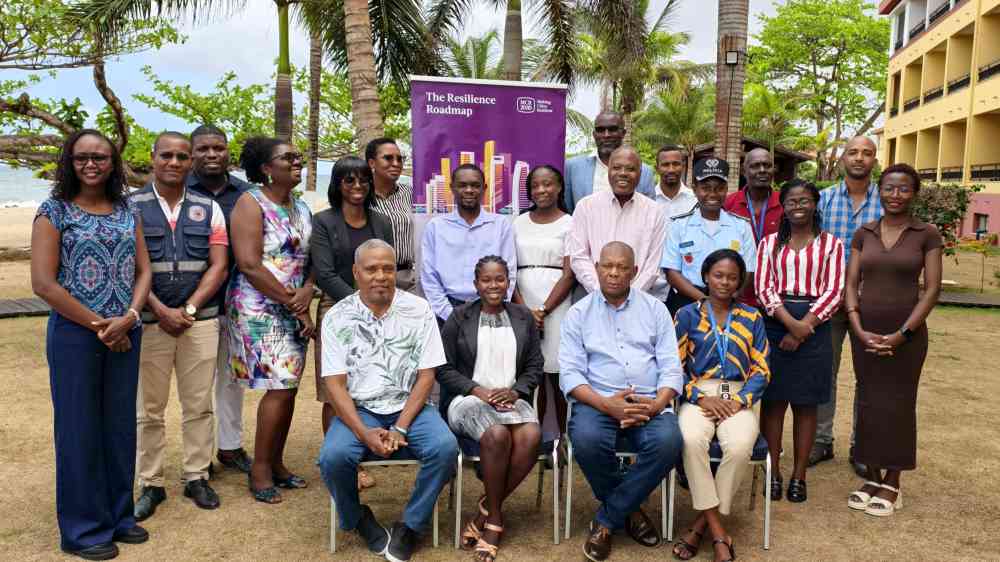
Participants of the assessment on Risk-Informed Urban Planning and Making Cities Resilient.
How exposed to disasters is Água Grande -- the district that holds São Tomé's capital -- and what would it take to change that for the better? That was the question that convened more than 20 representatives over three days in São Tomé, from 7 to 9 September 2026, for an assessment on Risk-Informed Urban Planning and Making Cities Resilient. The event was organised by the District of Água Grande in collaboration with the United Nations Office for Disaster Risk Reduction (UNDRR). Representatives came from a wide variety of stakeholder groups, including national and local government, civil protection and meteorological services, the health and tourism sectors, gender and disability organizations, civil society, and UN partner agencies.
São Tomé and Príncipe (STP) is particularly exposed to coastal and flash floods, hail, lightning and severe storms. Coastal communities are already among the country's most at risk, threatened by sea-level rise, flash flooding, droughts - with recent drought trends steadily eating into harvests. Given the country’s small size and economic vulnerability, a severe event can have impacts across multiple sectors of the economy - precisely why district-level conversations about resilience are vital.
The assessment was made possible through support from Portuguese Cooperation under the project “Enhancing Risk Information for Impact-Based Early Warnings and Resilience Building in SIDS”, implemented as part of UNDRR’s support to São Tomé and Príncipe under the Early Warnings for All (EW4All) initiative. The project aims to strengthen the use of risk information for early warning, early action and resilience-building, while improving connections between national and local action. In Água Grande, this support is being translated into local resilience planning through the Making Cities Resilient 2030 (MCR2030) initiative and its suite of resilience-building tools.
UNDRR has previously supported STP with a national risk assessment, a review of risk-sensitive public investment, and the development of an EW4All roadmap to establish inclusive and participative early warning systems. The assessment in Água Grande builds on this previous work at the local level.
From risk assessment to a shared picture of resilience
Participants worked through the full arc of what it takes to make a city resilient. Using the Disaster Resilience Scorecard for Cities , a MCR2030 diagnostic tool built around Ten Essentials for Making Cities Resilient . The participants scored Água Grande against each essential and, in plenary, agreed on priority gaps to address. The value of the exercise went beyond generating scores. It created a common evidence base around which different institutions could examine how risk is understood, governed and addressed, and where stronger action is needed.
The exercise engaged officials for whom disaster risk has previously sat outside of their day-to-day roles. The variety of sectors represented, which included tourism, health, natural resources, meteorology, gender equality, and police, reflects the necessary emphasis on treating urban resilience as a shared responsibility. This wide participation helped to shift the conversation from disaster response toward a broader understanding of resilience; one that connects risk knowledge to planning, investment, infrastructure, preparedness, inclusion and service delivery. For Água Grande, that shared understanding will provide the foundation for the next stage: turning agreed-upon gaps into practical priorities for local action.
"The knowledge I gained here is something I want to take directly into the communities. I want to use it to organize better preparedness actions and help people become more ready for disasters."
- Carlos Mendes Dias, of the National Council of Disaster Prevention and Response Platform (CONPREC)
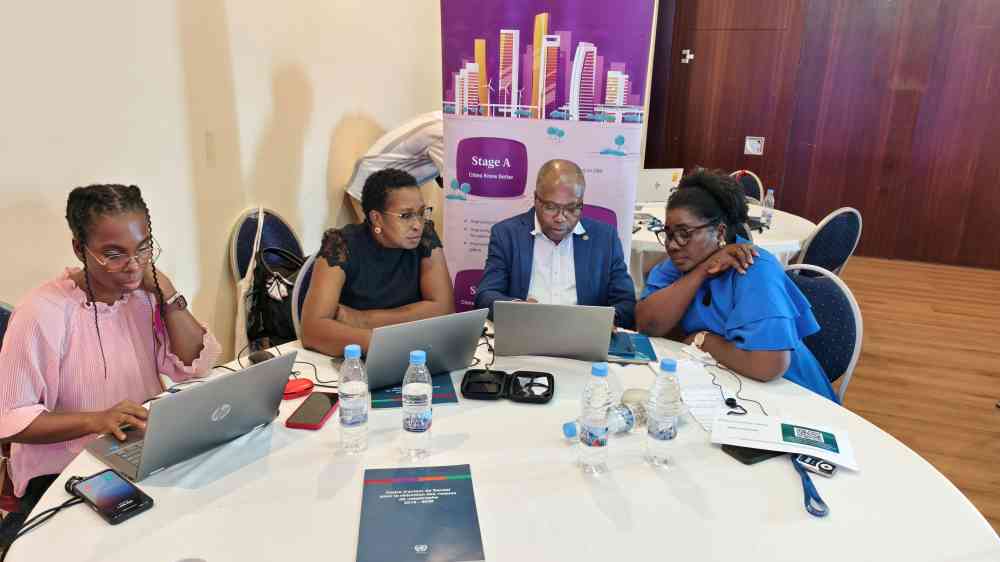
Participants score Água Grande's resilience during a group exercise using the Disaster Resilience Scorecard for Cities
Risk becomes everyone's business
One of the clearest messages from the assessment was that disaster risk is not confined to the institutions traditionally responsible for disaster management.
For Adilson da Graça, Director for Tourism Development at the Directorate-General of Tourism and Hospitality, the discussions highlighted a connection between disaster risk and tourism planning that had not previously been reflected in his sector’s work. Tourism, one of São Tomé's key economic sectors, is particularly exposed to flooding and coastal erosion, he said, yet the country's current tourism development plan does not address disaster risk at all.
“For us, the first point that would be a big help for tourism is the early warning system, knowing which areas are most vulnerable to hazards would help guide future tourism investment. This workshop helped me understand how tourism development and disaster risk really are tied together. I want to bring what I learned into the next update of the tourism plan, especially around how we mobilize the private sector's resources for risk reduction."
- Adilson da Graça, Director for Tourism Development at the Directorate-General of Tourism and Hospitality
Deodato Xavier Dias da Costa Neto, of the Ministry of Health, said the workshop left him focused on getting decisionmakers to take ownership of disaster risk reduction in his sector, and on “the need for institutional coordination with local authorities.” His ask going forward was specific: a proper “district plan for disaster risk reduction,” backed by “adequate infrastructure, materials and sectoral financing,” and critically one that gets followed through, with real “implementation, follow-up, and reassessment of results.”
Building blocks for a strategy
By the last day, participants had moved from diagnosis to drafting. They developed a vision and mission statements for a local disaster risk reduction strategy, set draft objectives against the Sendai Framework's four priority areas, and gave input on the composition and reporting lines of a proposed coordination mechanism for disaster risk management in the district. Rather than treating the Scorecard as an end, participants used the findings to begin defining what a more resilient Água Grande should look like, what the strategy should seek to achieve, and how institutions could work together to deliver it.
The scorecard results and the draft strategy elements developed in Água Grande are a starting point, not a finished plan. Local authorities are now expected to carry that work forward into a full disaster risk reduction strategy and action plan, formalize the coordination mechanism discussed during the workshop, and continue building the city's engagement with the MCR2030 initiative.