
The impact of El Niño will be shaped by what we decide today
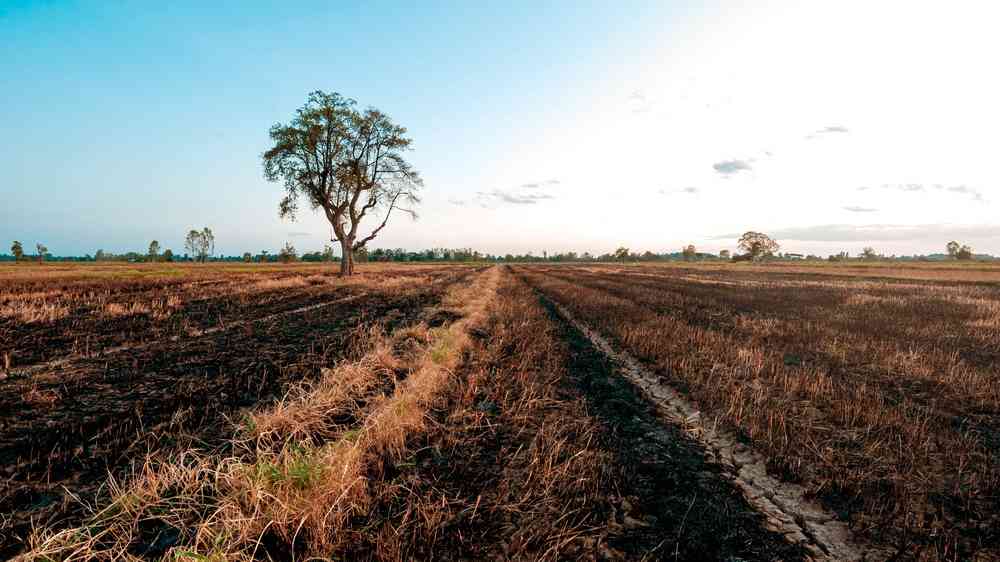
El Niño is no longer a forecast. In early July, the World Meteorological Organization confirmed that the phenomenon has already set in over the Pacific and is very likely to strengthen rapidly in the coming months, becoming an intense event towards the end of the year. For Latin America and the Caribbean, however, the announcement catches no one unprepared. The region has been hit by El Niño many times, has learned from each episode, and still has the chance to prove it as the 2026-2027 event unfolds.
A look back is enough to understand what is at stake, bearing in mind that El Niño's effects can be opposite across the region and even between areas of the same country, drying out one and flooding another. Barely two years ago, the 2023-2024 El Niño left a deep mark: the Central American Dry Corridor, Bolivia and Colombia endured prolonged droughts, while the coasts of Ecuador and Peru were inundated by torrential rains. In the Amazon, the Rio Negro fell to its lowest level on record. And the Panama Canal, one of the arteries of global trade, had to restrict vessel transits for lack of water for more than a year: the limits began in July 2023, brought daily transits down from 36 to 22 by November of that year, and were only fully lifted in September 2024.
But El Niño does not always have the same impact, and its cost depends as much on its intensity as on how prepared it finds us. The 1997-1998 event is associated with more than 1,200 deaths in the region, according to the international disaster database EM-DAT, caused mainly by the floods and landslides triggered by extreme rainfall in the Andean countries. The 2014-2016 event, better anticipated and with more and better warning systems in place, cut that figure drastically despite affecting hundreds of thousands of people. The lesson repeats itself in every cycle: when risk is read in time, lives are saved and economies are protected.
Preparedness, then, should not be understood as an expense, but as the investment that allows life, production and essential services to carry on when the climate turns adverse.
The time that today's forecasts provide must be used well, and it all begins with turning information into decisions. The region's meteorological services have already anticipated, months in advance, where water will be scarce and where rainfall will be excessive. The challenge is that these data do not remain in reports and technical bulletins, but are shared across institutions, inform decision-making processes and reach the most exposed communities in the form of early warnings. That is where much of the difference between knowing and acting lies.
With that information on the table, the priority is to protect what El Niño hits first: water and food. Close to 85% of the losses associated with the phenomenon are concentrated in agriculture, and its effect on food security reaches millions of people. Managing reservoirs ahead of the drought, securing irrigation, storing water and food, distributing resilient seeds or protecting livestock are measures that cost a fraction of what responding will cost once the emergency breaks out.
The region already offers examples of this approach in motion. Faced with the first drought forecasts, the World Food Programme activated an anticipatory action plan worth 3.8 million dollars in Honduras, Guatemala and El Salvador, with cash transfers, delivery of basic grains and weather monitoring so that more than 75,000 people can prepare before scarcity sets in. In parallel, the Food and Agriculture Organization of the United Nations (FAO) is supporting smallholder farmers in the Dry Corridor with short-cycle seeds, water harvesting systems and livestock protection, while countries such as Ecuador and Chile have developed national plans to manage the phenomenon from start to finish.
That same principle of acting ahead must extend to the infrastructure we all depend on. When a road, a dam or a port shuts down because of a drought or a flood, the damage does not stop there: it travels through supply chains and ends up raising the price of food and basic goods, with sharper effects on those who have the least. Reinforcing and maintaining these works before the event, and planning how they will operate under extreme conditions, is what keeps essential services standing. The Panama Canal, which began saving water in 2025 in response to the El Niño alert in order to sustain its operations through the drought, offers a close example of that anticipation.
That way of working delivers most when it centres on the people and communities facing the greatest risks. Combining climate forecasts with vulnerability and exposure data makes it possible to identify where support is most needed, and that matters because impacts are always felt locally. Local governments, communities and frontline organizations need timely information, technical support and flexible resources. Strengthening those capacities before impacts hit makes an enormous difference in reducing losses, protecting livelihoods and speeding up recovery.
"Every day we devote to preparing reduces the impacts we will have to face, but none of this is achieved in isolation: it requires collective action, with communities at the centre and with information that reaches those on the front line," says Nahuel Arenas, Chief of the UNDRR Regional Office for the Americas and the Caribbean.
None of this holds, however, as long as prevention remains the first thing sacrificed when resources are scarce. Integrating climate risk into fiscal and sectoral planning, and diversifying sources of financing, is what makes it possible to anticipate in a permanent and sustained way, rather than adopting a response-driven approach event after event. That is where the underlying challenge lies: the region still devotes more resources to responding to disasters than to preventing them, and many of the vulnerabilities we have known and quantified for decades remain unresolved.
El Niño is already here, and once again we saw it coming well in advance. Turning that advantage into lives protected and economies kept safe depends on decisions that can be taken today: strengthening early warning systems and moving, through initiatives such as Early Warnings for All (EW4All), which UNDRR promotes in the region together with WMO, towards the day when no one is left outside their coverage. Of all the decisions a region can take in the face of a known risk, preparing remains, always, the most cost-effective.