
Grenada advances Multi-Hazard Early Warning Systems through first national consultative workshop
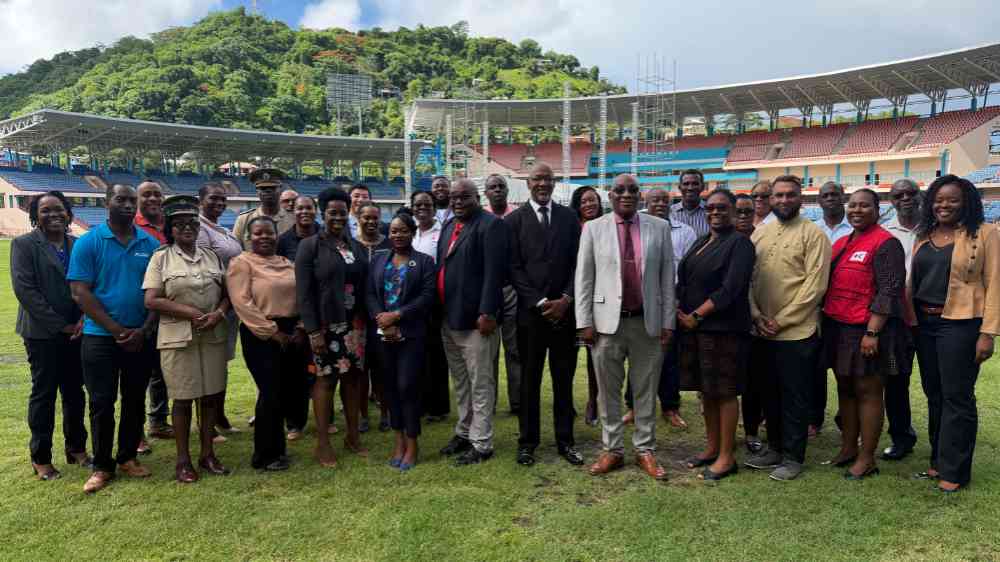
St. George's, Grenada | 8 July 2026 – More than 40 representatives from government ministries, academia, the private sector, civil society, emergency services and technical agencies gathered in Grenada from 7–8 July 2026 for the country's First National Consultative Workshop on Multi-Hazard Early Warning Systems (MHEWS).
The two-day workshop marks a significant milestone in Grenada's efforts to strengthen disaster resilience through a coordinated, people-centred and inclusive approach to early warning systems. The initiative is being implemented with support from the European Union Caribbean Resilient Programme and the Climate Risk and Early Warning Systems (CREWS) Initiative, in collaboration with the United Nations Office for Disaster Risk Reduction (UNDRR), the World Meteorological Organization (WMO), the International Telecommunication Union (ITU), the International Federation of Red Cross and Red Crescent Societies (IFRC) and key partners under the Early Warnings for All (EW4All) initiative.
The workshop brought together stakeholders from across multiple sectors to assess the current state of Grenada's Multi-Hazard Early Warning Systems, identify existing gaps, and begin shaping a nationally owned roadmap for strengthening risk knowledge, monitoring and forecasting, dissemination and communication, and preparedness and response capacities.
Opening the workshop, Dr. Terence Walters, Director of the National Disaster Management Agency (NaDMA), underscored the importance of active participation from all stakeholders throughout the consultation process.
"Disaster risk reduction cannot be achieved by one institution alone," Dr. Walters noted. "It requires a whole-of-government and whole-of-society approach, where every stakeholder has a role to play in reducing risk and strengthening resilience."
He further highlighted that the workshop comes at a pivotal moment for Grenada as the country advances efforts to transition the National Disaster Management Agency into a statutory authority. This institutional transformation, he explained, presents an important opportunity to further strengthen national disaster risk governance while embedding Multi-Hazard Early Warning Systems as a core component of national resilience.
Delivering the feature address, the Honourable Dennis Cornwall, Minister of Finance and Acting Prime Minister, expressed the sincere appreciation of the Government and people of Grenada to the European Union, the CREWS Initiative and the United Nations partners and EW4All pillar leaders—UNDRR, WMO, ITU and IFRC—for selecting Grenada as one of the programme's countries of focus. This effort is being carried with funding from the EU-Caribbean Resilience Programme (EU-CARES) and the Climate Risk and Early Warning Systems initiative (CREWS).
The Acting Prime Minister emphasized that disaster risk management must continue to evolve in response to an increasingly complex and interconnected risk landscape.
He emphasized that while hydro-meteorological hazards continue to pose significant threats to our islands, we must also broaden our understanding of risk, he stated. He added that cybersecurity threats, biological hazards and other non-natural hazards have the potential to disrupt our economy, our institutions and our communities. Our early warning systems must therefore evolve to address this wider spectrum of risks.
Reflecting on the devastating impacts of Hurricanes Ivan, Emily and, more recently, Beryl, Minister Cornwall noted that these events serve as enduring reminders of the importance of investing in preparedness and resilience before disasters occur.
He stressed that Multi-Hazard Early Warning Systems are not static mechanisms but dynamic systems that require continuous improvement, sustained investment and collaboration across sectors. Building effective early warning systems, he said, depends on strong partnerships among governments, technical agencies, communities, the private sector and development partners to ensure that no one is left behind.
Throughout the workshop, participants engaged in interactive discussions examining Grenada's existing capacities and identifying priority actions needed to strengthen the country's Multi-Hazard Early Warning Systems. Discussions focused on governance and institutional coordination, risk information and data management, forecasting capabilities, warning dissemination, community preparedness and ensuring that early warning systems are inclusive and accessible to all segments of society.
The outcomes of the consultation will contribute to the development of Grenada's national MHEWS Gap Analysis and Implementation Roadmap, providing a strategic framework to guide future investments and coordinated action towards achieving the goals of the Early Warnings for All initiative.
By bringing together expertise from across government, academia, the private sector, humanitarian organizations and technical institutions, the workshop reaffirmed Grenada's commitment to building resilient communities through integrated and inclusive early warning systems capable of protecting lives, livelihoods and sustainable development in an increasingly complex risk environment.