
Tajikistan to establish framework for Disaster Risk Information Exchange
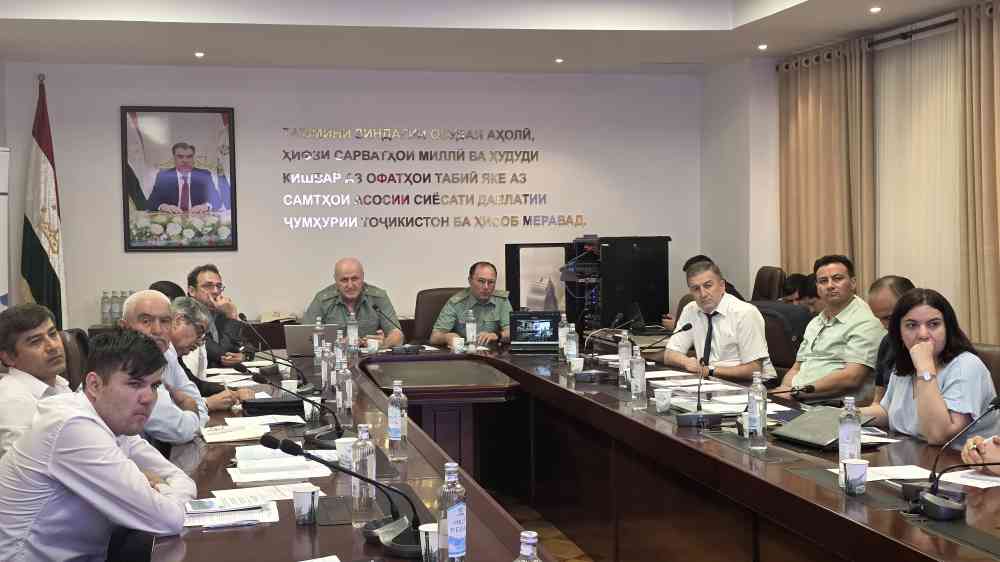
Dushanbe – On 22 June 2026, a Consultative Meeting on Disaster Risk Information Exchange convened in Dushanbe, bringing together national specialists and international experts dedicated to disaster risk reduction and the enhancement of multi-hazard early warning systems.
The technical sessions focused heavily on reviewing current disaster risk assessment practices in Tajikistan. Experts analyzed existing operational methodologies, identifying critical challenges related to the fragmentation of data and the historical lack of standardized data exchange protocols across various agencies. The consultation directly addressed these technical barriers, aiming to transform scattered analytical resources into a shared, coordinated knowledge ecosystem where safety and climate resilience are managed as a collective responsibility.
A primary output of the technical workshop was developing the framework for a mutually beneficial mechanism of interaction to regulate the continuous exchange of both foundational analytical data – such as hazard maps, historical statistics, and vulnerability assessment methodologies – and real-time operational data required for immediate emergency response. To formalize this process, participants initiated drawing up a comprehensive standardization protocol and outlining the main technical features of the data-sharing mechanism.
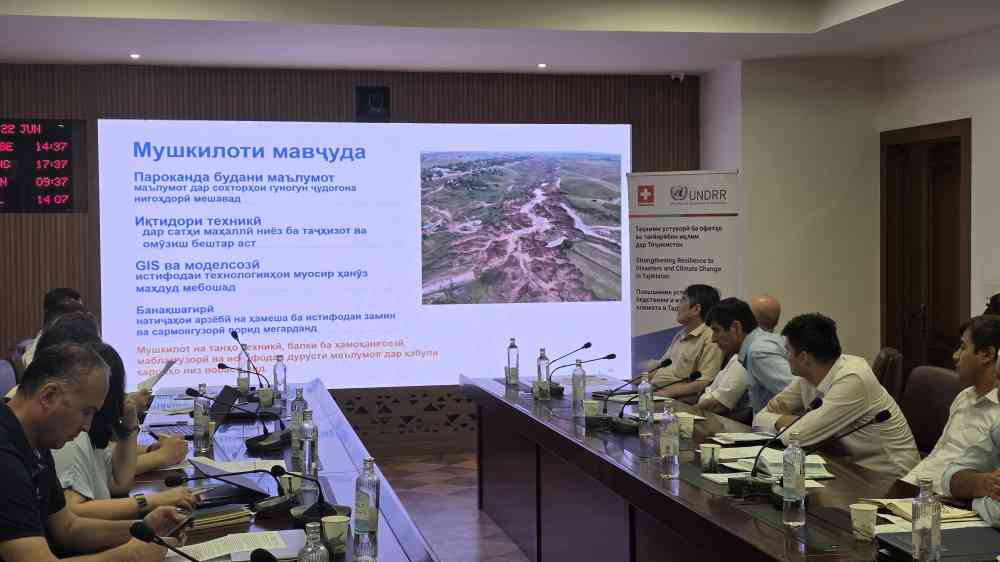
Specialists agreed that this integration will be anchored upon successful instruments already operational in Tajikistan, including established Open Centers for Spatial Data Infrastructure. Transitioning from isolated, post-disaster reporting to continuous, end-to-end monitoring of multi-hazard threats – such as seismic, climate, and avalanche risks – will allow all technical entities to rely on a single source of verified information for precise risk mapping and data-driven decision-making.
A critical outcome of integrating long-term risk modeling with real-time operational data exchange will be the qualitative upgrade of Tajikistan’s national Early Warning System. By combining multi-agency data, technical teams can modernize predictive algorithms, increase the accuracy of preventive alerts, and effectively secure last-mile communication reliability.
The system-wide benefits of this newly established mechanism are clear across sectors: government technical structures gain access to advanced analytical tools for precise strategic planning; international agencies can target development assistance in strict alignment with actual national priorities; and academia ensures the practical, field-level application of its scientific research.
The consultation concluded with a coordinated approach aiming at further digitalization through a centralized information portal. This consolidated framework will significantly strengthen collaboration among partners, eliminate duplication of functions, and lay a robust foundation for protecting the population and critical infrastructure of the Republic of Tajikistan against catastrophic threats.
The consultative meeting was organized by CoES and supported by the joint UNDRR and Government of Switzerland project “Strengthening Resilience to Disasters and Climate Change in Tajikistan”. Within the framework of this project, UNDRR continues to provide targeted support to Tajikistan in capacity building for risk governance, active stakeholder engagement, and improving risk knowledge management and data collection to enhance national capabilities.