
Eleven lessons in risk governance from the Panama Canal
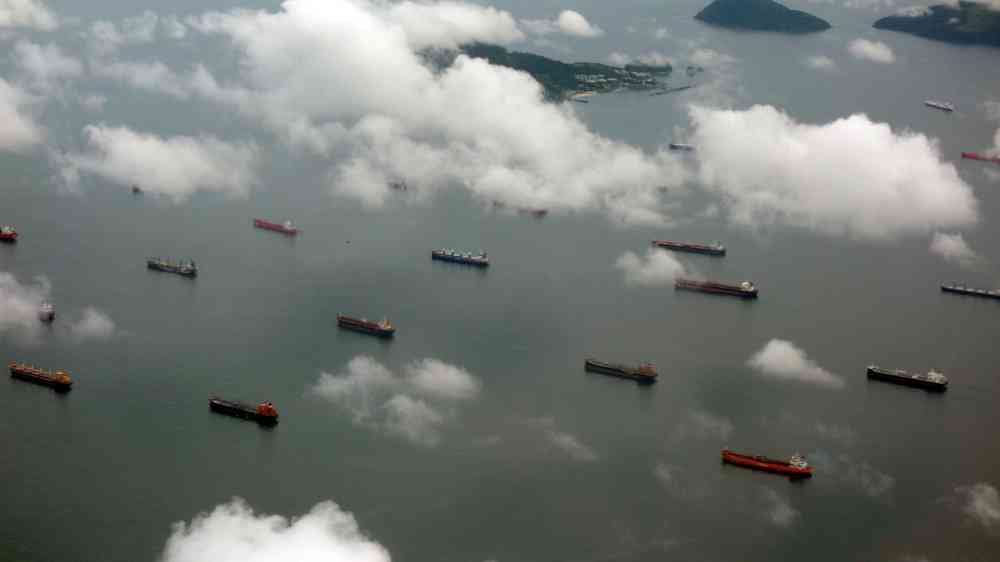
Earlier this month, I visited the Panama Canal to see this marvelous feat of human ingenuity for myself, to hear how the Canal authorities are preparing for the coming El Niño, and to discuss their broader strategy for climate and disaster risks.
The Canal has been playing a critical role in the global supply chain for more than a century, and currently serves up to 6% of global maritime trade. Its operations depend on freshwater from Gatún and Alajuela Lakes, so any variation in water availability has a big impact, and drought years – typical under El Niño conditions – present a major challenge.
The newly appointed Panama Canal Authority Administrator Iliya Marotta and her colleagues – Victor Vial (VP of Finance), Luis Rovira (VP of Water Resources Management and Miguel Lorenzo (VP of Engineering) – gave generously of their time, explaining that the Authority has learned from its many experiences of extreme events that risk management is a continuous process – not a one-time or intermittent exercise, but an integral part of day-to-day operations.
I gleaned many valuable lessons that can be applied to any infrastructure system, and to reducing disaster risks in other sectors:
1. Risk is systemic and dynamic, and must be managed as such
The Panama Canal is more than just a physical asset, with sophisticated hydraulics and navigation: it is a complex system of systems that illustrates how closely water security and infrastructure security are linked.
The freshwater lakes that service the Canal’s locks also provide drinking water to human settlements near the canal. In drier than normal years, excessive use of fresh water in the canal can cause salinity ingress and severely damage local ecosystems.
While El Niño related seasonal outlooks can give probabilistic rainfall forecasts for the upcoming season as a whole, antecedent conditions – such as the level of the lakes at the end of the previous season – and short bursts of intense rainfall, even during an otherwise deficient season, can change the scenario dramatically. Risk must therefore be assessed iteratively – every two weeks – and across the system, and for this the Canal has a dedicated team of meteorologists, hydrologists, and hydraulics engineers.
But it doesn't stop here. There is also considerable financial risk associated with any temporary reduction in the capacity of the canal. The shipping companies need to be informed at least two weeks (if not one month) in advance to be able to manage their own operational risks, requiring continuous dialogue and transparent information sharing between all stakeholders.
The severity of the 2023–24 drought – discussed in more detail below – illustrates this systemic risk: it resulted in revenue losses of more than US$500 million during the 2024 financial year from drought-related restrictions, demonstrating how hydrological risk rapidly translates into financial risk.
2. Abnormal is now the new normal
While my discussion with the Canal authorities was in the context of the forecasted 2026-27 El Niño, they noted that “abnormal” conditions manifest every few years. The 1997-98 El Niño, the droughts of 2009 and 2024, the 2020-2022 pandemic, and numerous disruptions on the world’s other shipping routes have all presented challenges.
The drought of 2023–24 was widely described by Canal authorities as unprecedented in their modern operational history, reducing transit capacity by roughly one-third, increasing waiting times, and forcing some shipping companies to reroute vessels– with considerably greater cost and transit times – through the Suez Canal, around Cape Horn, or around the Cape of Good Hope.
Similarly, disruption of other shipping channels such as Suez Canal and Hormuz Strait places additional demands on the Panama Canal.
Administrators of large infrastructure systems need to continuously identify and evaluate all emerging risks, generate plausible worst-case scenarios, and implement appropriate measures. Managing risk – catastrophic risk as well as everyday risk – must be an integral part of the regular operation of any large infrastructure system.
3. Local communities are key stakeholders in large infrastructure systems
Communities that live in the watersheds around the Panama Canal are the custodians of natural ecosystems, such as forests and natural water bodies. Investing in their sustainable livelihoods is an investment in the long-term sustainability of the Canal itself.
The Panama Canal Authority has been supporting these communities in diversifying their livelihoods and developing a market value chain for local produce, such as coffee. When these communities have sustainable livelihoods, they are motivated to play a more active role in protecting the natural ecosystems in the watersheds, contributing to the sustainability of the feeder lakes, and ultimately to more resilient operation of the Canal itself.
The stakes are high: the Canal watershed supplies approximately 95% of the drinking water for Panama City, Colón, San Miguelito and surrounding urban areas – serving more than than half of the country’s population – making it an essential public utility as well as a shipping asset.
4. There is no substitute to local knowledge
When large vessels arrive to transit the Panama Canal, they are handed over to the Canal’s own local pilots.
Local pilots have intimate knowledge of different segments of the Canal and the unique challenges of navigating through a system of locks and channels spanning approximately 82km. This local expertise has played a large part in the Panama Canal’s impressive record of avoiding any incidents of major disruption or damage to vessels.
5. Institutional culture is pivotal
The Panama Canal Authority leadership emphasized that even their most sophisticated risk management strategies mean little without an institutional culture that drives tangible action.
Across all functions and levels of decision-making, everyone needs to be alert to emerging risks, take preemptive action based on forecasts and foresight, and respond effectively at every level, and in a coordinated way.
This kind of adaptive culture has shown its value across several major crises – such the 1997–98 El Niño, the 2020–22 pandemic, and the 2023–24 drought – as operations have been able to continue without prolonged shutdowns.
6. The subsidiarity principle applies to complex infrastructure systems
A defining feature of risk governance for the Panama Canal is that decisions are made at the most local level possible. The Panama Canal Authority is itself an autonomous institution, and within its hierarchies, personnel are empowered to make risk management decisions without escalating them unnecessarily.
In a sense, everyone owns the risks at their level. This empowers all staff and reinforces an institutional culture of proactive disaster risk governance.
7. Listen to your customers
When Canal capacity is reduced, the Panama Canal Authority applies market-based instruments to prioritize which ships can transit the canal, with every effort to ensure the system is fair and transparent. They maintain continuous engagement with their customers, seeking feedback and correcting any anomalies as they arise.
When the 2023–24 drought restrictions reduced daily vessel passages, creating significant queues, this approach allowed causing shipping companies to make informed decisions to alter their routes accordingly.
8. Climate services are operational assets, not only scientific products
During the 2023–24 drought, the Canal’s operations relied on continuous monitoring of lake levels, rainfall, watershed conditions and seasonal climate forecasts to make progressive adjustments to vessel traffic.
By integrating climate information directly into operational decisions, customer advisories and risk management processes – rather than treating forecasts solely as scientific inputs – the Panama Canal Authority has built one of the world's clearest examples of climate-informed infrastructure management.
9. Multidisciplinary governance leads to better decisions and risk management
The Canal’s governing board draws on the expertise of people from multiple disciplines – shipping, finance, engineering and trade.
This breadth of perspective improves the quality of risk governance decisions and minimizes risk blind spots.
10. Infrastructure systems must adapt and upgrade to manage emerging risks
The Panama Canal has been in operation for more than a century. Over that period the requirements of the shipping sector have burgeoned, as has our understanding of risks. This means that the infrastructure system needs to be upgraded periodically – with additional channels, overland logistics corridors, and phased seismic strengthening.
The most visible investment in modernization has been the US$5.25 billion Canal Expansion Project completed in 2016, introducing a third set of locks to accommodate much larger vessels.
More recently, recurring droughts have prompted consideration of additional reservoirs and water-management infrastructure to secure future operations under a changing climate.
11. Invest in your people over the long-term
More than 9,000 people – most of them Panamanians – work at the Canal across engineering, operations, environmental management, navigation, logistics, finance and administration.
Maintaining an infrastructure system of such complexity requires decades of accumulated institutional knowledge and systematic investment in human capital. The Canal Authority systematically invests in human resources, preparing a cadre of local experts with the knowledge, skills, and international exposure to operate the Canal in decades to come, even as traffic increases, risks evolve, and new challenges emerge.
These lessons extend well beyond the Panama Canal
Many countries manage critical infrastructure facing comparable climate risks and uncertainty.
Resilience is ultimately a property of networks and systems, not of fixed assets. The experiences of the Panama Canal offer an instructive example of this wider principle.
The Canal succeeds because engineering, ecosystems, communities, institutions, markets, and people operate as an interconnected system – and that is an example worth following.
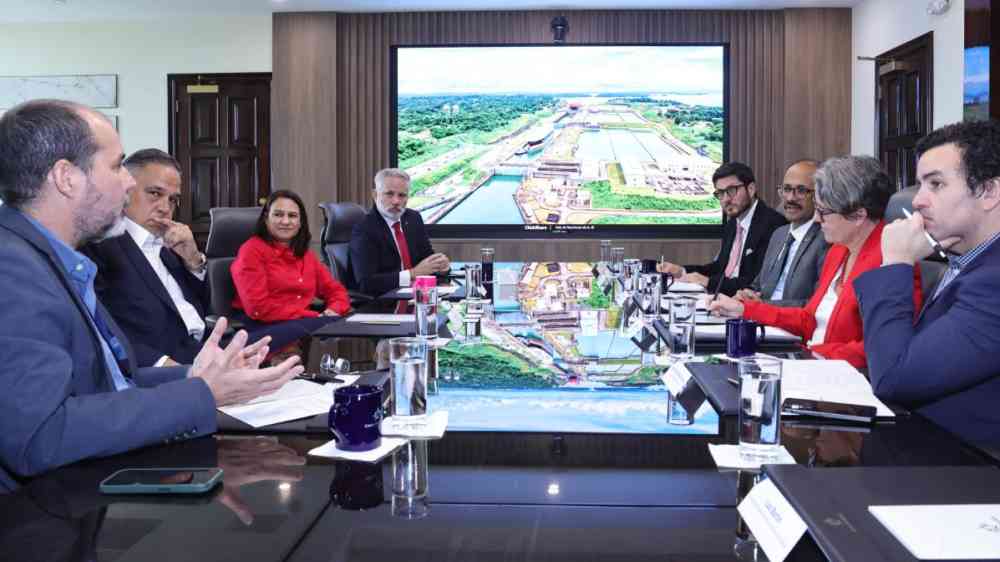
Meeting with the Panama Canal Authority leadership