Risk & Resilience Framework

A new generation of risk analytics to inform the shift from risk to resilience
The world is becoming more volatile. Floods, droughts, storms and other hazards are affecting economies and societies with growing frequency and complexity. Governments and communities, but also businesses and financial institutions, are waking up to this reality.
Advances in probabilistic risk modelling, open datasets and digital technologies are now making it possible—for the first time—to translate the science of disaster risk into clear, actionable intelligence at scale, across all countries and all income levels.
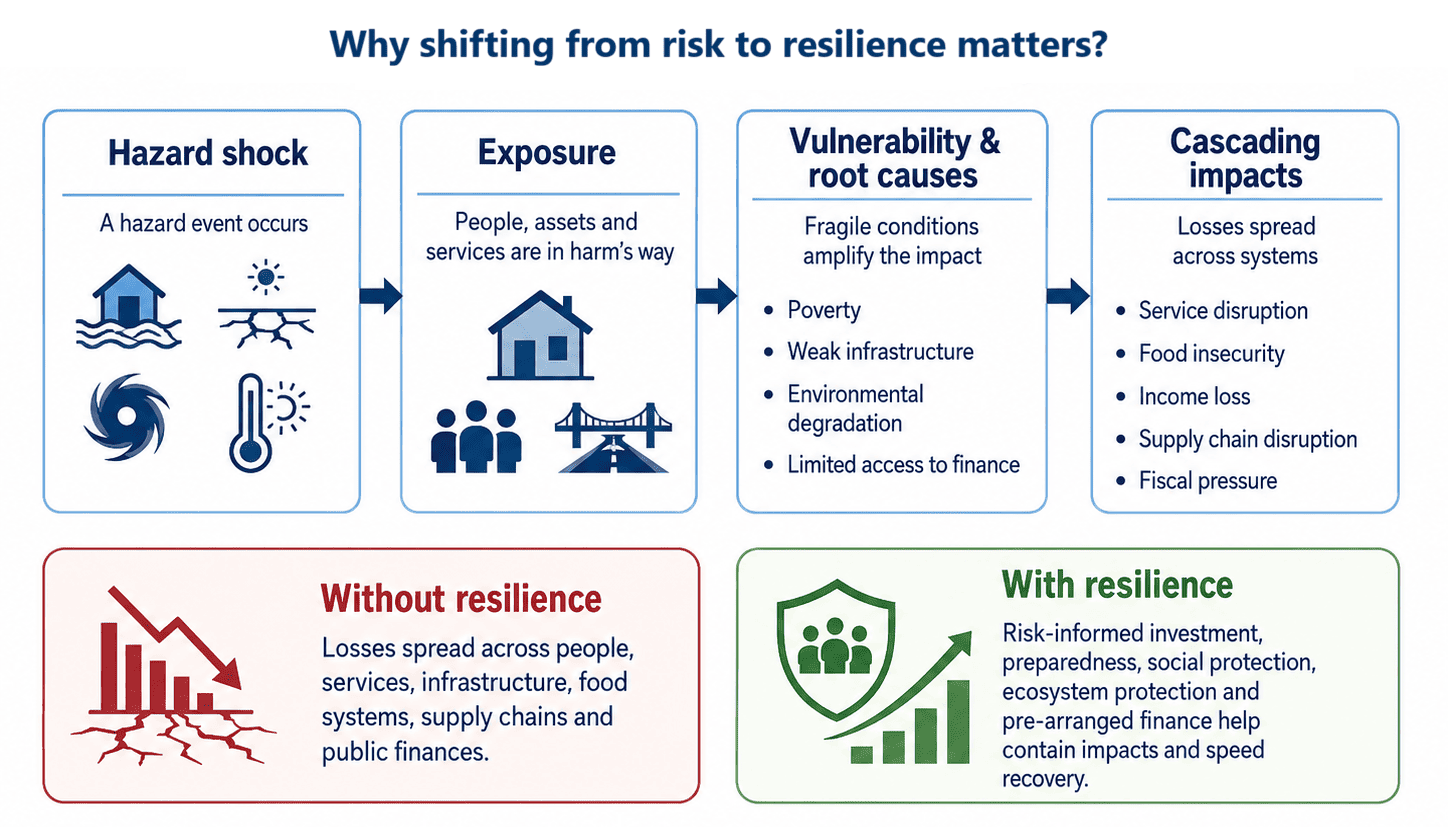
But there is a persistent gap between understanding risk and acting on it.
The Risk to Resilience Metrics initiative is closing the resilience gap. It translates disaster risk science into clear signals that decision-makers can use to understand their risk today, but also how future impacts can be reduced, and money saved, by policy and investment changes. Focusing action on reducing specific resilience gaps helps direct investments to where they can make the greatest difference.
Built on transparent methodologies, open data standards, and a growing network of public and private partners, the initiative aims to create a trusted analytical foundation for comparing risk and resilience across countries, sectors and hazards. Rather than simply making data available, it focuses on improving the quality, consistency and decision-usefulness of risk information, by helping governments, financial institutions and development partners move from understanding exposure and vulnerability, to identifying where resilience investments, financial instruments and policy choices can have the greatest impact.
The goal is not simply to measure risk. It is to change how we manage, absorb and reduce it.
Turning risk intelligence into protective action
The resilience gap metrics spotlight:
1. Current risk and projected future losses
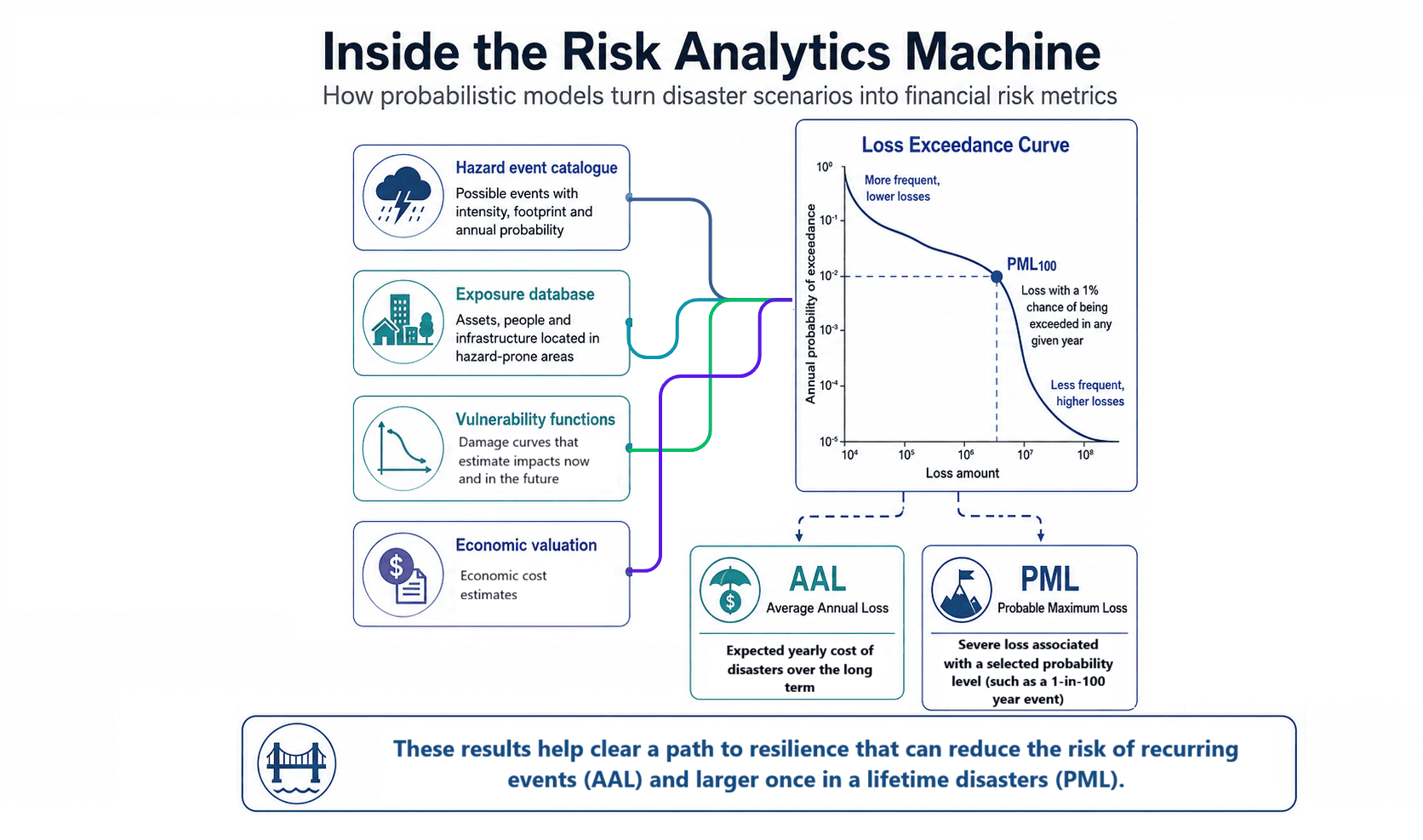
Analytics identify where disasters are most likely to unfold, and how severe their impacts could be, drawing on probabilistic methods adapted from the insurance industry and scaled for global coverage. This presents a high-resolution view of the risk landscapes of all countries, sectors and communities.
2. Current resilience and priorities for immediate action to reduce future losses
Disasters do not affect everyone equally. Understanding who and what is exposed—people, infrastructure, ecosystems and economic activity—lays a solid foundation for prioritizing action.
The analytics spotlight the current and future realities of what more frequent and intense disasters can mean for societies and economies, illuminating potential impacts on people, economic growth, public finances and supply chains.
3. Effective investment options to buffer future risk
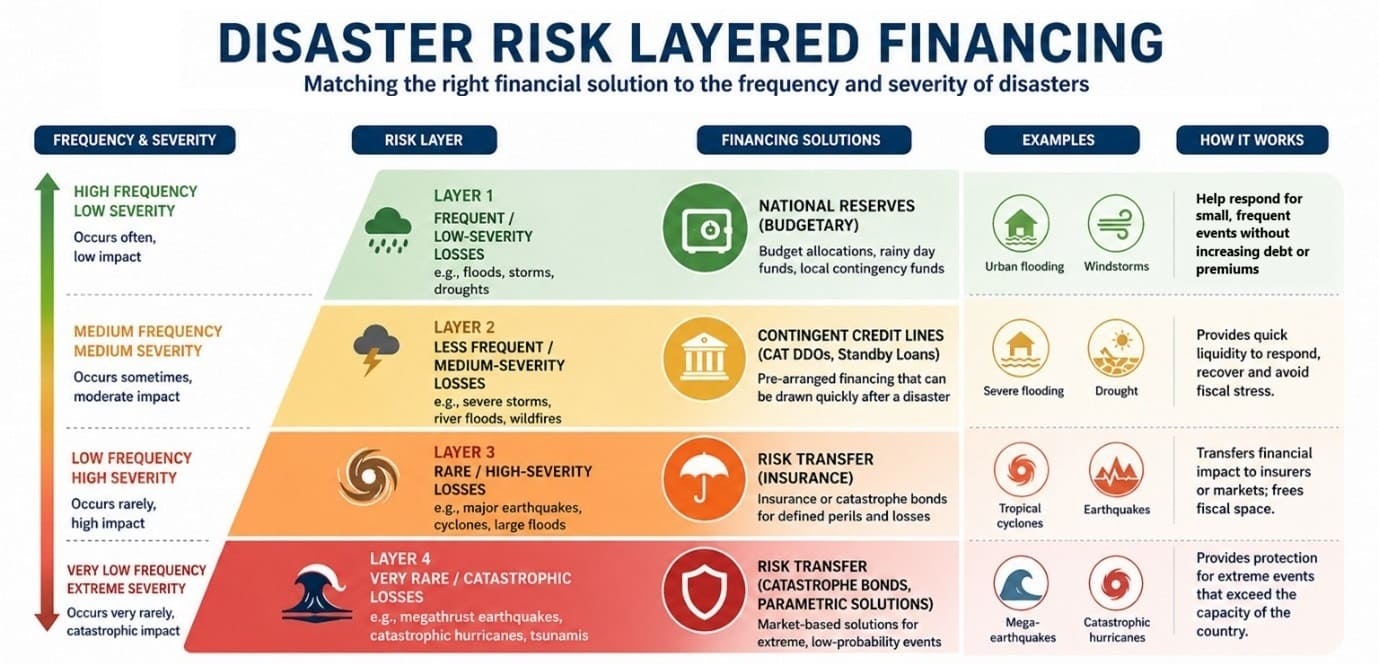
The analytics also show where resources are already being deployed, and how different financial tools and policies can strengthen resilience taking into account future changes to the risk landscape.
This enables governments, investors and development partners to identify the most effective actions to reduce future losses and stabilize long-term growth.
4. Pathways towards a safer future for all
Finally, the analytics provide insights on possible policy and investment options, helping decision makers better chart their pathway from risk to resilience over time.
Who the platform serves — and how
The Risk to Resilience platform supports a wide range of decision-makers who need clear, credible information.
- Governments can use it to prioritize public investment, strengthen fiscal stability and support sustainable development.
- Financial institutions, investors and rating agencies can better understand how disaster risk affects economic stability and long-term investment performance.
- Development partners can align financing around shared resilience priorities.
- Communities can identify where risks are concentrated and where action can have the greatest impact.
From knowing the risk to owning the response
Disaster risk does not have to define the future.
By bridging the gap between risk science and decision-making, the Risk to Resilience initiative helps translate complex information into practical choices. It takes leaders beyond simple recognition of risk to lay out a foundation for building resilience. In a world of growing volatility, that shift matters.
The Risk to Resilience Metrics initiative allows societies to anticipate shocks, strengthen economic stability, and chart a confident path toward a future where risk is understood, managed and reduced.