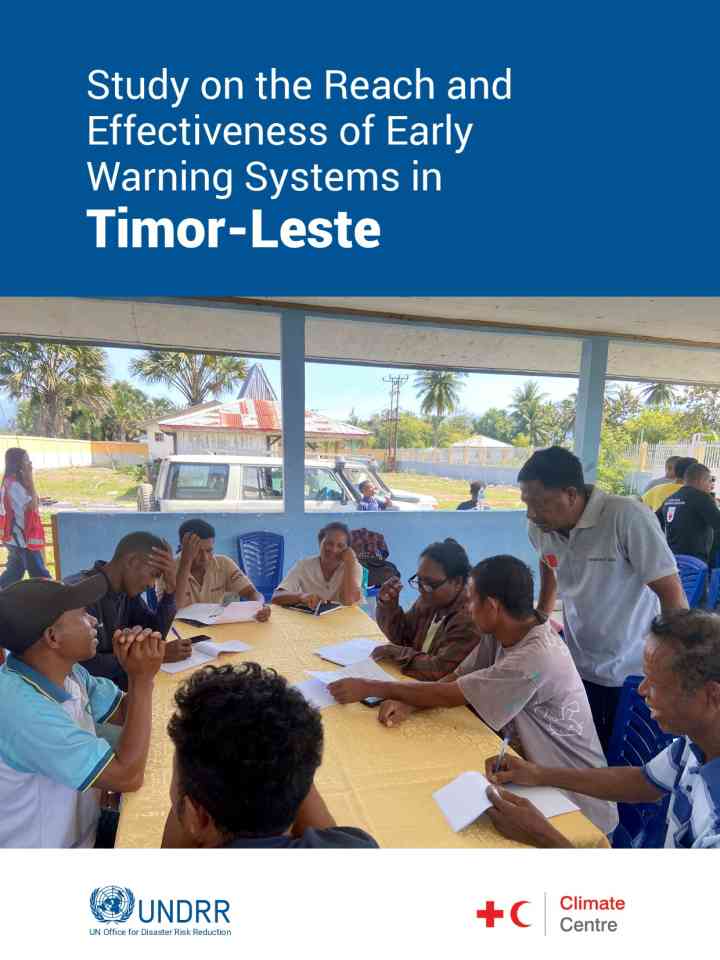
Study on the reach and effectiveness of Early Warning Systems in Timor-Leste
This study evaluates the effectiveness of early warning systems in Timor-Leste, based on 909 household surveys and 27 focus group discussions across eight municipalities and key informant interviews with national, municipal and community stakeholders. The findings establish a baseline for strengthening communication, inclusivity and the actionability of early warnings, while identifying persistent challenges and opportunities for improvement.
Based on the comprehensive assessment of HHS, FGDs and KIIs across multiple municipalities, several critical gaps and opportunities have been identified in the EWS in Timor-Leste. The following recommendations aim to address these gaps by strengthening multichannel dissemination, enhancing local leadership and community networks, improving infrastructure, simplifying and localizing messaging, shifting towards impact-based forecasts, and prioritizing preparedness and inclusive response. Collectively, these measures are designed to ensure that early warnings are timely, understandable, actionable and accessible to all, particularly the most vulnerable populations, thereby enhancing resilience to multi-hazard risks across the country