Catalyze investment in resilience
Catalyzing investment in resilience - why financing resilience matters

Disasters are costly, not just in human lives, but in lost development gains. Every dollar invested in prevention saves many more in response and recovery. Yet financing for disaster risk reduction (DRR) remains far below what is needed. Most resources flow after disasters strike, rather than being invested before, in prevention.
To change this, UNDRR is working with governments, financial institutions, and the private sector to make resilient investment the norm. By embedding DRR in financial systems and investment decisions, we can shift from reactive spending to forward-looking, cost-effective, risk-informed investments.

Report launch
Extreme heat is one of the deadliest hazards worldwide, with impacts that are acute, chronic, cumulative, and highly unequal.
Financing Heat Resilience, a joint paper by UNDRR, India's National Disaster Management Authority with inputs from Centre for Disaster Protection, examines how governments and the private sector can finance action on extreme heat, from reducing risk to managing its impacts. Learn more on how cities worldwide are utilizing a layered mix of public budgeting, strategic borrowing, and pre-arranged contingent financing to protect vulnerable working populations, transform urban infrastructure, and absorb climate shocks efficiently.
Our approach
Supporting countries in developing national financing systems for DRR
In many countries, there is limited capacity and knowledge to effectively integrate disaster risk considerations into public financial management, as well as on the appropriate financing instruments and mechanisms needed to advance DRR. UNDRR seeks to address these gaps through technical assistance, capacity-building support, and solutions such as budget tagging.
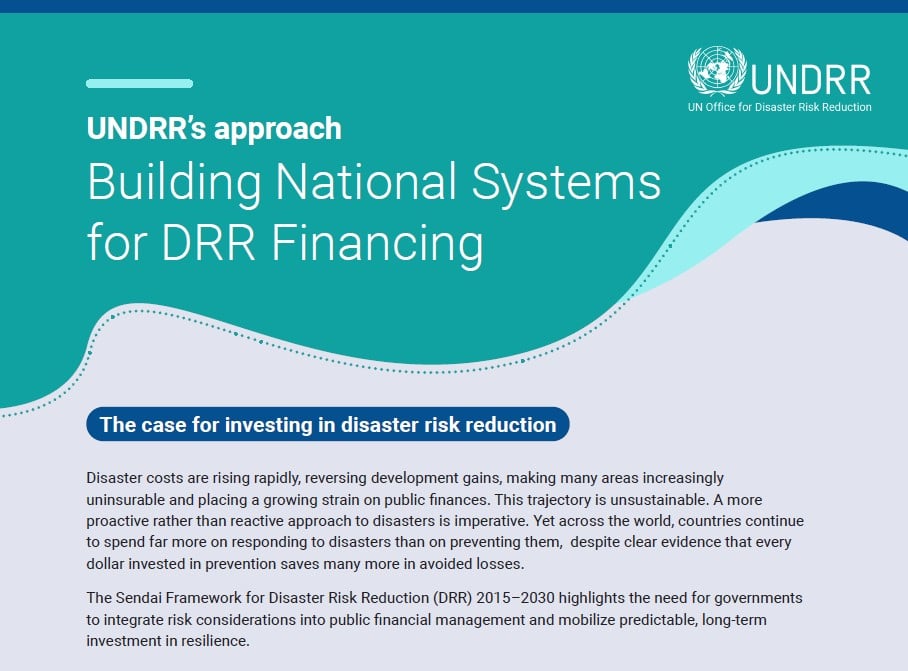
Five-step approach to disaster risk reduction financing
UNDRR has used a five-step approach to build the capacity of government officials and other experts in establishing national financing systems for DRR, while enhancing their understanding of how to mobilize financing for DRR from different sources (i.e., public, private, and international).
- Step 1: Understand the financial consequences of disasters
- Step 2: Analyse the existing financial landscape
- Step 3: Identify and prioritize DRR investment needs
- Step 4: Match needs with financing options
- Step 5: Develop a DRR financing strategy and implementation plan
This approach is also presented in the following five online training modules:
Complete the training and take the quiz to obtain your DRR Financing certificate:
Tools and solutions to address national financing system for DRR
Tools and solutions have also been developed to address specific components of a national financing system for DRR:
It is a methodology for tagging and tracking Disaster Risk Reduction (DRR) and Climate Change Adaptation (CCA) expenditures in public budgets. This system allows the institutionalizing of CCA and DRR in government processes and helps governments uncover funding gaps, improve spending effectiveness, and facilitate decision-making.
It explains the different sources of AA finance available and presents real-world examples and practices of their application. The guidance has been applied in countries like Burkina Faso, Iraq, Guatemala and Niger to identify legal and institutional bottlenecks to scaling up anticipatory finance and provide recommendations to address these.
Integrated National Financing Framework (INFFs) for disaster risk reduction
UNDRR in collaboration with the UN Department of Social and Economic Affairs (DESA) developed this note to support governments in using integrated national financing framework (INFF) to achieve their disaster risk reduction (DRR) objectives.
Public Finance Management (PFM) for Recovery
UNDRR’s assessment enables countries to ensure that fiscal risk management accounts for potential disasters and that public investment integrates “Build Back Better” into the recovery process. It also supports governments to integrate resilience building into budget planning and execution, while strengthening accountability.
Engaging the private sector in DRR
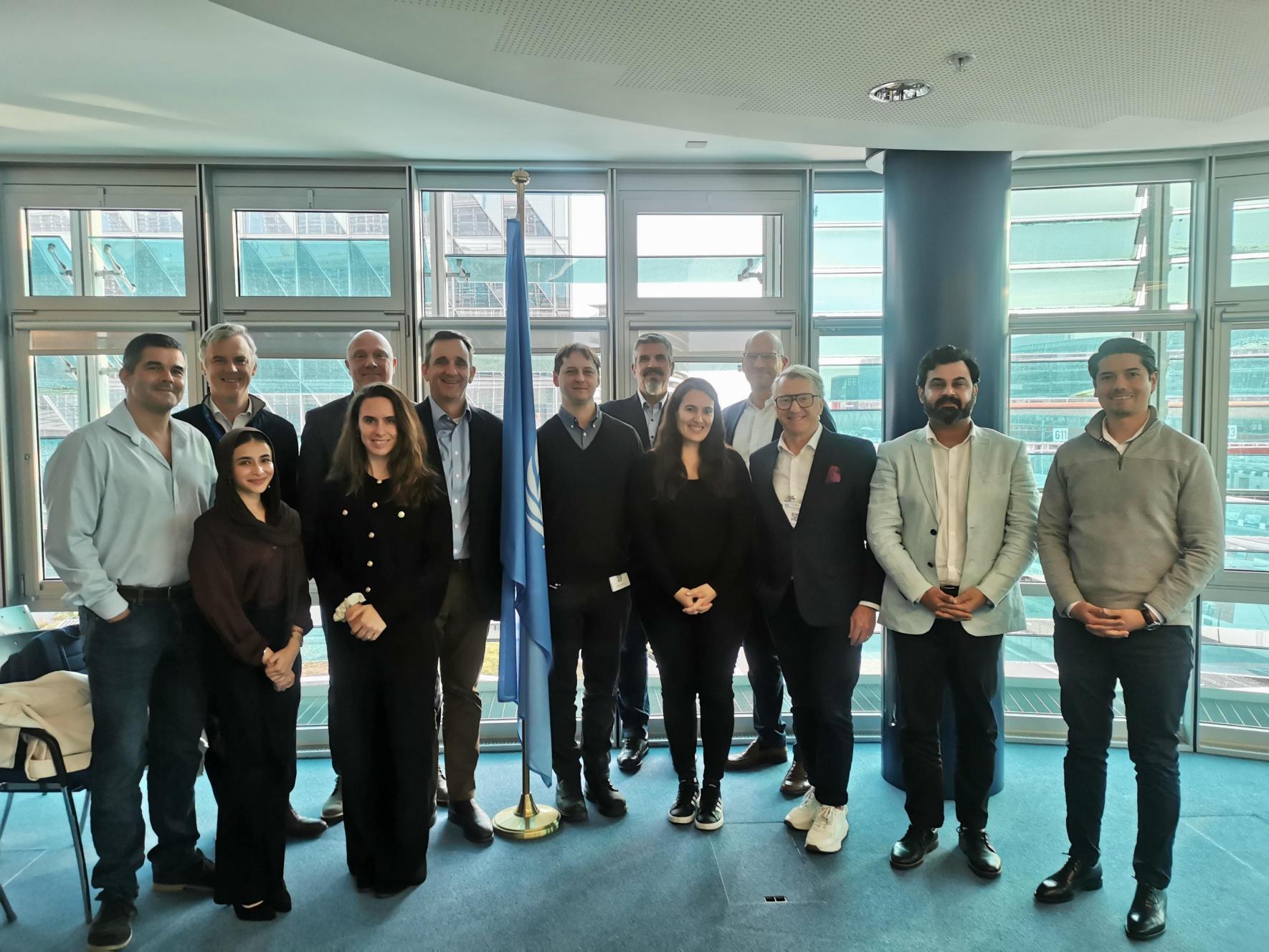
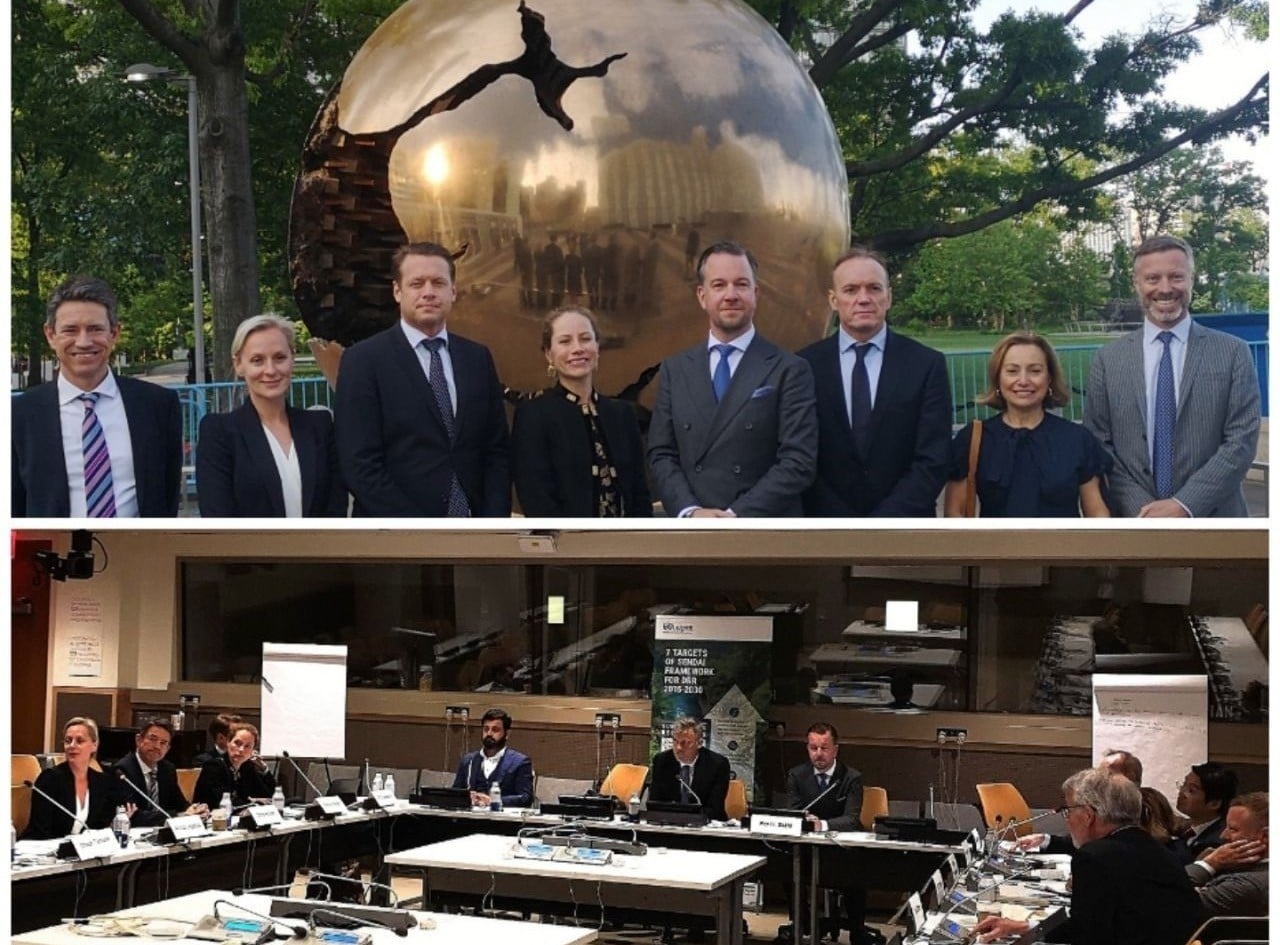
Investing in disaster risk reduction is a precondition for developing sustainably in a rapidly changing climate. The private sector has a crucial role to play in financing and directing investment towards projects and companies that properly manage risks and avoid the creation of new risks for society. UNDRR is engaging with the private sector on a number of initiatives to catalyse investments in resilience including the ARISE Private Sector Alliance for Disaster Resilient Societies, a Network of Corporate Chief Resilience Officers (CCRO) and an Investor Advisory Board (IAB). UNDRR is also a member of the Insurance Development Forum (IDF), which brings together private and public partners led by the insurance industry and supported by international organisations.
UNDRR-supported initiatives
Featured publications


Advancing global knowledge on DRR financing
UNDRR works to strengthen the global knowledge and evidence on how disaster risk reduction is financed, tracked, and reported. Through flagship analyses, UNDRR identifies spending patterns, financing gaps, and opportunities to scale up investment in resilience. By promoting common methodologies, data standards, and knowledge exchange across countries and sectors, UNDRR helps ensure that financial decisions are informed by evidence and that global progress on DRR financing can be consistently monitored and accelerated.
De-risk investment and reconfiguring risk in the global financial system
This video explains why risk-blind finance is no longer an option. Current financial rules often overlook disaster and climate risks, driving short-term decisions that increase vulnerability and undermine sustainable development. To build a resilient future, we need to:
✔️ Address market failures and short-termism
✔️ Ensure disaster risk is fully priced, disclosed, and accounted for
✔️ Align fiscal and market-based measures with resilience goals
✔️ Bring businesses, investors, and stock markets into the solution
✔️ Reconfigure the relationship between finance, the economy, and the health of our communities and ecosystems
Global Observatory Early Warning System Investments
This observatory focuses on one stream of DRR financing: investment in early warning systems (EWS). It shares information on funding from multilateral development banks and funds supporting EWS, with the aim of strengthening coherence and alignment, increasing the effective use of financing, and identifying funding gaps.
This material currently draws heavily on https://www.undrr.org/media/78949/download?startDownload=20240913
Featured publications

News and events





Related content