
UNDRR, ESCWA, and League of Arab States advance regional cooperation on disaster statistics for risk-informed decision-making
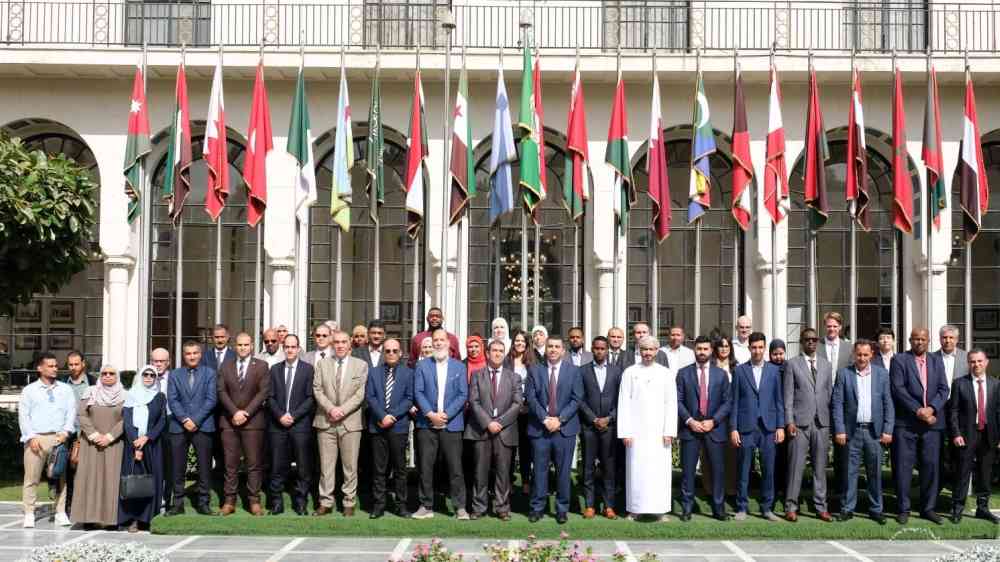
The United Nations Office for Disaster Risk Reduction (UNDRR), the United Nations Economic and Social Commission for Western Asia (ESCWA), and the League of Arab States convened a three-day Regional Workshop on Disaster-Related Statistics in Cairo from 27 to 29 October 2026, bringing together representatives of national disaster management authorities, statistical offices, and regional and international organizations.
Under the theme “Strengthening disaster data systems for evidence-based policymaking and anticipatory action,” the workshop focused on a central challenge facing the Arab region: how to transform disaster-related data into reliable information that informs policies, strengthens preparedness, and supports timely action before disasters occur.
From disaster data to risk-informed decisions
The Arab region faces increasingly complex disaster risks, compounded by climate change, conflict, displacement, and institutional challenges. Gaps in the availability, quality, and consistency of disaster-related statistics continue to limit countries' ability to assess risks, monitor losses and damages, and make informed decisions.
Opening the workshop, representatives of UNDRR, ESCWA, and the League of Arab States emphasized the importance of strengthening national statistical capacities and regional cooperation to ensure that disaster data supports effective disaster risk reduction.
Discussions examined the Global Framework for Disaster-related Statistics (G-DRSF) and its relevance to monitoring the Sendai Framework for Disaster Risk Reduction and the Sustainable Development Goals.
Participants also explored DELTA-Resilience, including approaches to integrating information on hazards, exposure, vulnerability, capacities, losses, and damages into national disaster data systems.
Strengthening data governance and regional cooperation
A key focus of the workshop was improving coordination between national statistical offices, disaster management authorities, and other institutions responsible for planning and decision-making.
Participants exchanged experiences on institutional arrangements, data-sharing mechanisms, statistical standards, and the use of national disaster loss and damage databases.
Technical discussions also examined how emerging technologies, including artificial intelligence, geospatial information, and alternative data sources, can help address information gaps and strengthen disaster risk assessments.
Particular attention was given to fragile and conflict-affected settings. Drawing on experiences from Syria, Yemen, Somalia, and Sudan, participants explored practical approaches to strengthening statistical systems despite challenges related to data availability, institutional capacity, and coordination.
Turning Statistics into Preparedness and anticipatory action
Beyond collecting and reporting disaster data, the workshop emphasized its practical application in preparedness, early warning, anticipatory action, and development planning.
Sessions explored how timely, reliable, and disaggregated statistics can help identify populations and locations at risk, establish early-action triggers, guide resource allocation, and inform investments that reduce disaster risk.
The discussions reinforced the importance of connecting data producers with policymakers and humanitarian actors so that risk information informs decisions before hazards escalate into disasters.
Key recommendations and the way forward
The workshop concluded with recommendations aimed at strengthening national disaster data systems and advancing regional cooperation.
Key priorities included:
- Strengthening national implementation of the Global Framework for Disaster-related Statistics, aligned with existing national systems and priorities.
- Facilitating regional knowledge exchange on disaster data governance, institutional coordination, and national loss and damage databases.
- Bridging data gaps in fragile and conflict-affected contexts through innovative approaches to data collection and risk assessment.
- Assessing national disaster data ecosystems to identify capacity gaps, establish priorities, and guide technical support.
- Developing Arabic-language resources for the Global Framework and its associated guidance and tools to support consistent regional implementation.
- Sustaining regional coordination through the League of Arab States, ESCWA, and UNDRR to advance implementation and follow-up.
Additional recommendations from Algeria and Palestine highlighted opportunities for sharing national experiences in disaster statistics and strengthening the use of administrative records and survey data.
The workshop reaffirmed that disaster-related statistics are not merely tools for documenting past losses, but essential foundations for anticipating future risks and building resilience.
Through continued cooperation, UNDRR, ESCWA and the League of Arab States aim to support stronger national capacities and more effective use of disaster data in policies, investments, and actions that protect communities across the Arab region.