
Risks to resilience – Enhancing climate action through coherent approaches
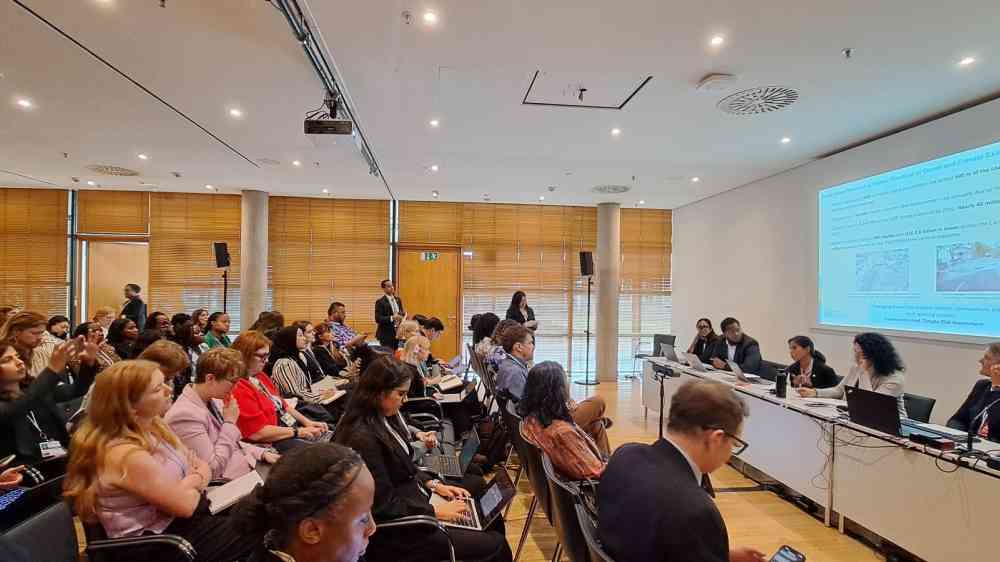
Bonn, 26 June 2026 | The complexity and scale of climate change create a unique challenge, one that puts those most vulnerable populations at even greater risk. However, through risk-informed action and working in an integrated way, these challenges can be better understood and addressed in a tailored manner. This was a core message from the UNDRR, WMO, MCII and ICSC side event titled “Coherent risk-informed climate action for adaptation and managing loss and damage” held during the recently concluded 64th sessions of the Subsidiary Bodies in Bonn, commonly dubbed the “June Climate Sessions”.
The presenters and panelists established clear linkages between science, policy and implementation, and the essential role that monitoring progress plays in ensuring the right action is delivered to those most in need.
Focusing on what matters
Co-moderated by Danica Marie Supnet, ICSC Director for Climate Policy and Animesh Kumar, Head of the UNDRR Office in Bonn, the event emphasized that what matters is the people at the heart of climate action, especially those who bear the brunt of the burden that comes from the devastating impact of climate change. Understanding their circumstances through their voices is pivotal for inclusive action, and giving the respect and dignity that they deserve.
In delivering her keynote remarks, Elisa Morgera, UN Special Rapporteur on Human Rights & Climate Change, emphasized that, “Protecting those in vulnerable situations is not something additional, it is what we understand from local and lived experience that tells us what needs to be brought together."
Data as a driver of risk-informed action
Data, therefore, took centre stage at the event given its role in every aspect of climate action and resilience building. Speakers demonstrated how it tells the story of those affected by climate change, of what possible impacts (i.e., risks) lie ahead, and what can be done to avoid, reduce or manage risks.
Building from the key message, Luckson Zvobgo, Head of Science Policy in Climate Risk Lab at ACDI; and IPCC Lead Author, AR7, Working Group II, emphasized how data is underpinning the implementation and tracking of the targets and indicators of the global goal on adaptation (GGA). Hindumathi Palanisamy, Scientific Officer, WMO, showed climate data for both extreme and slow-onset events as they worsen, and the growing tolls on societies.
The event highlighted clear data gaps. This applies to observation systems and determining the impact of climate change and action, particularly non-economic losses that includes the loss of life, morbidity, culture, etc. Speakers recognized that this has implications for developing robust policies as well as access to finance.
In reflecting on these gaps, Camila Minerva Rodriguez Tavarez, Co-Chair, Board of the Fund for responding to Loss and Damage (FRLD) stated that, “Some countries' realities and problems disappear in global data.”
Filomena Nelson, Climate Change Adaptation Adviser, Secretariat of the Pacific Regional Environment Programme (SPREP), went further to note that, "Data gaps go beyond observations; some of the most critical gaps concern impacts that were never recorded - who was affected, how much it cost, and what losses communities experienced.”
Championing coherent, comprehensive action
There was convergence among speakers on taking a more coherent, comprehensive approach that bridges climate action (especially adaptation and addressing loss and damage), and disaster risk reduction. As a supporter of this approach, Tania Rödiger-Vorwerk, Deputy Director General, Climate Environment and Health, Federal Ministry for Economic Cooperation and Development (BMZ), Germany, said, “Adaptation, resilience, and loss and damage belong together and require a comprehensive approach grounded in risk information.”
Trinidad and Tobago is a small island developing State that is advancing coherence. Aditi Bisramsingh, Climate Change Specialist, Ministry of Planning Economic Affairs and Development, said, “We realized we did not need another strategy; instead, we integrated disaster risk reduction priorities into the National Adaptation Plan and focused on strengthening data systems and multi-hazard early warning systems.”
The event was therefore an appropriate space to launch the second module on “Implementation Pathways for Coherent Disaster Risk Reduction and Climate Action” of the UNDRR/UNSSC thought leadership course on Synergizing Disaster Risk Reduction and Climate Action Learning Path. The course – now with two modules and is free of charge – targets decisionmakers, focal points, and all other stakeholders involved in climate action and DRR, as well as biodiversity and land degradation, etc.
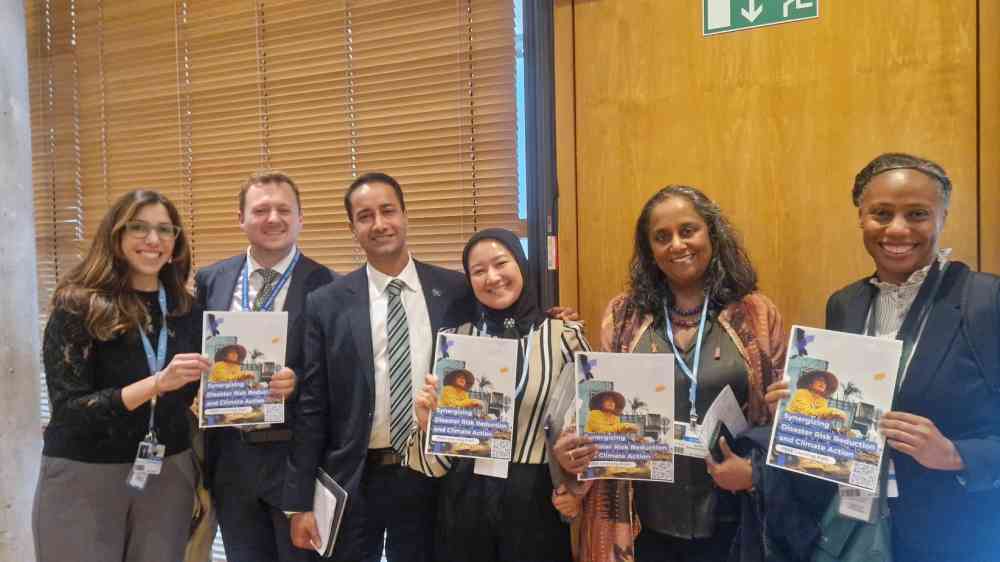
Multi-hazard early warning systems was among the ways the event demonstrated joint approaches. There was a strong call for such systems to better integrate future risk scenarios, and for stronger linkages with social protection initiatives, including early action for vulnerable, exposed communities once early warnings are triggered.
Enabling implementation through finance
Finance remains a key enabler as it determines the extent to which data is available on risk and impact, and implementation of climate action as outlined in countries’ plans and strategies. The event therefore recognized the growing finance landscape, including the FRLD, that can be a valuable source for well-needed finance for developing countries and vulnerable communities.
Reflecting on this reality, Camila Minerva noted that, “Data enables prioritization and justice. Without data, it is difficult to understand who is at risk, who is being left behind, and how loss and damage should be addressed." She further stated that with the resources to be made available through the Fund, developing countries can not only enhance the evidence of those who are at risk, but also design interventions that respond in a tailored way.
The “COP” imperative
In wrapping up the events, Berna Erdal, Directorate of Climate Change, Turkiye, COP 31 Presidency team, and Tessa Kelly, Director, Adaptation, Resilience, Loss and Damage Section, DCCEEW Australia as COP 31 President of Negotiations team, echoed how coherent, risk-informed approaches can help to solidify climate action, especially as the challenges mount. It was therefore a signal of support that comprehensive risk management approaches remain a priority, building on the formal outcomes of COP 30 and on the granary of solutions adopted by the COP 30 Presidency, Brazil, in 2025.
