
Resilience starts at home: Geneva connects local and global leaders to advance resilient housing
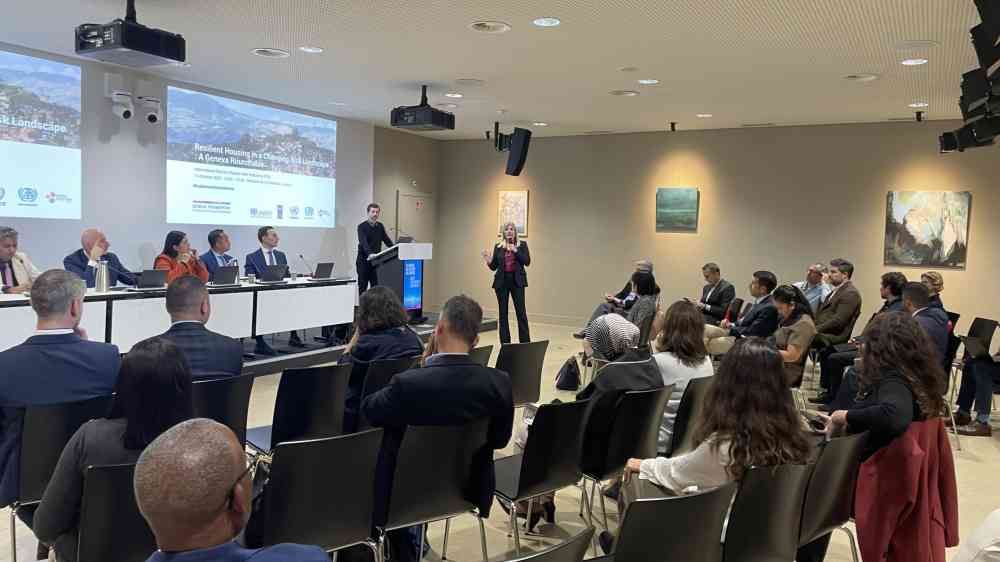
Government representatives, mayors, United Nations agencies, development partners and technical experts gathered in Geneva for the Resilient Housing in a Changing Risk Landscape: A Geneva Roundtable for the International Day for Disaster Risk Reduction , organized by UNDRR, UN-Habitat, UNECE, UNDP and the Global Cities Hub, to explore how resilient and affordable housing can become a cornerstone of disaster risk reduction.
A recurring theme throughout the event was the unique role of Geneva International in connecting local and national governments with international organizations, technical experts and financing partners. Participants emphasized that resilient housing challenges can only be addressed through stronger collaboration across all levels, making Geneva an important platform for turning local experiences into global solutions.
Discussions highlighted how climate change is reshaping what constitutes "safe" and "adequate" housing. As floods, storms, landslides and extreme heat become more frequent and severe, growing housing affordability pressures are forcing many households to live in hazard-prone areas, making housing insecurity an increasingly significant driver of disaster risk.
City leaders and government representatives identified financing, implementation capacity and access to investment as some of the most significant barriers to delivering resilient housing at scale. Participants also stressed the challenge of translating identified housing needs into projects that are ready for implementation and financing.
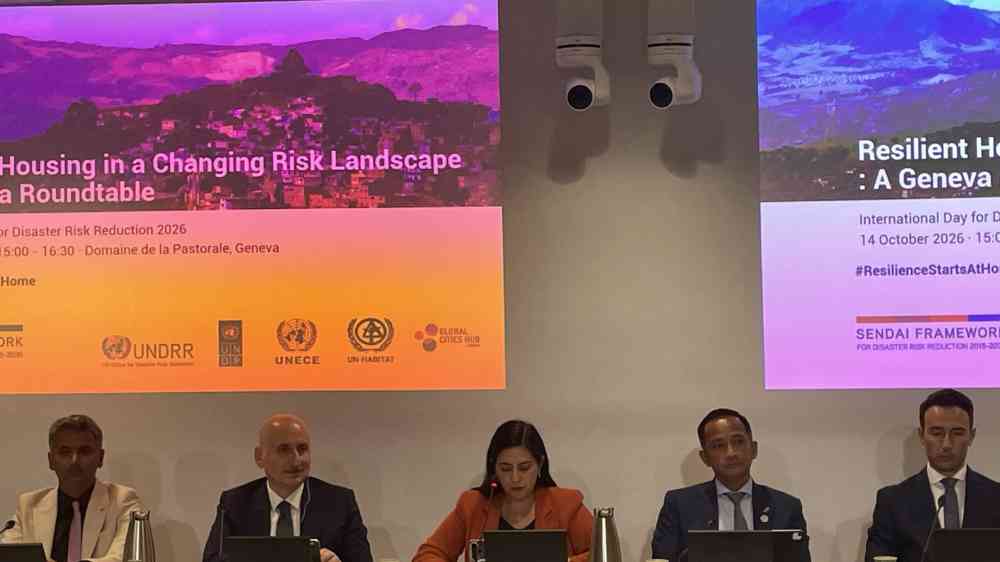
The roundtable showcased examples from around the world. H.E. Mr. Adil Karaismailoğlu, Chairperson of the Public Works, Urban Planning, Transportation and Tourism Commission of the Grand National Assembly of Türkiye, shared lessons from Türkiye's extensive social housing and post-earthquake reconstruction efforts, emphasizing the need to build resilience into housing systems before disasters occur and to ensure reconstruction strengthens communities rather than simply replacing what was lost.
Ms. Karina Delfino, Mayor of Quinta Normal, Chile, shared experiences relocating families from high-risk informal settlements and transforming former industrial land into integrated housing developments. Mr. Anwar Ali, Mayor of Larkana, Pakistan, presented lessons from post-flood reconstruction following the 2022 floods, including an owner-driven approach that prioritizes women-headed households and community participation. Mr. Hing Phorpminea, Mayor of Kampong Chhnang, Cambodia, emphasized the importance of linking housing interventions with livelihoods and access to services to ensure long-term resilience.
Resilient housing requires integrated approaches that combine affordable housing, risk-informed planning, access to finance, resilient infrastructure, social inclusion and strong local governance. At UNDRR, strengthening recovery readiness is a key priority. Early assessments show that while reconstruction policies often exist, local capacity and risk-informed building standards frequently lag behind, reinforcing the need to prepare for recovery before disasters rather than during them.
The roundtable concluded with a call for greater investment in prevention, stronger support for local governments and deeper collaboration between cities, national authorities, development partners and financial institutions. Participants agreed that while resilience starts at home, achieving it requires coordinated action from the local to the global level, with Geneva serving as a vital bridge between communities on the front lines of risk and the international actors working to support them.