
Alexandria advances resilience planning through first technical workshop under MCR2030
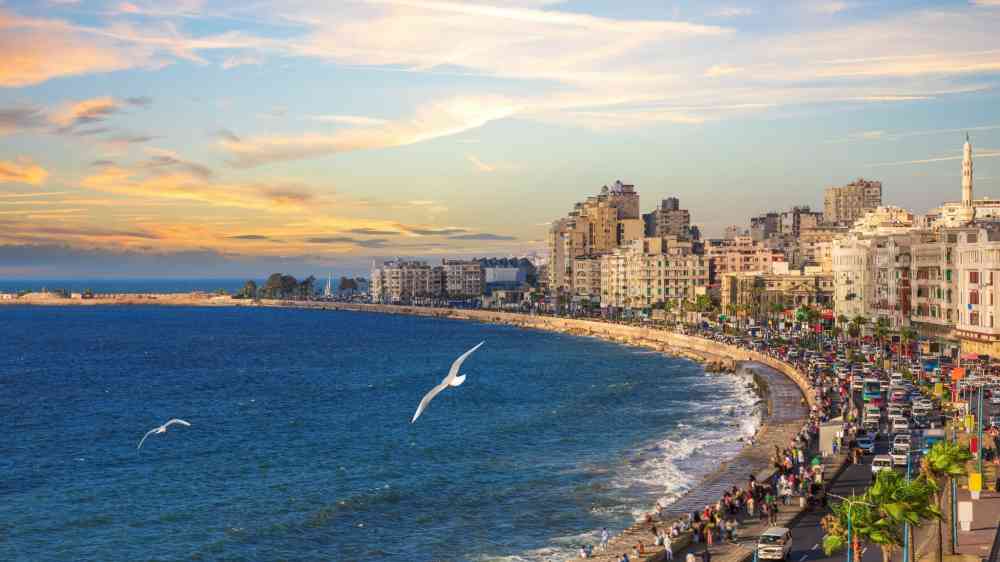
Alexandria is taking new steps to strengthen urban resilience and disaster risk reduction, as city counterparts and national partners joined an online technical workshop under the Making Cities Resilient 2030 (MCR2030) initiative.
The workshop marked the first official gathering since the launch of the Consortium for Alexandria, which aims to support the city’s transition into a more resilient coastal city and strengthen its role as a regional leader in disaster risk reduction and urban resilience.
As one of Egypt’s most strategic coastal cities, Alexandria faces a complex risk profile linked to sea-level rise, coastal hazards, flooding, rapid urban growth, infrastructure exposure, and increasing pressure on essential services.
Building a resilience baseline for Alexandria
The workshop initiated a structured technical dialogue between UNDRR, Alexandria Governorate, national authorities, and technical partners to identify practical entry points for supporting the city’s resilience planning through MCR2030, UNDRR tools, and the Consortium for Alexandria.
Discussions focused on:
Alexandria’s current risk profile and existing plans
Institutional arrangements and available data
Core resilience priorities and gaps
Stakeholder mapping and engagement
Development of an Alexandria Resilience Roadmap
Building on Alexandria’s resilience legacy
Opening the workshop, Ms. Sandra Amlang, Chief of Office, UNDRR Regional Office for Arab States, highlighted Alexandria's long history of adapting to change and the importance of strengthening resilience for future generations.
“Alexandria has stood for more than 3,000 years as a centre of civilization, trade, and knowledge. It absorbed repeated shocks and adapted. That continuity is not accidental — it reflects the city's enduring capacity to renew itself.” She quoted.
Participants discussed how the Consortium for Alexandria can build on this legacy by strengthening the city’s capacity to address future challenges, particularly those linked to climate change and coastal risk.
With more than five million residents and a critical role in Egypt’s economy and regional connectivity, Alexandria’s resilience is increasingly important to Egypt’s future. Discussions also underscored the importance of ensuring that investments in infrastructure, coastal protection, and urban services are risk-informed so they can deliver their full value for communities.
From partnership to implementation
The workshop further explored how the Consortium for Alexandria can support a practical, city-owned resilience agenda that brings together national authorities, local government, academia, the private sector, and development partners.
Participants discussed opportunities to strengthen coordination, mobilize expertise, and support implementation of resilience priorities through the Consortium’s collaborative framework.
Alexandria will also build on the experiences of Aswan and Sharm El-Sheikh in implementing the Making Cities Resilient initiative, while advancing efforts toward becoming a Resilience Hub by 2030.
Looking ahead
The workshop concluded with a shared focus on next steps, including technical assessments, stakeholder engagement, data collection, and the development of an Alexandria Resilience Roadmap.
As coastal cities face growing risks from sea-level rise, flooding, climate change, and urban pressures, Alexandria’s resilience journey represents an important step toward strengthening safer, more inclusive, and risk-informed urban development in Egypt and across the region.