
African LDCs and SIDS meet in Saly to leverage Santiago network support

Participants engaging in group activity to discuss map gaps and identify assistance needed.
Regional workshop in Senegal equips developing countries to access technical assistance for averting, minimizing and addressing loss and damage.
Representatives from least developed countries (LDCs) and Small Island Developing States (SIDS) across Africa gathered in Saly, Senegal, from 22 to 24 July 2025, to take forward their engagement with the Santiago network, a key mechanism established in 2019 under the climate change global treaties to facilitate technical assistance in vulnerable developing countries.
Hosted by the Government of Senegal and organized by the Santiago network Secretariat, in collaboration with the United Nations Office for Disaster Risk Reduction (UNDRR), the three-day workshop was attended by over 60 representatives from 34 national governments. It supported national liaisons to the Santiago network Secretariat, the United Nations Framework Convention on Climate Change (UNFCCC) National Focal Points and disaster risk reduction focal points in identifying loss and damage priorities and beginning the process of preparing tailored requests for technical assistance under the Santiago network.
Opening the workshop, Colonel Pape Assane Ndour, First Technical Advisor to the Minister of Environment and Ecological Transition of Senegal stated "This workshop is of paramount importance, not only for our country, but also for all LDCs and SIDS in Africa. It concerns the technical assistance that our particularly vulnerable countries need to address the loss and damage associated with climate change, a phenomenon that knows no borders and has dramatic repercussions on our ecosystems, economies, and communities."
Combining introductory presentations, peer sharing and practical exercises, the workshop followed a participatory write-shop format, allowing countries to reflect on their national contexts, map capacity gaps, and articulate specific technical assistance needs. The event was an opportunity to break the silos and bring together disaster risk reduction and climate change practitioners. Participants considered how the identified needs align with national priorities on loss and damage, including through climate strategies and disaster risk reduction plans, drawing on a wide range of expertise and peer experience. Sessions also addressed the importance of comprehensive risk management, transboundary cooperation and inclusive approaches.
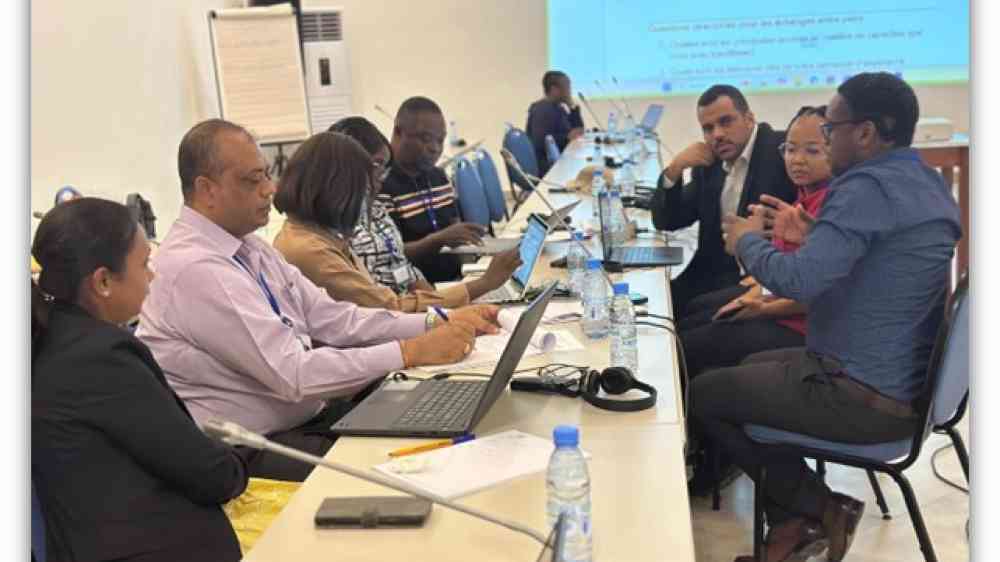
Participants engaging in group activity to discuss map gaps and identify assistance needed.
During the peer exchange session, Christopher Bartlett, national liaison to the Santiago network Secretariat of Vanuatu pointed out the importance of the network:
"The Santiago network's support is making a real difference for Vanuatu. The Secretariat was very responsive, helping us translate our high-level goals into a concrete, tailored technical assistance plan. We were especially pleased with the selection of the consortium of Members, which reflects our priorities and brings the right expertise to help us deliver for Indigenous Peoples and local communities on the frontlines of climate change impacts across our island nation.
The Santiago network catalyses technical assistance of relevant organizations, bodies, networks, and experts (OBNEs) to implement approaches to averting, minimising and addressing loss and damage associated with the adverse effects of climate change in developing countries. Members of the Santiago network include local, national and international OBNEs with diverse expertise and experience. They can provide services such as climate risk modelling, policy advisory, early warning systems development, nature-based solutions, and institutional capacity-building.
In her opening remarks, Angela Rivera, Co-Chair of the Santiago network Advisory Board, stated "On behalf of the Advisory Board, we are eager to receive requests for technical assistance from your countries and regions. These requests are not just welcomed-they are essential to the success of the Santiago network. They ensure that the support we provide is truly demand-driven and tailored to the unique needs of developing countries."
Key outcomes from the workshop included a regional stocktake of capacity gaps and a shared roadmap for continued engagement with the Santiago network. Representatives of participating countries also had the opportunity to develop and share their draft requests for technical assistance to contribute towards priority actions on loss and damage at the local, national and/or regional levels. The workshop reaffirmed the urgent need for practical, context-specific support to address the growing burden of loss and damage in Africa's most vulnerable communities.
"This workshop is about empowering vulnerable countries to drive the solutions they need - I am especially proud that it features the first-ever write-shop of the Santiago network to translate ideas into action. We look forward to assisting you and receiving your technical assistance requests!" said Carolina Fuentes Castellanos, Santiago network Secretariat Director.
Animesh Kumar, Head of the UNDRR Bonn Office highlighted that "We live in a world where risk is becoming increasingly complex, necessitating systemic actions. Working in synergy, the Santiago network will have a multiplier impact by catalysing technical assistance to yield resilience dividends. As co-hosts of its Secretariat, UNDRR and UNOPS remain committed to its full-scale roll-out to benefit developing countries."
As the global community continues its push for equitable climate action, African LDCs and SIDS are taking the lead in defining and advancing the assistance they need, turning global solidarity into meaningful support.