The heatwaves of today are the coolest heatwaves we are likely to experience for the rest of our lives. SRSG Kamal Kishore reflects on how cultural institutions can play a central role in extreme heat action – and in disaster risk reduction more broadly.
United Nations Office for Disaster Risk Reduction (UNDRR)
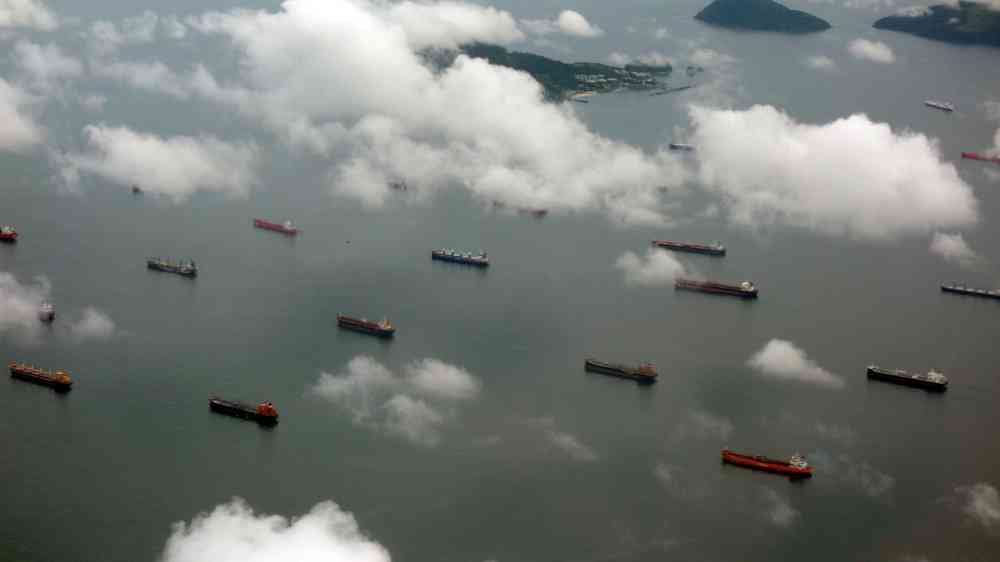
In more than a century of operation, the authorities that manage the Panama Canal have accumulated some valuable lessons in risk governance that are relevant to other major infrastructure systems – and to disaster risk reduction more broadly.
United Nations Office for Disaster Risk Reduction (UNDRR)
Signs are pointing to a potentially powerful El Niño event — but there is no need for panic. It is an opportunity to stress-test our disaster risk governance systems, and to strengthen protection for the most vulnerable communities.
United Nations Office for Disaster Risk Reduction (UNDRR)
In his three decades of responding to catastrophic events around the world, Kamal Kishore, head of the United Nations Office for Disaster Risk Reduction, often observed a curious human tendency to overlook the invisible foundations of our safety.
Kamal Kishore reflects on the future of disaster risk reduction – a future challenged by growing complexity, but made navigable by new AI-enabled capabilities. We must make the right choices now so that we use AI not only to do more, but to do better.
United Nations Office for Disaster Risk Reduction (UNDRR)
Successful post-disaster housing recovery is about much more than the buildings. SRSG Kamal Kishore reflects on what often goes wrong in post-disaster housing recovery, and how these mistakes can be avoided.
United Nations Office for Disaster Risk Reduction (UNDRR)
As Egypt hosts the first “Arab Regional Forum on Early Warning Systems and Disaster Preparedness,” from 17 to 18 December, the region stands at a defining moment.
United Nations Office for Disaster Risk Reduction (UNDRR)
This year’s International Day for Disaster Risk Reduction calls to “Fund Resilience, Not Disasters.” AI through its ability to quickly ingest, process, and find patterns within vast, complex datasets – can help flag key factors across and within systems.
International Telecommunication Union (ITU)
United Nations Office for Disaster Risk Reduction (UNDRR)
European Commission Joint Research Centre
Centro Euro-Mediterraneo sui Cambiamenti Climatici (CMCC)
The GAR 2025 highlights that direct disaster costs have grown to approximately $202 billion annually, and that the true costs could be over $2.3 trillion, when cascading and ecosystem costs are taken into account.