Remember. Protect. Build disaster resilience.
Observed every year on 29 April
Observed every year on 29 April

Established by the UN General Assembly in 2025, the International Day in Memory of the Victims of Earthquakes is observed every April 29.
Earthquakes are among the deadliest natural hazards. Often striking with little warning, they have claimed millions of lives, devastated infrastructure, displaced communities, and left profound and enduring social, economic, and psychological impacts across generations.
The International day is an opportunity for remembrance and renewed commitment to protecting lives and livelihoods from earthquake disasters. The Day echoes the priorities of the Sendai Framework for Disaster Risk Reduction 2015-2030, which underscores the importance of understanding disaster risk, developing disaster risk reduction plans, investing in resilience, and enhancing preparedness to “build back better” after disasters.
The International Day in Memory of the Victims of Earthquakes is both a moment of remembrance and a catalyst for practical, forward‑looking action on earthquake risk reduction and resilience. It honours those lost and affected, while mobilizing concrete measures to reduce disaster risk, prevent future loss of life, and protect development gains.
In commemorating this Day, countries and partners are called to:
Key Messages

Earthquakes are the sudden release of energy from the Earth's crust, generating seismic waves that shake the ground. Large earthquakes increase the risk of damages and may lead to secondary hazards such as landslides or tsunamis.

Living and building in high-seismic zones and shaky soils increases risk to earthquakes and exposes millions to danger. Today, over half the world’s population lives in earthquake-prone regions.

This is a factor where a lot can be done to reduce risks. Vulnerability is the difference between a building that crumbles and a building that rumbles.
An earthquake only becomes a "disaster" when these three collide:
Earthquakes are among the deadliest natural hazards. Often striking with little warning, they have claimed millions of lives, devastated infrastructure, displaced communities, and left profound and enduring social, economic, and psychological impacts across generations.
Since 1900, there have been 12 earthquakes on record that each killed 50,000 or more people, five of them since 2000. (GAR 2025)
25.6% of Global Losses: Earthquakes now account for over a quarter of all global economic disaster losses. (GAR 2025)
About 90% of all the planet’s earthquakes occur along the rim of the Pacific Ocean, called the “Ring of Fire”. (USGS)
The largest recorded earthquake in the world was a magnitude 9.5 (Mw) in Chile on May 22, 1960.(USGS)
It is estimated that there are 500,000 detectable earthquakes in the world each year. 100,000 of those can be felt, and 100 of them cause damage. (USGS)

The stories you will find herein encompass a wide range of practical DRR measures, including early warning systems, community-based initiatives, green and grey infrastructure improvements, policy implementations, and innovative technologies that have been applied and proven effective in real-world scenarios.
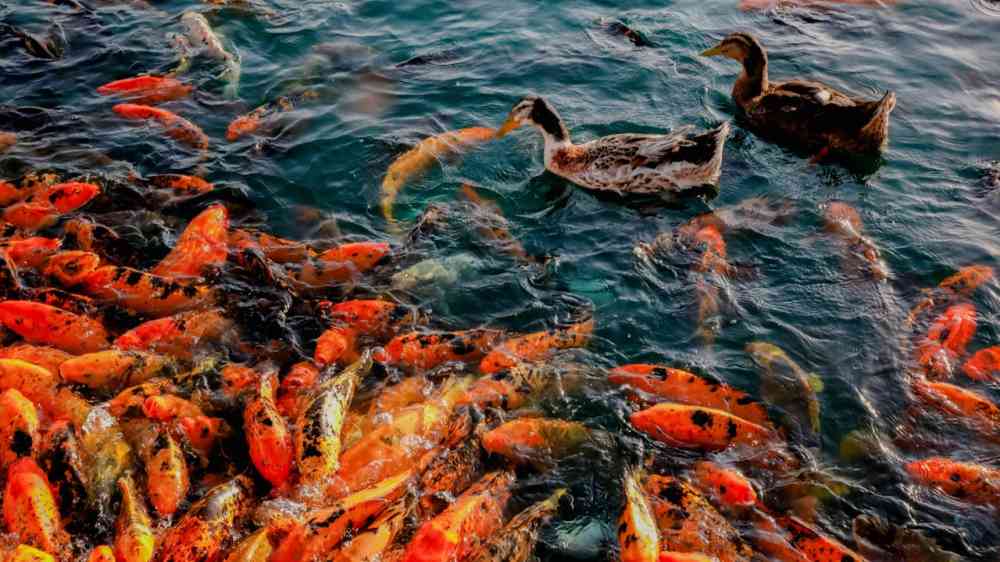
The Answer: There is no scientific evidence that animals can predict earthquakes. However, they are much better than humans at sensing the P-wave (the fast-moving "warning" wave). To us, it might feel like a tiny tremor or nothing at all, but to a sensitive animal, it’s a signal to move. By the time we feel the stronger S-waves, the animals have already reacted! (USGS)
The Answer: This is a myth! During an earthquake, the ground moves past itself or over itself. While the shaking can cause shallow cracks, fissures, or landslides, the Earth does not pull apart to create a deep void. You are much more at risk from a falling bookshelf than a "crack in the Earth." (USGS)

The Answer: No! The safest move is Drop, Cover, and Hold On. Get under a sturdy table or desk to protect yourself from falling debris, which is the leading cause of earthquake injuries.
Thank you. If you have 2 minutes, we would benefit from additional feedback (link opens in a new window).