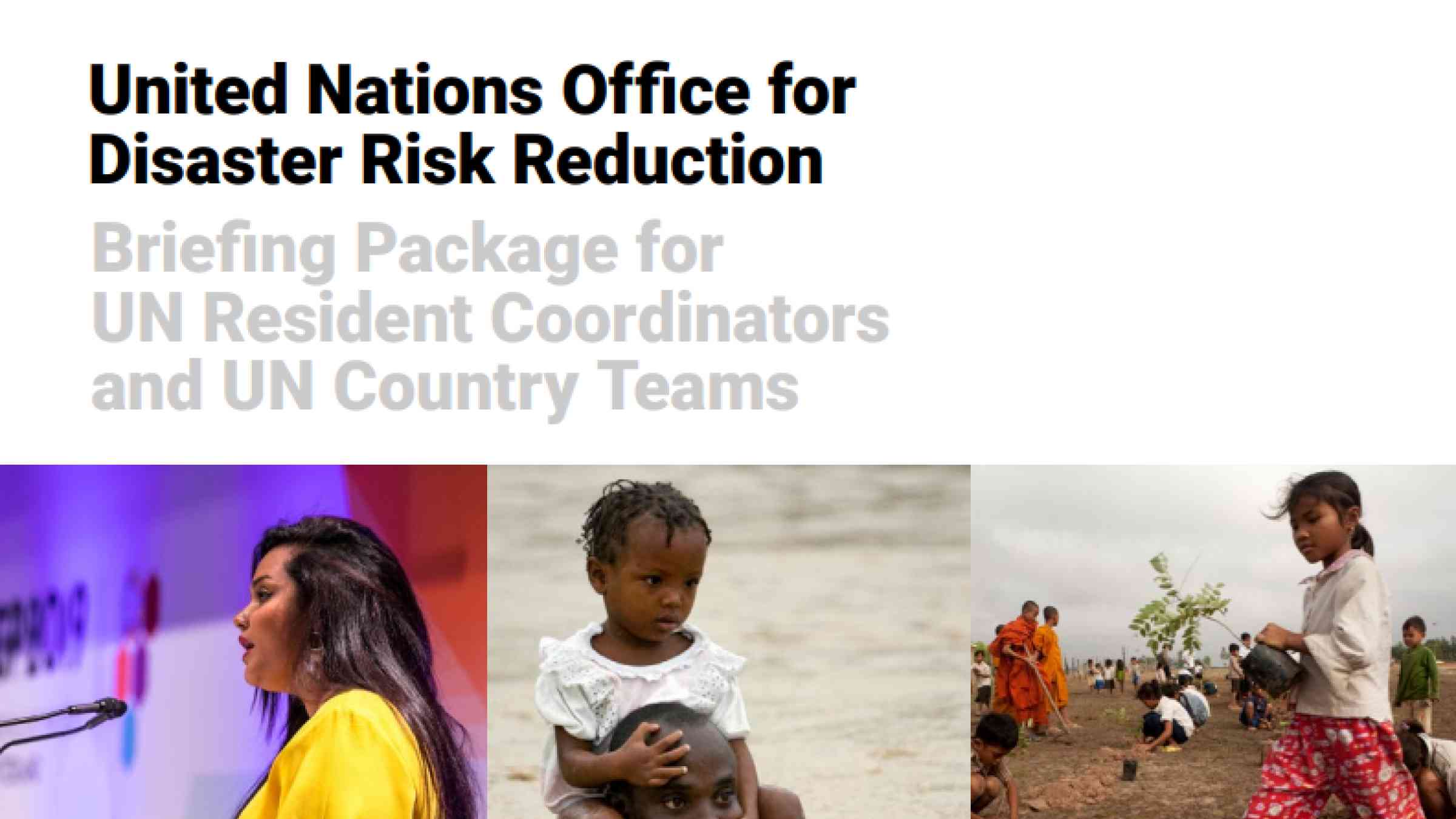
UNDRR is part of the UN Secretariat and is headed by the Special Representative of the Secretary-General for Disaster Risk Reduction.
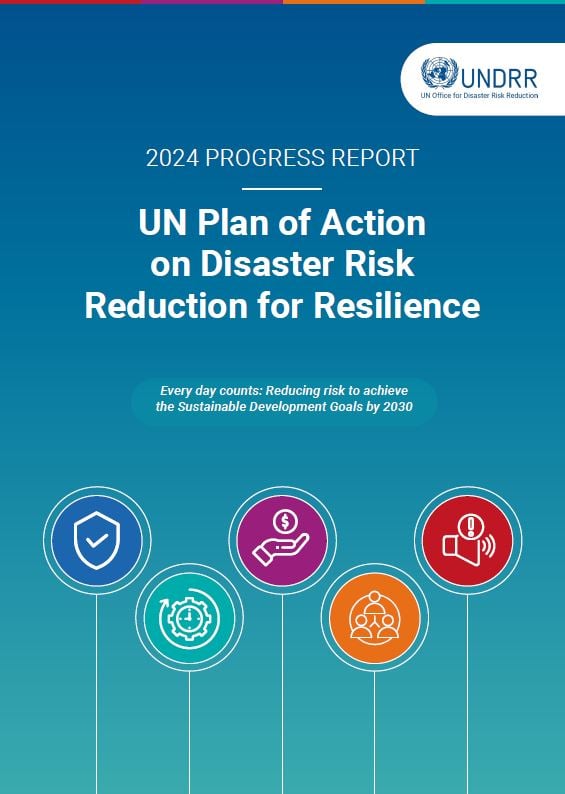
The United Nations Plan of Action on Disaster Risk Reduction for Resilience outlines the UN’s contribution to the implementation of the Sendai Framework. It guides UN support to countries to strengthen risk-informed development programming, planning and investment while ensuring that no one is left behind – at the global, regional and country levels.
UNDRR is a member of the UN Sustainable Development Group, as well as more than 50 UN Country Teams. UNDRR works closely with partners in reducing risk to accelerate sustainable development, including through risk-informing UN Sustainable Development Cooperation Frameworks. The 2024 Quadrennial Comprehensive Policy Review Resolution (QCPR), in which Member States requested the UN development system to strengthen DRR at the country level, provides a solid foundation for advancing this work.
United Nations Plan of Action on Disaster Risk Reduction for Resilience
The Sendai Framework specifically calls upon the entire UN system to work together in a coordinated manner to reduce DRR and support countries in building resilience.
The UN Plan of Action on Disaster Risk Reduction for Resilience: Towards a Risk informed and Integrated Approach to Sustainable Development is the UN’s contribution to ensure a risk-informed approach to the achievement of the 2030 Agenda. It promotes coherence and joint approaches to integrating DRR and climate change adaptation in UN development efforts. The UN Plan of Action on Disaster Risk Reduction for Resilience was endorsed by the UN Chief Executives Board in 2016.
The UN Plan of Action implementation is guided by the following coordination mechanisms, supported by UNDRR:
- The UN Senior Leadership Group on DRR for Resilience
- The UN DRR Focal Points Group
The UN System reports on its contribution to the UN Plan of Action on DRR for Resilience on an annual basis.

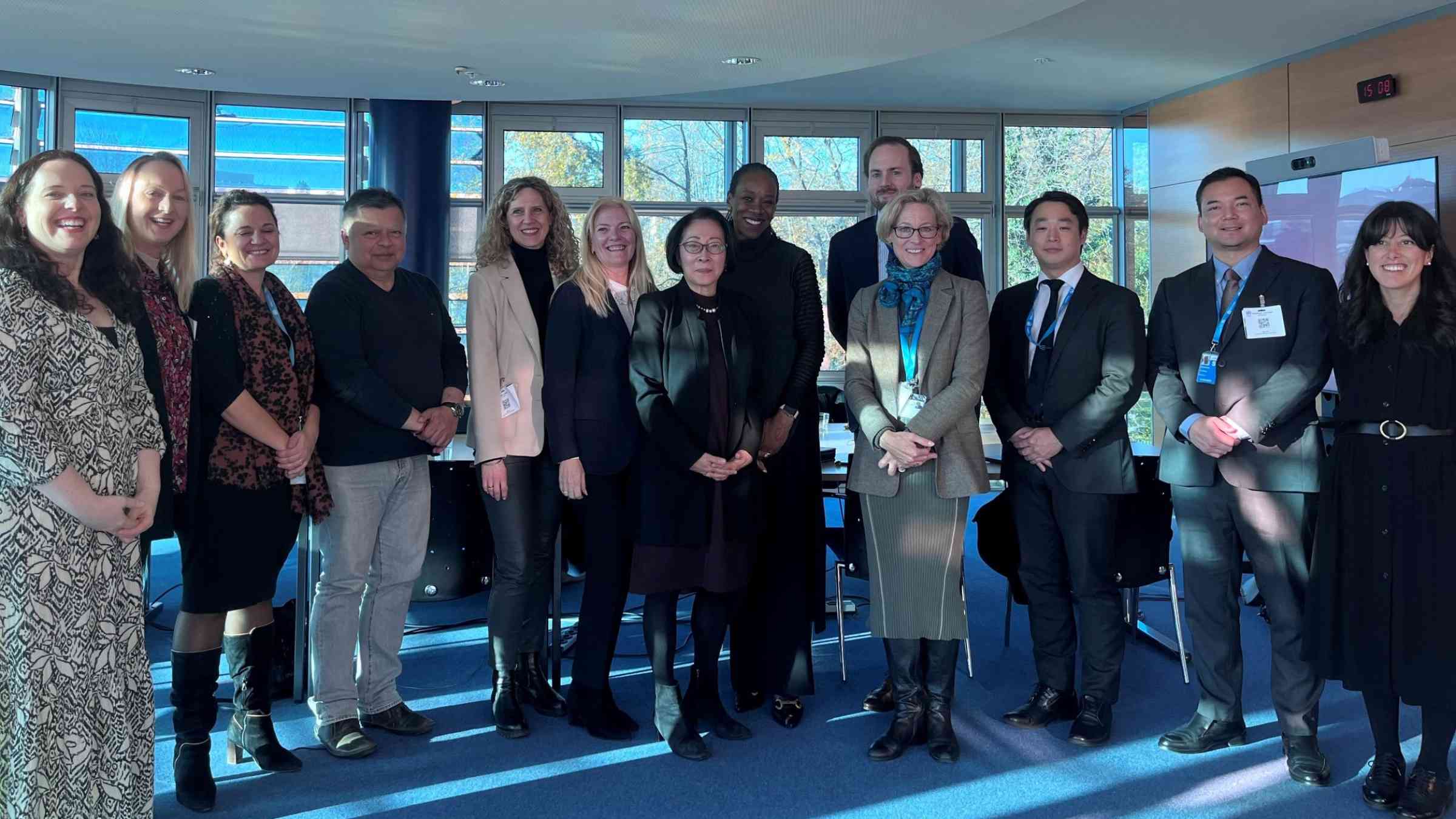
During the 9th Meeting of the UN SLG in 2024, in New York, United Nations leaders discussed scaling up coordinated UN system effort around risks.
Read all UN SLG meeting reports: 2024 (Full Report/Summary) | 2023 | 2022 (Full Report/Summary) | 2021 (Full Report/Summary) | 2020 | 2019 | 2018
The 2030 UN SLG recommendations endorsed by the UN SLG in 2015 will guide the UN system-wide support on disaster risk reduction, climate change adaptation and resilience building until 2030.
Commitments of the UN Plan of Action on DRR for Resilience:
Commitment 1
Strenghten system-wide coherence in support of the Sendai Framework and other agreements, through a risk/informed and integrated approach.
Commitment 2
Build UN system capacity to deliver coordinated, high-quality support to countries on disaster risk reduction.
Commitment 3
Ensure disaster risk reduction remains a strategic priority for UN Partners.
UN Senior Leadership Group on Disaster Risk Reduction
Reducing the risks of disasters from natural and human-made hazards is a critical pre-requisite for achieving the 2030 Agenda for Sustainable Development. To strengthen the UN’s collective contribution, the UN Chief Executives Board for Coordination has established a UN Senior Leadership Group on Disaster Risk Reduction for Resilience (UN SLG). Convened annually by the Special Representative of the Secretary-General on DRR, the UN SLG brings together members from more than 40 UN entities.
The UN SLG plays a central role in ensuring that the UN system works coherently and strategically to deliver a risk-informed 2030 Agenda, while advancing the Sendai Framework, the Paris Agreement on Climate Change, and other key international agreements. The UN SLG also ensures that DRR remains a strategic priority on the UN agenda and for related organizations.
The oversight of the UN Plan of Action has been entrusted to the UN SLG.
In 2023, the UN SLG endorsed the 2030 UN SLG recommendations . These guide UN system-wide support to countries on disaster risk reduction until 2030, combined with the original three commitments of the UN Plan of Action.
2023 UN SLG Recommendations

Recommendation 1
Strengthen risk governance at all levels, including within and across sectors.

Recommendation 2
Accelerate efforts to risk-inform programming in development, humanitarian and peace actions.

Recommendation 3
Support efforts related to investing in DRR for resilience and reforming the financial system to better consider climate change, the environment and other risks.

Recommendation 4
Boost an all-of-society approach to DRR and climate change adaptation by:
- 4.1 Scaling up and systematizing an all-of-society approach by strengthening inclusion and applying a human-rights approach to DRR to leave no one behind.
- 4.2 Enabling gender-responsive DRR and climate change adaptation.
- 4.3 Scaling up and systematizing child-responsive DRR and climate change adaption.

Recommendation 5
Strengthen risk governance at all levels, including within and across sectors.
Maximize efforts around strengthening multi-hazard early warning systems.
UN Disaster Risk Reduction Focal Points Group
United Nations Office for Disaster Risk Reduction in the United Nations Development System
As a member of the UN Sustainable Development Group, UNDRR works to ensure that DRR is a priority in the UN’s support to countries’ sustainable development, through advocacy, development of guidance, knowledge sharing and convening partnerships.
At the regional level, UNDRR works closely with UN partners through Regional Collaborative Platforms, including Issue-Based Coalitions and Peer Support Groups. Through these mechanisms, UNDRR works with UN partners to support UNCTs in integrating resilience into UN Sustainable Development Cooperation Frameworks – with particular focus on risk knowledge, locally-led DRR, and financing for resilience.
At the country level, UNDRR collaborates closely with UN Resident Coordinators and other UN agencies to provide governments with guidance, tools, and partnerships needed to develop and implement effective national and local DRR strategies.
Disaster risk reduction at the core of the Pact for the Future
The Pact for the Future – adopted by world leaders at the September 2024 Summit of the Future – is the most comprehensive international agreement in decades, covering entirely new areas while also addressing issues that have long stalled consensus. It aims to equip international institutions to navigate a rapidly changing world. It is a pressing call to strengthen global cooperation and address the multifaceted challenges of our era-from sustainable development and digital governance to peace and security.
The Pact offers multiple entry points for advancing DRR and resilience-building efforts to accelerate implementation of the 2030 Agenda for Sustainable Development alongside the Sendai Framework, and framing global development beyond 2030, and makes a clear global commitment to promote a disaster risk- informed approach to sustainable development at the local, national, regional and global levels and to accelerate progress on integrating disaster risk reduction into policies, programmes and investments at all levels.

United Nations Office for Disaster Risk Reduction in the United Nations Development System
UNDRR is a member of the UN Sustainable Development Group. UNDRR works to make sure that the UN Development System Reform provides an opportunity to enhance UN support to disaster risk reduction and risk-informing development at country level.
UNDRR works closely with UN partners at regional level through Regional Collaborative Platforms including Issue-Based Coalitions and Peer Support Groups, for example to support UNCTs in risk-informing UN Sustainable Development Cooperation Frameworks.
UNDRR is committed to working closely with UN Resident Coordinators and other UN agencies in-country to better support governments to build relevant and implementable national and local DRR strategies to reduce disaster and climate risk.
Related guidance