
Resilience starts at home: housing accounts for more than half of expected annual building losses
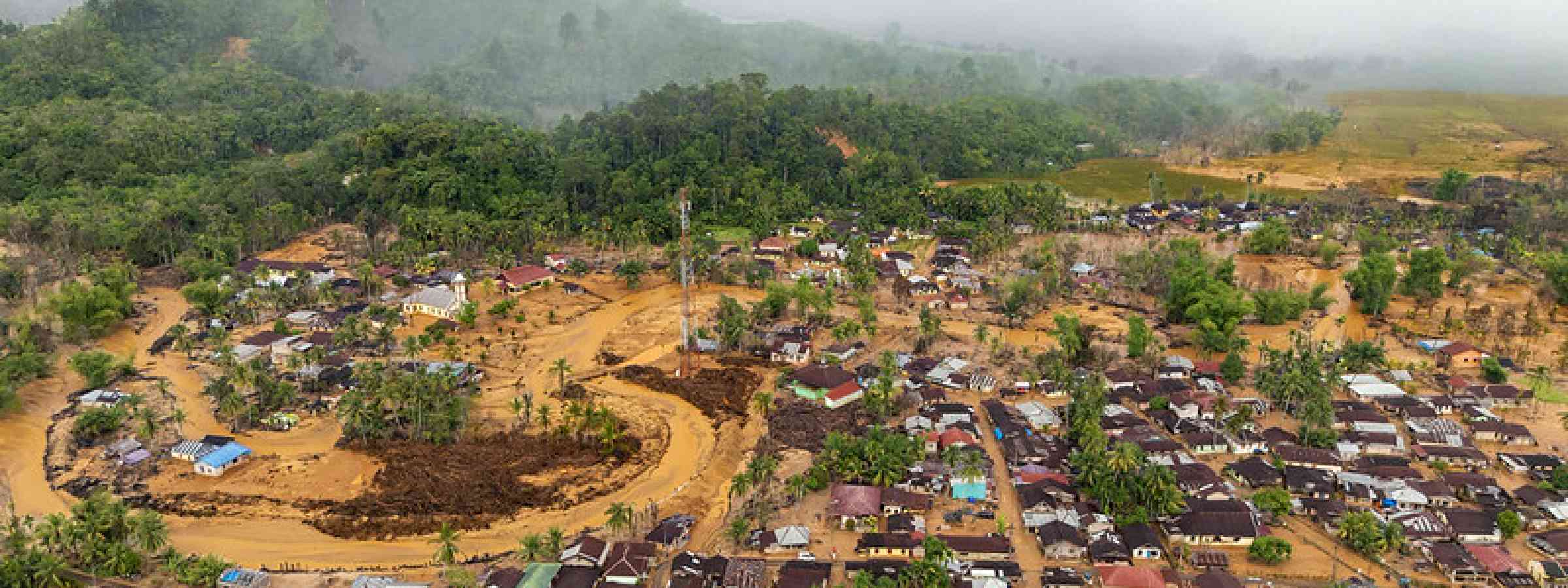
Global risk modelling estimates average annual losses of around US$228 billion for residential buildings from cyclones, floods, tsunamis and earthquakes. Country-reported data show housing accounts for 43 per cent of reported direct economic disaster losses.
Homes account for more than half of the disaster losses expected each year across the world’s building stock, according to global risk modelling provided by the Coalition for Disaster Resilient Infrastructure (CDRI). The model estimates losses from cyclones, floods, tsunamis and earthquakes.
The Global Infrastructure Risk Model and Resilience Index (GIRI) estimates average annual losses of around US$426 billion for buildings, of which approximately US$228 billion – 53 per cent – is associated with residential buildings under the existing climate scenario. The model estimates losses from cyclones, floods, tsunamis and earthquakes.
Housing accounts for a major share of reported disaster impacts
The modelling is consistent with the pattern seen in losses reported by countries through the Sendai Framework Monitor.
Around half of the people reported as affected by disasters experienced damage to or destruction of their homes. Housing also accounted for 43 per cent of the direct economic losses reported by countries through the Sendai Framework Monitor.
Absolute losses can hide unequal burdens
The economic significance of disaster losses depends not only on their value in dollars, but also on the resources and assets available to absorb them. Comparing expected building losses with a country’s capital stock can show where recurrent losses place particularly heavy pressure on accumulated assets.
Looking at losses relative to accumulated assets changes the geography of risk. Countries that do not rank among the largest losses in dollar terms can face a much heavier economic burden.
Reducing losses before disasters happen
The scale and distribution of these losses strengthen the case for treating housing resilience as an investment priority.
Reducing future losses means addressing risk before homes are damaged or destroyed. Country-reported data already point in this direction: the Sendai Framework Monitor analysis highlights the need to move beyond post-disaster reconstruction towards risk-informed housing policy, resilient investment and better measurement of housing vulnerability.
Resilient homes
- Safer locationsRisk-informed land-use planning that keeps homes out of harm’s way.
- Building standardsRisk-informed building codes, and their enforcement.
- Retrofitting and adaptationInvestment in strengthening existing housing.
- Better measurementImproved information on exposure and vulnerability.
Foundation: risk-informed housing policy and investment
Strengthening housing resilience is an important part of reducing existing risk and avoiding the creation of new risk. Decisions on planning, construction and investment made today will shape the exposure and vulnerability of households for decades to come, with consequences for livelihoods, public finances and sustainable development.