1. Home
  2. Our work
Capacitación
UNDRR trabaja a nivel mundial con gobiernos, instituciones y con el sector privado y la sociedad civil para capacitar e incorporar la reducción del riesgo de desastres y la adaptación al cambio climático en el desarrollo sostenible.

El riesgo es un asunto de todas las personas. UNDRR no puede reducir el riesgo de forma solitaria.

El Global Education and Training Institute (GETI) de UNDRR, situado en Incheon, República de Korea, trabaja globalmente con los gobiernos, instituciones, el sector privado y la sociedad civil para fomentar la capacidad de incorporar la reducción del riesgo de desastres y la adaptación al cambio climático en el desarrollo sostenible.

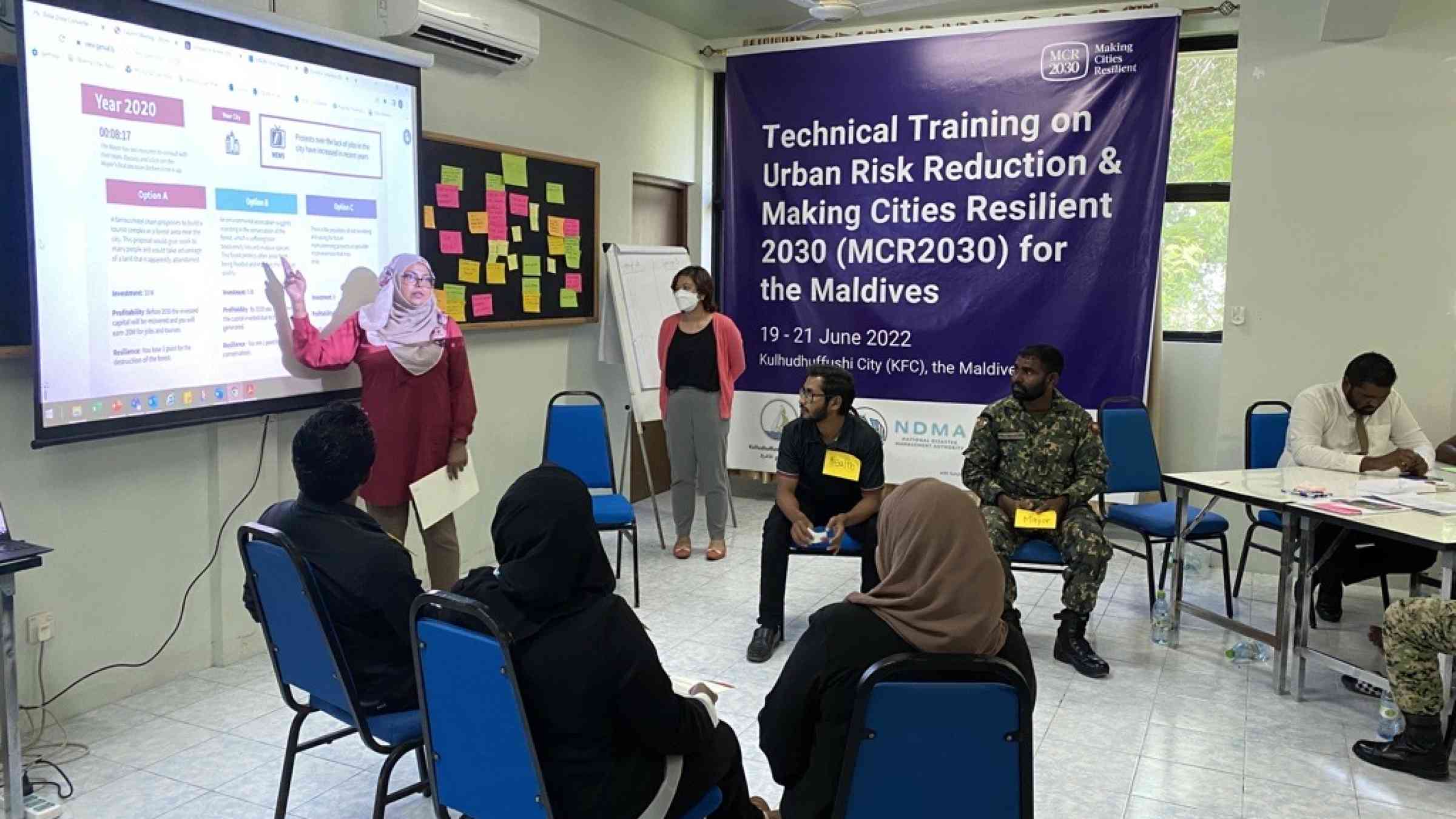
A través de nuestra campaña Desarrollando Ciudades Resilientes, convocamos y apoyamos el aprendizaje interurbano para fortalecer la resiliencia y proporcionar apoyo para la capacitación de las instituciones nacionales que trabajan en temas de resiliencia, apoyando el intercambio de mejores prácticas.

Contáctenos para aprender más sobre nuestros cursos personalizados bajo solicitud.


Próximos programas de formación UNDRR

No results found.

Capacitaciones bajo demanda

Case study
Through their Disasters Avoided project, the authors are demonstrating the benefits of proactive DRR for everyone, including through the effective use of Earth observations, so that no one is left behind.
  • United Nations Office for Disaster Risk Reduction (UNDRR)
Case study
This paper underlines that traditional and indigenous knowledge (TIK) has demonstrated adaptability and resilience, allowing communities to thrive in challenging environments by developing context-specific disaster risk reduction (DRR) strategies.
  • United Nations Office for Disaster Risk Reduction (UNDRR)
Case study
Ubicación: Ecuador
This case study presents the UKRI-GCRF Urban Disaster Risk Hub's "Tomorrow's Cities" initiative which has implemented an interdisciplinary and participatory approach to disaster risk reduction (DRR) in Quito.
  • United Nations Office for Disaster Risk Reduction (UNDRR)
Case study
Ubicación: Guatemala
This case study presents a Guatemala City pilot project which exemplifies game engines' successful application, integrating multi-hazard risk assessments and NASA data into an interactive 3D environment.
  • United Nations Office for Disaster Risk Reduction (UNDRR)
Case study
Ubicación: Lebanon
After seven days of heavy rain in January 2024, two rivers in Northern Lebanon flooded simultaneously, covering a large area with mud and debris. Coastal roads were submerged, blocking food aid distribution and preventing some people from getting to work.
  • United Nations Office for Disaster Risk Reduction (UNDRR)
Case study
Ubicación: Jamaica
On January 8, 2021, heavy rains deluged Jamaica’s Montego Bay, flooding roads and damaging vehicles and buildings alike. A total of 40mm of rain fell in a short period, affecting an estimated 933 people, including several injuries in the town.
  • United Nations Office for Disaster Risk Reduction (UNDRR)
Case study
Ubicación: Portugal
During the spring and summer of 2022, Portugal experienced more than four distinct heatwaves, the most severe of which ran from July 2 to July 18. This exceptional event killed almost 2,400 people and triggered several devastating forest fires.
  • United Nations Office for Disaster Risk Reduction (UNDRR)
Case study
Ubicación: Indonesia
In 2023, Indonesia experienced a significant surge in wildfires, with the total area burned reaching 1.16 million hectares (2.87 million acres), a fivefold increase from 2022. This dramatic rise in fires was largely attributed to the El Niño phenomenon
  • United Nations Office for Disaster Risk Reduction (UNDRR)
Case study
Ubicación: Canada
The 2023 wildland fires across Canada were unprecedented. In Alberta, the fires became out of control in late spring, followed by large wildfires in Quebec, Nova Scotia, Northwest Territories, and British Columbia as the summer progressed.
  • United Nations Office for Disaster Risk Reduction (UNDRR)
Case study
Ubicación: Americas
Droughts have been a persistent hazard in Central America for more than 12,000 years, impacting ecosystems, life zones, and resource use. While these dry spells vary in size, duration, and impact, they have been handled in very different ways.
  • United Nations Office for Disaster Risk Reduction (UNDRR)

Muestras de cursos

Relacionado