
Using disaster loss data to develop national risk financing strategies in Sierra Leone
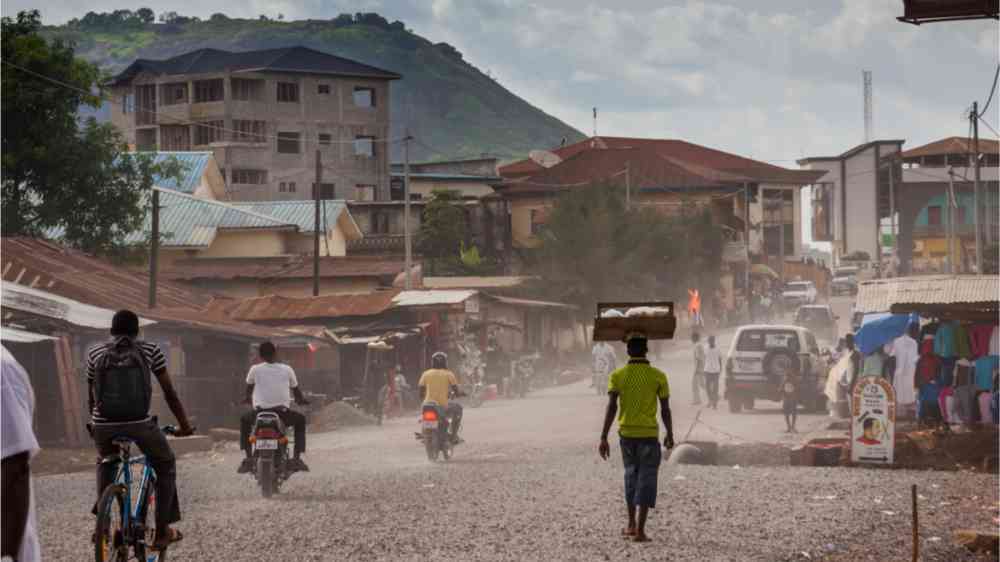
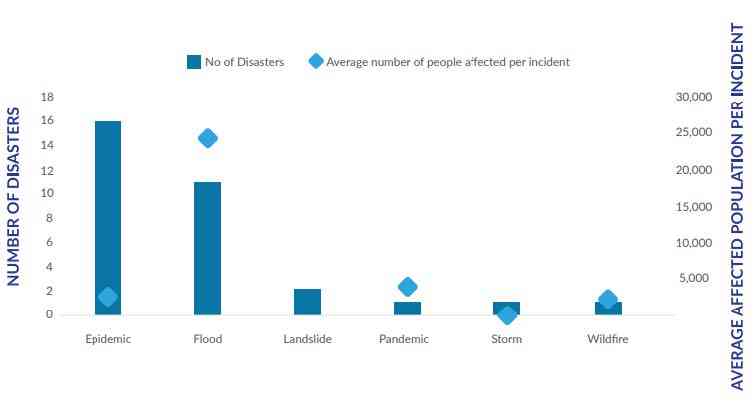
In the absence of coherent, high-quality national data on disaster losses, Sierra Leone had to revert to using global data sets: EM-DAT13 data were used to establish basic occurrence and impact metrics, such as the number of disaster events and people affected, while World Bank data were used to define vulnerability, with the usual caveats on granularity (see Figure 16). Since then, it has recognized the need for a strong national disaster loss accounting system, the development of which is now an explicit action in the strategy.
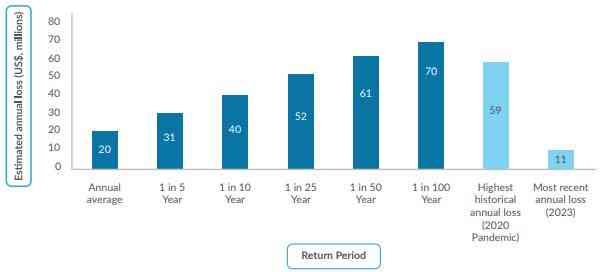
Using a probabilistic risk modelling approach, and with technical assistance from the World Bank, an assessment of estimated average annual losses (around US$20 million) and of probable maximum losses by return period was developed (see Figure 17), the financing gap the government may face established, and possible alternative funding strategies identified (see Figure 18). As global database do not contain records on localized events that do not meet the thresholds for registration (based on impact and/or humanitarian assistance requests),14 nationally maintained disaster losses and damages tracking systems and official disaster statistics would have enabled more accurate modelling as they capture frequent and localized events which, despite not being included in the international humanitarian databases and media channels, have a significant cumulative impact on local livelihoods, human development and regional economies.
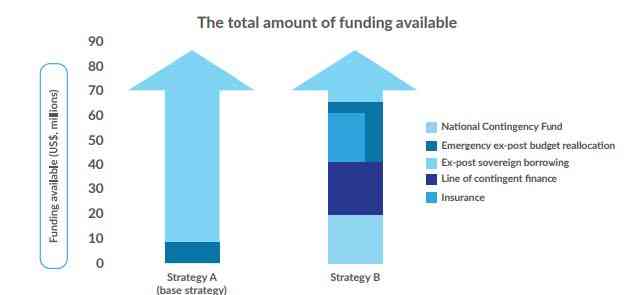
The strategies are then broken down further by types of financing instruments that may be used under each, for different types of events (see Figure 19). The analysis shows that under the current (baseline) strategy, the government needs to reallocate budgets and secure access to additional borrowing in the case of a 1-in-50- year loss event, whereas the alternative (Strategy B) reduces the need for borrowing, reducing cost and time to respond to disasters.
Nationally produced disaster statistics with more granular impact information (including by geography, sector and subsector or affected groups [e.g. farmers, industry workers, etc.]) and losses accounted for in monetary terms according to consistent institutionalized methodologies would enable some of the gaps and inaccuracies associated with globally collated data on economic costs to be addressed. These are the types of data point that are less consistently reported in humanitarian-driven data sets, where the focus is on human direct impacts such as deaths and injuries and rough estimates of economic costs, when available.
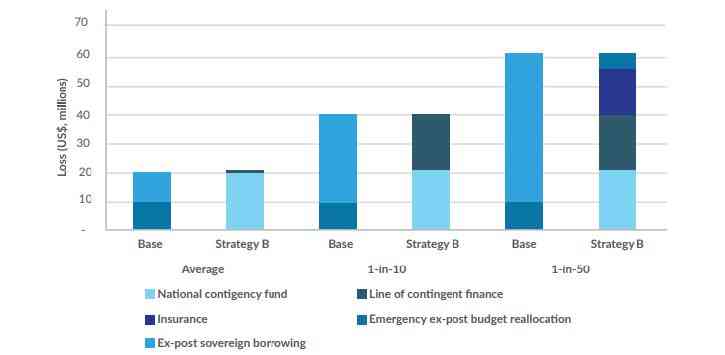
The analysis further highlights that a risk-layered financing strategy could be more cost-efficient, particularly for moderate and extreme events, creating potential annual savings of US$8 million in the case of a moderate event and of up to US$37 million for extreme events. As mentioned above, such an analysis can be further enhanced and the performance of the risk financing strategy more effectively monitored with access to locally collected and nationally aggregated disaster damage and loss data. Therefore, the current disaster risk financing strategy, running from 2024 to 2028, makes explicit provision for investments into a national loss accounting system: "Establish and develop a system (DesInventar, UNDRR/ Sendai) in Sierra Leone for recording disaster damage, capable of producing annual reports. This would involve collecting available historical information about disaster losses." (Sierra Leone, Ministry of Finance and World Bank, 2024).