Understanding vulnerability in Sri Lanka: Combining disaster losses and damages data with national survey data
In Sri Lanka, data collected as part of national citizen surveys provide a clear picture of the multiple dimensions of vulnerability and could directly inform hotspot, vulnerability and risk analysis (UNDP, Oxford Poverty and Human Development Initiative [OPHI] and Government of Sri Lanka, 2023 (c)). Analysed through the lens of the Multidimensional Vulnerability Index (MDVI) (UNDP, 2023 (a)), data from the surveys clearly highlight pre-existing vulnerabilities. For example, 50 per cent of the population are vulnerable and deprived in their 'adaptive capacity to disasters', 35.6 per cent in terms of access to water and 33.4 per cent with regard to household debt.
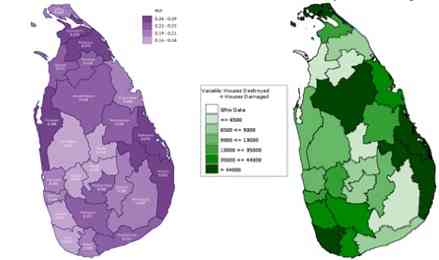
Regional differences in vulnerability levels are also apparent and have the potential to provide useful information for risk analysis, particularly when combined with more granular information from the national disaster losses and damages database (see Figure 2).
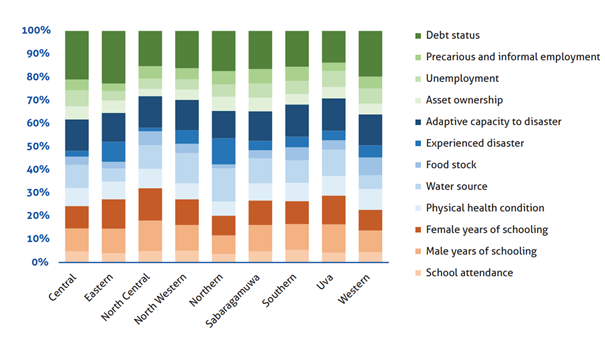
The factors contributing to high vulnerability in rural areas, such as indebtedness (17.8 per cent) and access to water sources (10.7 per cent), further indicate priority areas for risk reduction efforts (see Figure 3).
As shown in the composition of the multidimensional vulnerability index, experienced disasters make a significant contribution to how multidimensional vulnerabilities are experienced both in rural and urban areas across all provinces in Sri Lanka. When analysed along with subnational disaggregated data on disaster losses, damages and impacts, for example to understand the relationship between debt, assets, stock or water-related issues (scarcity, quality and access) and disaster impact, the results could indicate priorities for risk-informed development as well as for disaster risk reduction.
Additional disaggregation, for example in terms of disability status in the losses and damages data would enable an assessment of how other differentiated vulnerability dimensions in regard to health, education and adaptative capacity are exacerbated by disaster impact and at the same time exacerbate susceptibility to impact.