Global Status of Multi-Hazard Early Warning Systems 2026

The fifth edition of the report is a stocktake at a pivotal moment: one year before the Early Warnings for All goal of protecting everyone on Earth by 2027. Coverage and comprehensiveness keep rising — but fewer than half of reporting countries have systems that work end-to-end.
The first half of 2026 brought major earthquakes, flash floods, wildfires and heat extremes, while an intensifying El Niño raises the odds of further extremes. Countries with more comprehensive multi-hazard early warning systems experience significantly lower disaster mortality and fewer people affected.
“This is not a 100 m sprint. It is a marathon. We must run it together and make sure nobody is left behind.”
Achieving Early Warnings for All requires better information sharing, increased financing and deeper partnerships including with technology providers and businesses. The devastating glacial disaster in Nepal and China underscored the transboundary nature of many risks.

Kamal Kishore
Special Representative of the UN Secretary-General for Disaster Risk Reduction and Head of UNDRR

Celeste Saulo
Secretary-General of the World Meteorological Organization (WMO)
Four pillars, one end-to-end system
A warning only saves lives if every link in the chain works. Of the 136 countries reporting MHEWS, only 64 report capabilities across all four pillars. Select a pillar to explore.
Each pillar is in place in at least half of reporting countries. But only 64 countries have all four, so in most countries the chain still has a missing link.
Disaster risk knowledge is the weakest link: the lowest coverage and the lowest average score.
Countries reporting each MHEWS pillar, out of 136
Select a bar to read more
Pillar 1: Disaster risk knowledge72 countries out of 136
Lowest coverage and comprehensiveness of the four pillars, with high disparities among LDCs, SIDS, LLDCs and fragile contexts.
Pillar 2: Detection, monitoring and forecasting102 countries out of 136
Average scores indicate comprehensive capability, but gaps remain in observation coverage, data exchange and connectivity.
Pillar 3: Warning dissemination and communication123 countries out of 136
The strongest pillar globally. Cell Broadcast and CAP-enabled alerts help warnings reach more people than ever.
Pillar 4: Preparedness to respond111 countries out of 136
Close to comprehensive on average. Anticipatory action frameworks and activations continue to grow.
All four pillars64 countries out of 136
Fewer than half of reporting countries have capabilities across the whole chain, from risk knowledge to preparedness.
Source: UNDRR, Sendai Framework Monitor (2026)
More countries are warned. Not every warning system is complete.
Five charts, from how far MHEWS coverage has come to where the gaps remain.
More than twice as many countries report MHEWS as in 2015
136 countries now report the existence of multi-hazard early warning systems, up from 56 in 2015, an increase of 143 per cent.
Coverage is uneven across regions and country groups
More than four in five countries in the Arab States and among LLDCs report MHEWS. In the Americas and the Caribbean, and among SIDS, it is barely half.
Regions
Country groups
More countries report each pillar, but quality has stalled
Since 2022, around 20 more countries report on every pillar. Average scores barely moved, and preparedness to respond slipped from 0.74 to 0.70.
Disaster risk knowledge remains the weakest link on both counts.
Where systems exist, they are getting stronger
Every region and country group raised its MHEWS score. The global average rose by 47 per cent. Asia and the Pacific and LDCs improved most; the Americas and the Caribbean least.
Depth differs by pillar and region
Warning dissemination is the strongest pillar: comprehensive is the most common level in every region. Disaster risk knowledge is the shallowest, and most countries do not yet report on it.
Early warning in action
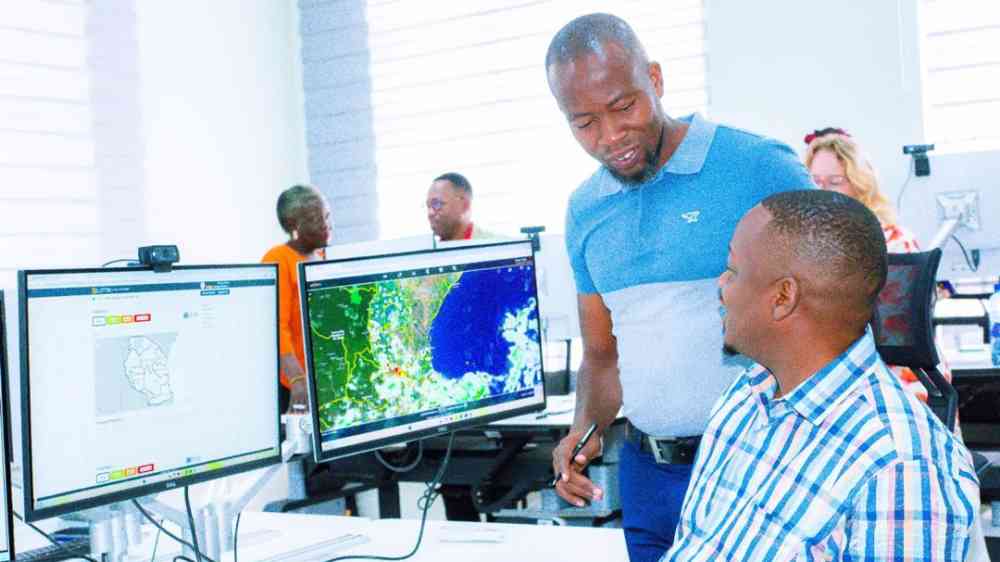
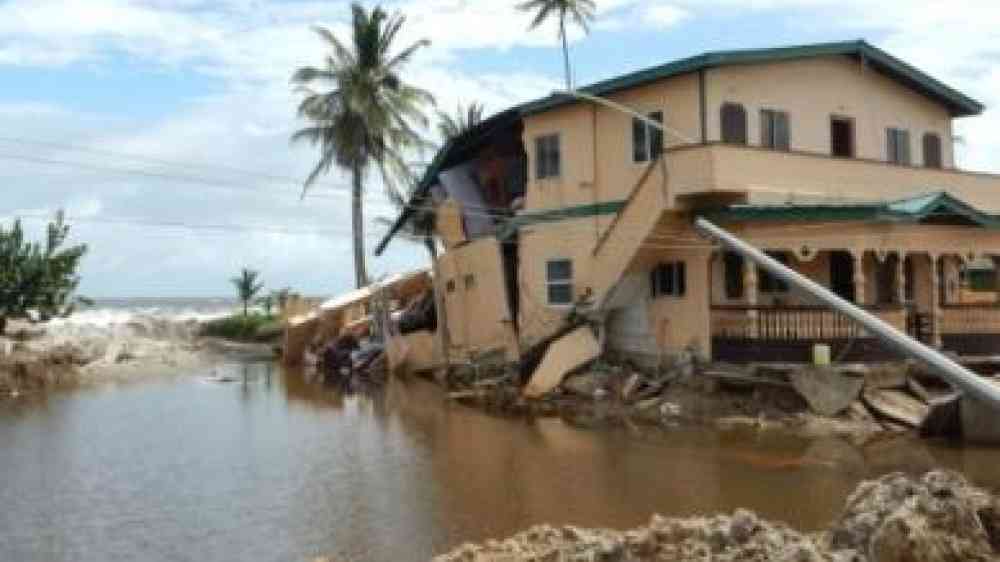
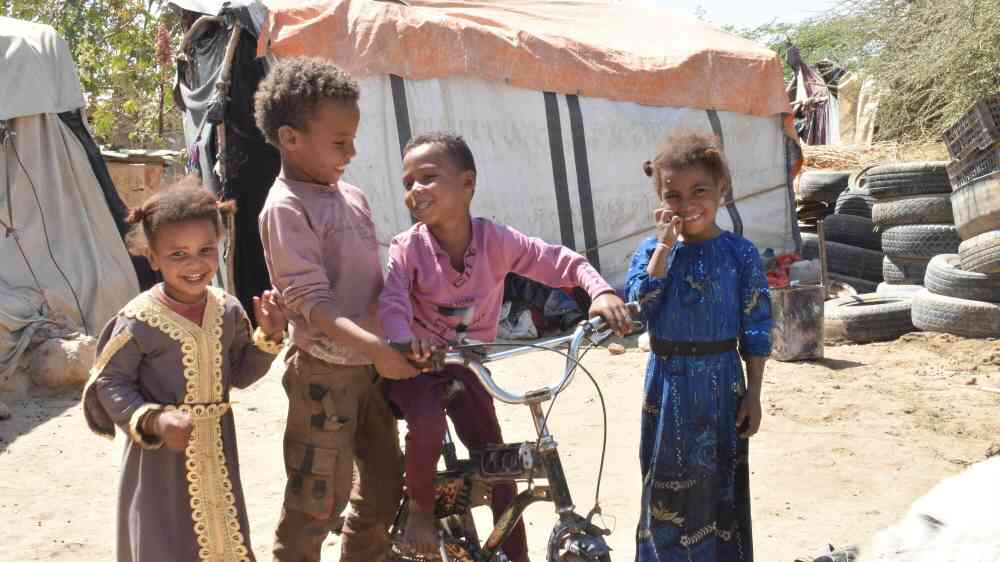
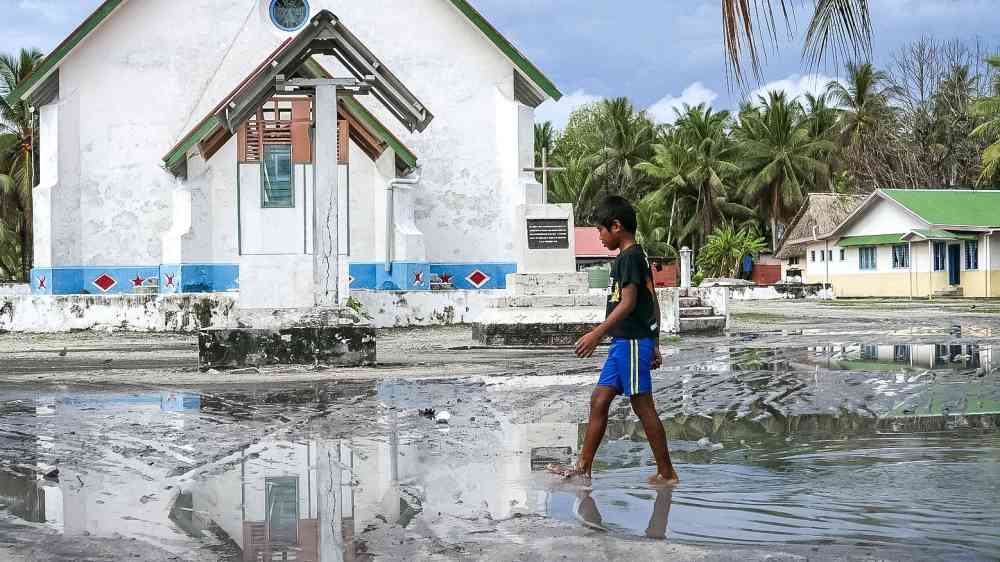
Events during the reporting period showed both the value of MHEWS and the cost of gaps.


Key findings and outlook
The 2027 milestone is not an end-point but the foundation for a longer-term effort. Select a finding to read the recommendation.
- 1. Early warning systems are demonstrably saving lives.
1. Early warning systems are demonstrably saving lives.
The positive trend observed in previous years has been maintained and is expected to continue, despite the context of a changing climate, emerging hazards and increasing economic losses due to disasters. There is also scope for the ratio to increase as the focus of EW4All transitions from monitoring MHEWS coverage and comprehensiveness to measuring system effectiveness, driving the need to ensure that investments in MHEWS result in measurable savings in both human and economic terms.
- 2. Global MHEWS capacity is expanding, but gaps in coverage and comprehensiveness continue to limit universal protection.
2. Global MHEWS capacity is expanding, but gaps in coverage and comprehensiveness continue to limit universal protection.
The development of MHEWS plans and EW4All roadmaps sets the stage for the continuation of the observed improvement in actual and reported MHEWS coverage and comprehensiveness into and beyond 2027. This needs to happen at pace globally, regionally, within the country groups and at both national and local levels. At the national level, the strategic ambition to develop MHEWS must also be reflected in national adaptation plans (NAPs) and Nationally Determined Contributions (NDCs) with clear responsibilities and costings.
- 3. While capabilities are improving, the next step is to demonstrate their effectiveness in driving action.
3. While capabilities are improving, the next step is to demonstrate their effectiveness in driving action.
Global efforts to evaluate MHEWS effectiveness are expected to accelerate through the roll-out of the AER methodology, wider adoption of after-action reviews, and continued development of the EW4All Effectiveness Index. In combination, assessment of system capability (including coverage and comprehensiveness), and effectiveness, provide the basis for understanding MHEWS maturity. The proposed Effectiveness Index offers a practical pathway for moving beyond capacity-based assessments towards a globally comparable measure of warning quality and performance. Future iterations may incorporate behavioural responses, protective actions and impact reduction where data are available. As more countries apply structured evaluation approaches and share lessons learned, a stronger evidence base will emerge to identify what makes MHEWS effective across different hazards and contexts.
- 4. MHEWS are being embedded in national strategies and plans as a coherent, holistic, collaborative, locally led and people-centred approach to protecting communities
4. MHEWS are being embedded in national strategies and plans as a coherent, holistic, collaborative, locally led and people-centred approach to protecting communities
Governments are increasingly working collaboratively with a range of MHEWS stakeholders to develop frameworks and plans for MHEWS scale-up. These trends are set to continue, supported by the best practice, shared learning and technical expertise made available through national, regional and global institutions and forums, as well as the meaningful participation of local communities.
- 5. Momentum is building and new financing pathways are emerging, but sustainability remains critical.
5. Momentum is building and new financing pathways are emerging, but sustainability remains critical.
There is considerable demand for financial and technical support for implementing MHEWS, as shown by the pipelines of countries seeking funding from CREWS, GCF and SOFF. The results of these investments will bear fruit in the coming years. Yet having built both appetite and momentum, they must now be sustained with funding to both establish and operate MHEWS. Evidence of MHEWS effectiveness will help agencies to argue the case for reliable funding through national budgets. At the same time, making operational funding dependent on the reliable and timely exchange of data will benefit countries and the wider global community.
- 6. Innovations and new technology bring opportunities to scale up MHEWS implementation but unequal access and technology and infrastructure gaps risk widening existing disparities.
6. Innovations and new technology bring opportunities to scale up MHEWS implementation but unequal access and technology and infrastructure gaps risk widening existing disparities.
The introduction, testing and roll-out of innovative approaches, new technology and upgrades to underlying infrastructure is driving improvements, large and small, both within and across the pillars of MHEWS. This trend is set to continue as more countries take advantage of shared learning, best practice and digital tools that can be tailored to fit national contexts and meet local needs. AI is already transforming MHEWS, particularly by strengthening data integration, analysis and decision support across the early warning value cycle. However, its adoption needs to be carefully governed, with robust validation, transparency and meaningful human oversight.
- 7. Progress in disaster risk knowledge provides a strong foundation for further advancement.
7. Progress in disaster risk knowledge provides a strong foundation for further advancement.
Global guidance on standards and best practices for multi-hazard risk assessments and for the selection of exposure and vulnerability indicators, as well as operational guidelines for FCV and mobile populations, are helping shape and steward the disaster risk knowledge landscape. The continued roll-out of DELTA Resilience lays the foundation for a step change in disaster risk knowledge capabilities, while regional platforms seek to operationalize risk and impact data. These systems simultaneously improve the availability, accessibility and usability of foundational data sets. Technical staff are acquiring new skills to make the most of these systems and integrate them into their standard operating procedures through workshops and training, as well as new global guidance tools. Meanwhile, the development and sharing of best practice provides entry points for countries to fully utilize all available tools and data sets, including ILK.
- 8. Observing networks and forecasting skills are improving and warning services are increasingly available but impact-based approaches are not widespread.
8. Observing networks and forecasting skills are improving and warning services are increasingly available but impact-based approaches are not widespread.
While continuing to address gaps in observing networks (for example, through SOFF), in many countries the basic hydrometeorological infrastructure exists, allowing the focus to shift to the use of this information, especially the scaling up of IBF through programmes such as SWFP and initiatives such as CREWS. This work is underpinned by the new Early Warning Technical Regulations which come into force at the start of 2027 and the development of other guidelines and toolkits that collectively help countries prepare for and respond to emerging and transboundary hazards such as heat, which may require a different approach to the country’s priority hazards.
- 9. The roll-out of mobile-based public warning systems is extending the reach of warnings but persistent gaps reinforce the need for an inclusive, multichannel approach.
9. The roll-out of mobile-based public warning systems is extending the reach of warnings but persistent gaps reinforce the need for an inclusive, multichannel approach.
In countries that have not yet been able to implement CAP or mobile-based systems such as CB, many of the foundations have been set through mapping and assessments, as well as institutional strengthening and staff training. With sufficient funding to both build and sustain these systems, further improvements in coverage and comprehensiveness are expected. Yet consistent messaging across multiple channels is still essential, both to reach everyone and to prompt action at every level of society.
- 10. Where anticipatory action is being embedded in national systems, activated plans are saving lives, yet many countries lack the legal frameworks and financing for this proactive approach.
10. Where anticipatory action is being embedded in national systems, activated plans are saving lives, yet many countries lack the legal frameworks and financing for this proactive approach.
The year-on-year growth in the number of anticipatory action frameworks is expected to continue. This is supported by a growing evidence base for the benefits of anticipatory action, an increased appetite for scale-up among countries and the availability of guidance, tools and technical assistance for implementation. It is also driven by the urgent need for communities to be better prepared, especially in the context of a changing climate, emerging hazards and dynamic contexts.
Previous editions
Track how global MHEWS coverage has changed since the series began in 2022.