
Global Status of Multi-Hazard Early Warning Systems 2025 | Target G
Disaster-related mortality in countries with more comprehensive Multi-Hazard Early Warning Systems (MHEWS) capabilities is nearly six times lower than in countries with limited capabilities.
In its third year since the global call for Early Warnings for All (EW4All), more than 60 per cent of all countries – and more than half of the countries in each region – have reported the existence of MHEWS.
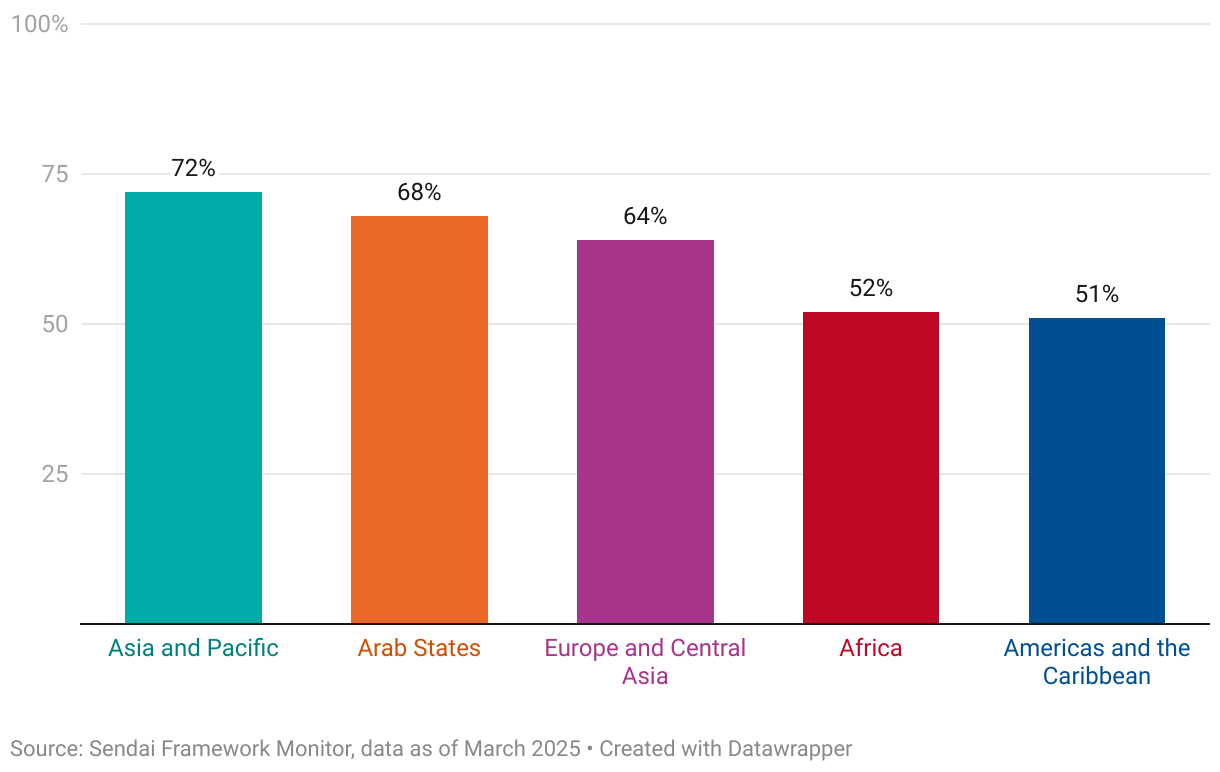
The number of countries reporting disaster risk reduction (DRR) strategies and local plans for early warnings has increased year-on-year, and most countries with MHEWS capabilities also have DRR strategies. Importantly, there is also evidence of MHEWS capabilities being more comprehensive where DRR strategies are more advanced. Advances in science and technology – for example, within forecasting – have led, and will continue to lead, to improvements in MHEWS capabilities.
Global Status of Multi-Hazard Early Warning Systems 2025
We are under no illusion about hard realities of tighter budgets, competing priorities and challenges facing multilateralism. But amid these complexities, there is one common denominator: the human desire and economic necessity to be safe from disasters. And one of the most cost-effective ways to achieve that is through multi-hazard early warning systems.
They are not a cost to taxpayers, but an investment in resilience.
Let us unite around achieving this goal and work to ensure that every country and every person is protected from disasters. Early warnings work. They must work for everyone, everywhere.

Special Representative of the United Nations Secretary-General for Disaster Risk Reduction and Head of the United Nations Office for Disaster Risk Reduction

Secretary-General of the World Meteorological Organization
Ensuring MHEWS reach those most at risk

Placing local actors and communities at the heart of MHEWS design and equipping them to be active participants ensures that systems reflect local needs.

Warnings are only effective if they are received, understood, trusted and acted upon – by everyone.

If warnings are to reach everyone, everywhere, a multichannel approach is needed.

The trust and credibility of warnings are as critical as the technology itself. Risk perception strongly shapes how people respond to alerts.
Featured hazards
Early Warning System averts lightning disaster: Case study from Barbados
On 4 August 2024, a tropical wave – monitored by the Barbados Meteorological Service (BMS) – created unstable conditions just as the Soca 5.0 concert was set to begin at the National Botanical Gardens. Initially, BMS issued a thunderstorm watch, later upgraded to a warning in coordination with the Department of Emergency Management (DEM) and the Minister of Home Affairs.
Based on risk assessments and historical patterns, the event was postponed and the venue evacuated. The decision was not based solely on instinct or precaution. Using geospatial tools and lightning strike data provided by BMS, authorities confirmed that multiple lightning strikes occurred within a 5-kilometre radius of the venue on 4 August. Given the presence of thousands of attendees, metallic stage equipment and barricades, the site was highly exposed.
A geographic information system (GIS)-based buffer analysis after the event confirmed that a minor westward shift in the storm’s path could have resulted in direct strikes at the concert location. In such a setting, even a single lightning strike could have caused mass casualties. By integrating risk data with real-time weather forecasts, Barbados avoided what could have been a national tragedy. Lessons learned from this event include the importance of using multiple communication channels, addressing concerns in real time and fostering public trust long before a hazardous event occurs.

Advancing Early Warning System for Sand and dust storms (SDS): Case studies from the Arabian Peninsula, Cameroon and Iraq
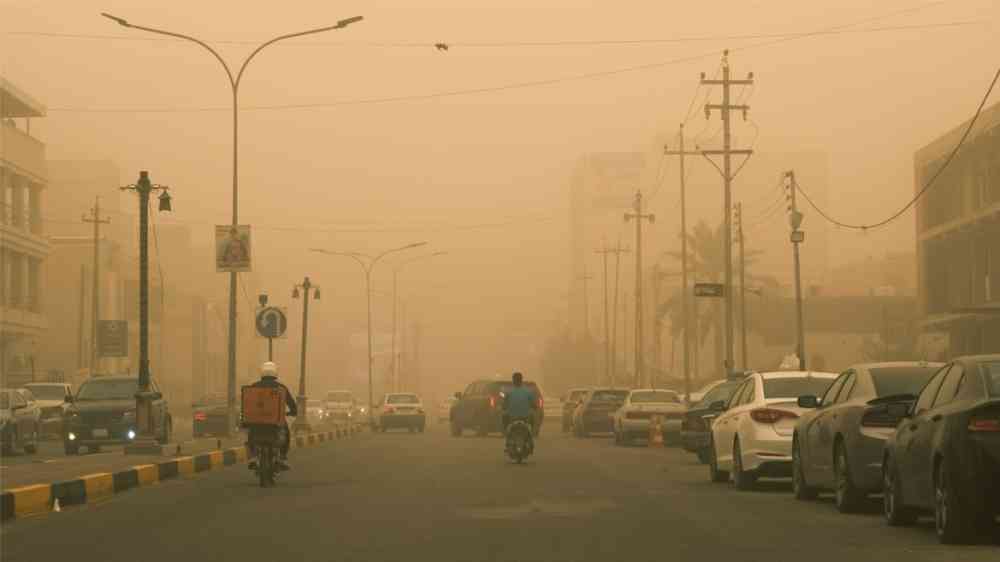
Since 2022, the increasing frequency and severity of SDS across Iraq, Kuwait and eastern Saudi Arabia have underscored the urgency of effective EWS for SDS. In response, both national and regional institutions have adopted integrated, multi-hazard approaches to forecasting SDS and disseminating forecasts and warnings. These activities have yielded tangible benefits for public health, institutional preparedness and early action.
In Iraq, the Iraqi Meteorological Organization and Seismology – supported by the United Nations Development Programme (UNDP) and WMO – launched a robust EWS combining satellite data, local observations and predictive models. Coordinated efforts with media, health authorities, and civil defence enabled timely dissemination of warnings through SMS, mobile apps and mass media, contributing to a 20 per cent reduction in respiratory-related emergency visits during SDS events. Schools and airports became more strategic in their response by closing facilities in advance. Improved inter-agency coordination also led to improved preparedness and response. Integration of SDS alerts into broader MHEWS platforms could further strengthen anticipatory action.
Meanwhile, on the Arabian Peninsula, real-time forecasts and advisories from the Sand and Dust Storm Regional Center empowered the Saudi National Center for Meteorology to issue proactive warnings ahead of severe storms, including one on 14 April 2025. Despite technical advances, the public’s underestimation of SDS risk – especially among vulnerable groups – prompted awareness-raising campaigns via social media, official websites and government workshops. These efforts enabled institutions to suspend outdoor activities, notably protecting children from hazardous exposure.
Across both contexts, the integration of local knowledge with advanced data enhanced forecasting accuracy. Key enablers included strategic partnerships with media and health sectors for comprehensive outreach, and multi-stakeholder coordination for coherent response planning. However, reliance on manual alerts remains a limitation. There is a shared need for investment in automated, multilingual warning systems as well as reliable digital infrastructure and ongoing community engagement to ensure MHEWS lead to early action. In Cameroon, the Department of National Meteorology at the Ministry of Transport creates a national weekly multi-hazard meteorological bulletin, which includes warnings for SDS. Written in simple language and accompanied by a map to show where the impact is expected to be greatest, it enables recipients of the bulletin to prepare for the impact of SDS.
Mitigating Glacial Lake Outburst Floods (GLOFs) in the Himalayan region
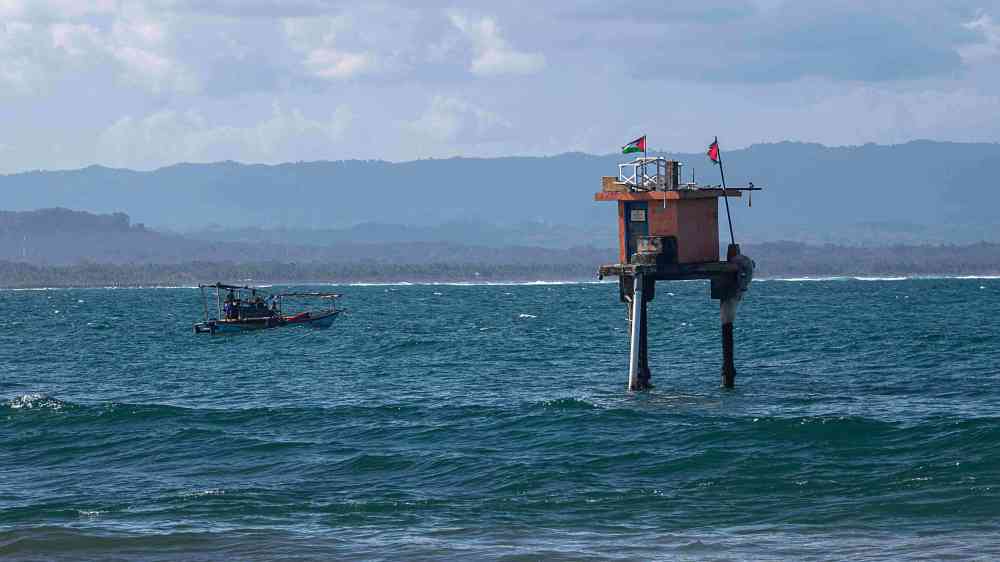
The approach taken by India to mitigate GLOFs in the Indian Himalayan region has shifted from reactive relief to proactive resilience. Catalysed by major GLOF events in 2013 and 2023, the National Disaster Management Authority (NDMA) established the National GLOF Risk Mitigation Programme, anchoring national efforts in scientific evidence, advanced technology and multi-agency collaboration. Through coordinated work under the Committee on Disaster Risk Reduction, the government has created a dynamic risk inventory of 195 high-risk glacial lakes out of a broader set of 28,000 identified in the Himalayas – 7,500 within India. Key milestones include targeted field expeditions to 45 lakes, installation of solar-powered automatic weather stations at sites more than 5,000 m above sea level, and deployment of unmanned aerial vehicles and remote sensing for localized hazard mapping.
From mid-2023 to mid-2025, NDMA has streamlined risk assessments, standardized mitigation frameworks and expanded MHEWS capabilities in high-altitude terrains. Structural solutions like lake drawdowns, bunding and siphoning are complemented by capacity-building through workshops, the development and implementation of emergency protocols and community planning activities. The NDMA’s real-time coordination with states and experts encourages operational viability and scientific standards.

Global status of MHEWS
Key findings and outlook
Early warning systems are demonstrably saving lives.
The positive trend observed in previous years has been maintained, with lower mortality in countries with more comprehensive MHEWS capabilities. More countries are developing, implementing and improving their MHEWS, but critical gaps remain, especially in Africa and Least Developed Countries.
People-centred, locally led approaches – underpinned by communication and dialogue – are enabling effective early action.
The global scale-up of MHEWS must be supported by action at the grass roots, so renewed efforts are required to ensure that local actors and communities are at the heart of MHEWS designs and equipped to be active participants.
Comprehensive local and national governance is facilitating effective MHEWS.
Through the development and implementation of governance frameworks and MHEWS plans, the foundations are being set for holistic, multisectoral MHEWS approaches that operate both vertically and horizontally.
Effective stakeholder engagement and data sharing are supporting collaboration and coordination for MHEWS implementation.
Governments are increasingly working collaboratively with a range of MHEWS stakeholders, developing frameworks to enable effective data sharing and implementing plans for MHEWS scale-up.
Financial mechanisms are investing in MHEWS, but funding must be targeted and sustained.
Momentum is building through the EW4All initiative, programmes and funds that have pledged their support. Investments to date – such as through CREWS, SOFF, GCF and the Adaptation Fund, among others – are all contributing to achieving the global goal.
Innovation and new technology bring opportunities to scale up MHEWS, yet the digital divide remains.
Advances and innovations in science – for example, within forecasting – and technology have led, and will continue to lead, to improvements in MHEWS across all pillars.
The extent and depth of risk knowledge are improving but need further strengthening.
Improvements in disaster risk knowledge so far, and into the future, have been supported by the development of a range of tools and the sharing of good practices.
Observing and forecasting skills are improving, but comprehensive capabilities are not widespread, and emerging hazards bring additional challenges.
The foundational work completed in recent years is bearing fruit, with global initiatives (e.g. CREWS and SOFF) and programmes (e.g. SWFP) gaining momentum and scaling up.
Enabled by improvements in digital infrastructure, warnings are reaching more people but need to be sustained.
With continued improvement expected in the coverage, accessibility and affordability of mobile communication – as well as the roll-out of CB and LB-SMS – dissemination of warnings by mobile phone will continue to transform the warning space, along with advances in satellite communication.
Momentum is building for anticipatory action and planned responses that save lives, but plans need to be embedded and keep pace with the growing complexity of.
With many countries developing anticipatory action frameworks in recent years and national governments seeing the benefits that they bring, there is an expectation that the number of active frameworks – and activations – will continue to increase in future years.
EW4All continues to stimulate MHEWS scale-up
At the midpoint of the EW4All initiative, it is clear that there has been a strategic shift as the global scale up of MHEWS is gaining momentum. More than delivering Early Warnings for All, partners are aligning on the principle of systems that are co-developed by all.
Crucially, national governments are in the lead, communities are engaged as active partners and international actors are providing targeted support to build and sustain domestic capability. Supported by science and technology, and strengthened by the integration of local, indigenous and traditional knowledge, this inclusive approach is reflected in ongoing efforts to broaden the tent by: expanding the range of implementing partners, reaching more people, mobilising diverse financing sources and extending coverage to a wider set of hazards. It is also marked by the progress made in transitioning from single to multi-hazard EWS.
- Stakeholder Involvement
Stakeholder Involvement
Partners from across the UN system, the humanitarian sector, civil society, international financial institutions (IFI), bilateral donors, the private sector and academia are contributing their expertise and implementing activities that are building on decades of work to advance the effectiveness of MHEWS and are essential to the initiative’s success. Following the UN development system reforms in 2018, the revitalised UN Resident Coordinators are playing a central role in mobilising this breadth of stakeholders at national level and ensuring alignment and synergies of MHEWS with policy, financing and capacity-building efforts on all aspects of sustainable development.
- Monitoring and Evaluation of EW4All
Monitoring and Evaluation of EW4All
EW4All’s Monitoring and Evaluation (M&E) strategy follows a twin-track approach of monitoring global progress and success on MHEWS coverage and effectiveness, and monitoring progress of implementation of catalytic interventions. The initiative tracks results at three levels through complementing methods and reports using a variety of key M&E tools.
Level of monitoring Measured through Global (Impact) Sendai Framework Monitor National (Outcomes) MHEWS Maturity index
- Capability
- EffectivenessInitiative (Implementation) EW4All M&E Framework
- Progress (outputs)
- Success (outcomes)- Progress at National Level
Progress at National Level
The EW4All Implementation Toolkit is being refreshed to provide resources for mapping MHEWS stakeholders, allocating roles and responsibilities and holding national meetings, workshops and consultations, with a launch date planned for later this year. Using this guidance, stakeholder mapping, national consultative workshops (including the establishment or verification of a national coordination mechanism) and gap analyses have been completed in 41 countries, 13 of which were finalised since the publication of last year’s report. National implementation plans have been completed in 17 countries, an increase of 5 countries since last year’s report. Many of the national consultation workshops or launch of national MHEWS roadmaps were attended by Heads of State, reflecting strong political commitment and national ownership.
- Progress at Regional Level
Progress at Regional Level
- A Pacific Regional MHEWS Technical Working Group was established by the Pacific Community and other partners of the EW4All initiative. Its purpose is to strengthen collaboration and coordination across the region, ensuring that the implementation of EW4All is effectively aligned with the Weather Ready Pacific (WRP) programme.
- The Severe Weather Forecasting Programme (SWFP) began taking steps to expand coverage to Central America (i.e., Belize, Costa Rica, El Salvador, Guatemala, Honduras, Mexico, Nicaragua and Panama) and in early 2025 to Southeastern Asia-Oceania (i.e. Brunei Darussalam, Indonesia, Malaysia, Papua New Guinea, and Timor-Leste).
- The Coordination Centre for the Prevention of Disasters in Central America and the Dominican Republic (CEPREDENAC) worked with CDEMA to develop a joint strategy to reduce impact of the 2025 hurricane season in Central American and the Caribbean Member States.
- South-South and triangular cooperation – in which two or more developing countries collaborate with or without support from an external partner – is an effective mechanism to coordinate peer-to-peer learnings, enable the exchange of data, and foster knowledge sharing. Arranged through the Africa Network of Centres of Excellence for DRR, in September 2024, Mozambique joined a study visit to Italy focusing on MHEWS and risk data management. This was followed by a peer exchange between the NDMAs of Mozambique and UR Tanzania, facilitating the sharing of good practices on risk data systems, transboundary disaster risk management and EW4All implementation.
- As part of SOFF, 20 NMHSs with strong expertise in data collection and standardisation offer technical advice and analytical support to 62 beneficiary countries through SOFF’s peer advisor programme.
- The Space for Early Warning in Africa project was launched in 2025 as part of the Africa-EU Space Partnership Programme to enhance continental capability to produce and deliver Earth observation services, applications, data and information for MHEWS.
- Financing EW4All
Financing EW4All
The Global Observatory for Early Warning Systems Investments is a collaborative platform led by UNDRR, WMO, nine IFIs, and the Friends of Early Warnings donor group. Launched in 2024, it brings together project-level data and uses a shared classification system based on the EW4All four pillars. Interventions are distinguished between structural (for example, equipment or infrastructure) and non-structural activities (such as training or planning), giving a clear view of how funding moves across stages of an MHEWS project.
Download the full report
Global Status of Multi-Hazard Early Warning Systems 2025