
From response to resilience: Timor-Leste takes a step toward safer futures

When heavy rains sweep across Timor-Leste, it doesn't take long before rivers spill over, roads wash out, and whole communities are cut off. In the countryside, farmers watch the skies anxiously, too much rain means floods, too little brings drought. With most people relying on agriculture and living in rural areas, disasters here hit hard and fast.
That is why a group of 40 government officials came together in the capital Dili at the end of September. For three days, the Civil Protection Authority (CPA), with support from the United Nations Office for Disaster Risk Reduction (UNDRR) and funding from the Government of Portugal through the Camões Instituto da Cooperação e da Língua, rolled up their sleeves to learn, debate and plan. Their mission? To begin shaping Timor-Leste's very first National Disaster Risk Reduction Strategy.
Learning together
The training wasn't about listening to endless lectures. It was about participation, creativity, and problem-solving.
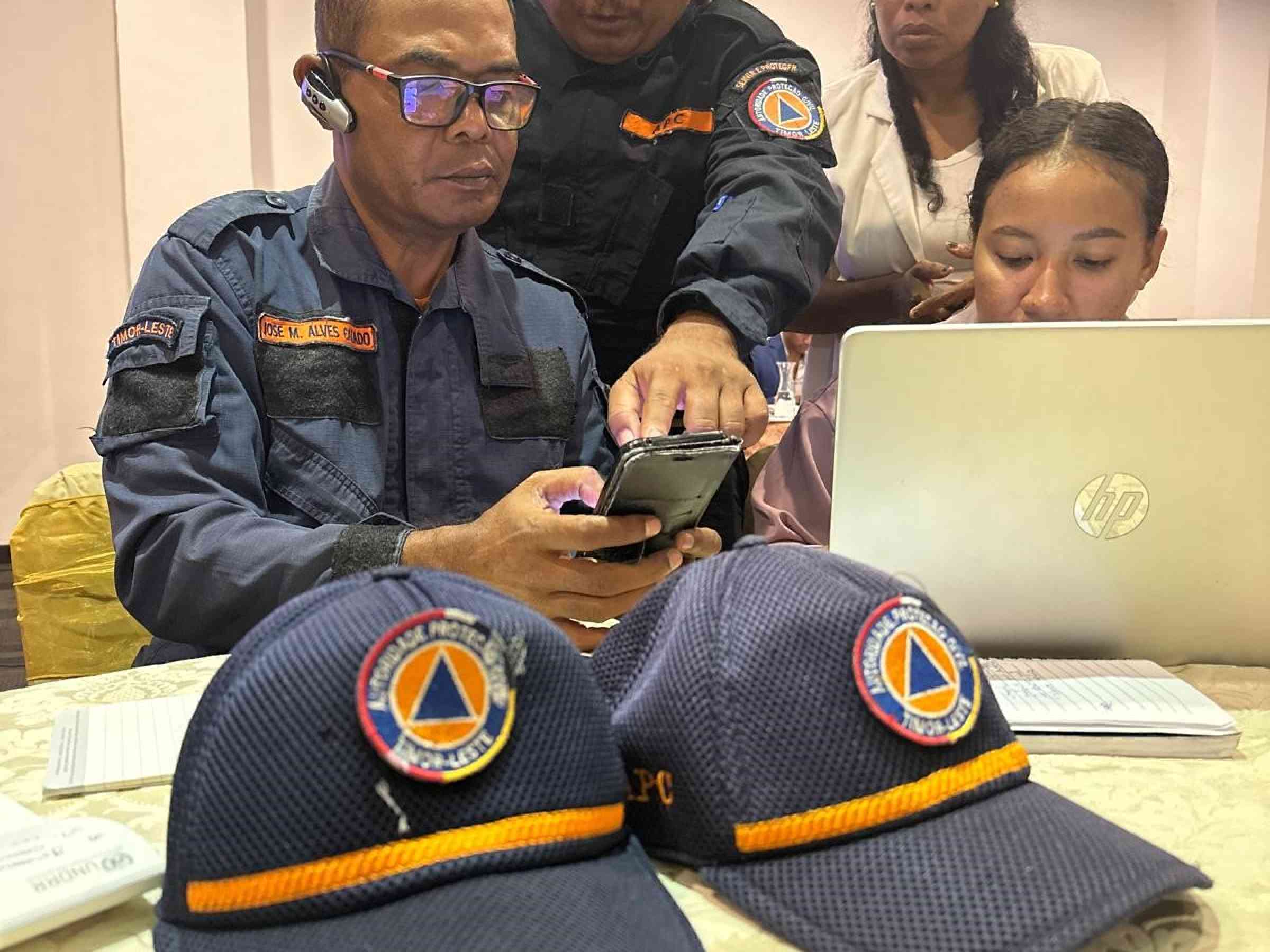
Photo credit: UNDRR
On the first day, groups sketched out risks in a game of Risk Pictionary and stepped into the shoes of people who are often left behind during disasters, like a deaf student who might miss a radio warning, or an older farmer struggling to reach a shelter.
Day two was about connecting the dots. Using international tools from the Sendai Framework for Disaster Risk Reduction, participants identified gaps in Timor-Leste's current disaster management systems. They discussed how disaster risk information and data, dedicated budgets, and risk-informed planning can fit together to build resilience instead of just reacting after a hazard strikes. There were even daily online quizzes with more than 10 questions each day, that showed how much participants' knowledge grew as the training went on.
By day three, the energy in the room had shifted. This wasn't just theory anymore. It was about building the future. Participants drafted a work plan for the upcoming national disaster risk reduction strategy, put together a potential outline of the strategy and risk information to utilize, identified who needs to be involved in its development (from ministries to women's groups and organizations of persons with disabilities), and agreed to form a task team led by the Civil Protection Authority to keep the momentum alive.
More than CPA
While the Civil Protection Authority led the training with the support of UNDRR, they weren't alone. Participants came from across government:
- The Ministry of Public Works, which oversees infrastructure that disasters so often damage - but that can also protect from hazards;
- The Ministry of Health, for which resilient hospitals and emergency medical preparedness are critical;
- The Ministry of Agriculture, working to safeguard farmers and food security against floods and droughts;
- Dili Municipality, representing the urban centers where population density creates its own risks; and
- The Secretary of State for Equality, ensuring gender perspectives are fully integrated.
They were joined by representatives from the Embassy of Portugal, UN Women, and Ra'es Hadomi Timor Oan (RHTO), a national organization of persons with disabilities.
The training represented the beginning of efforts to engage a wider range of stakeholders in disaster risk reduction, from government ministries to community representatives and civil society actors, with the aspiration that the CPA will continue to lead and expand this inclusive approach as Timor-Leste moves forward with developing its national disaster risk reduction strategy.
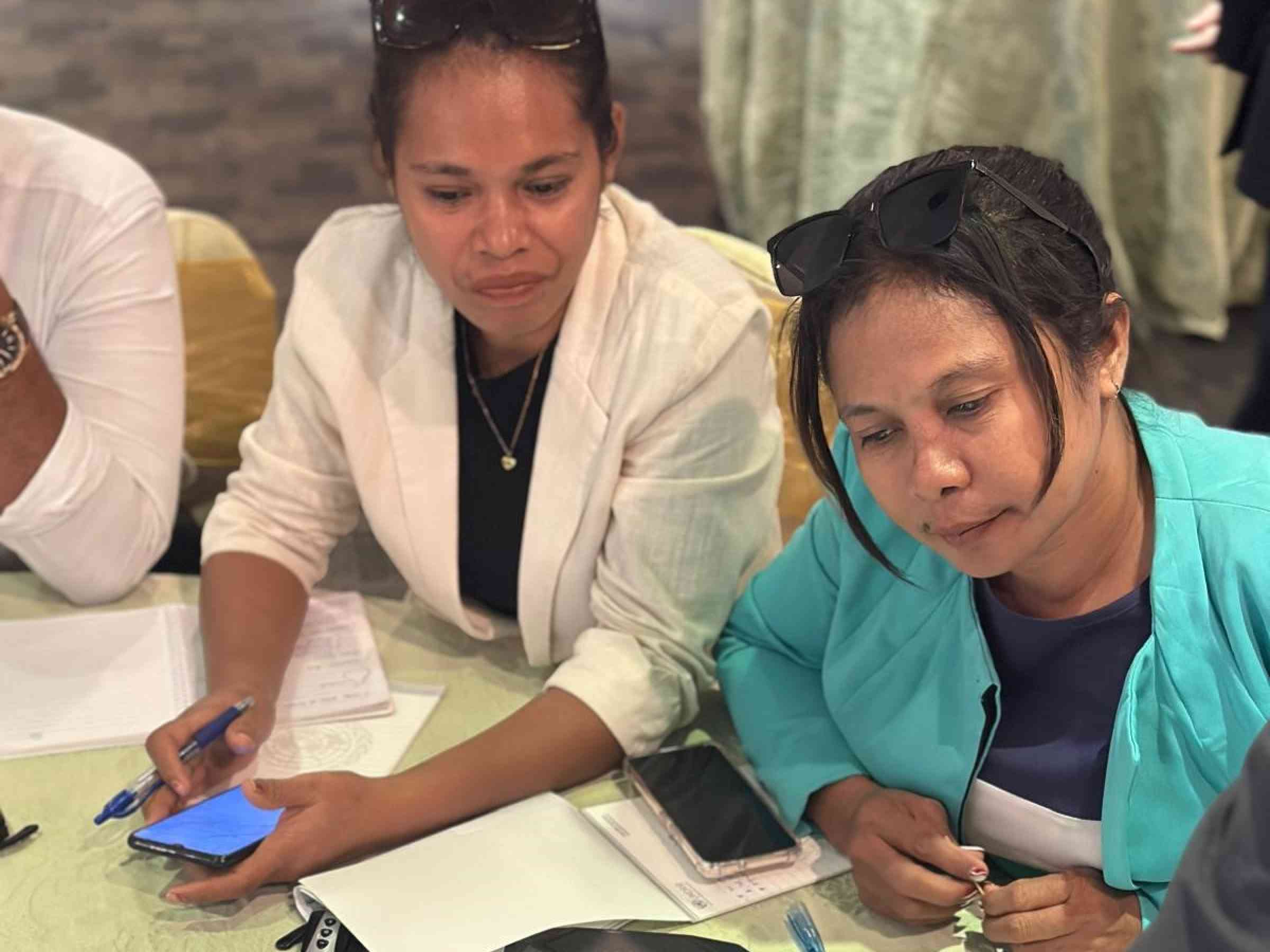
Photo credit: UNDRR
As a newly established institution, the Civil Protection Authority is stepping into a leading role in shaping disaster risk governance in Timor-Leste. This training was also a strategic step to empower CPA in that leadership role-equipping its officers with the knowledge and tools to guide policy direction, coordinate across government, and strengthen national systems for risk reduction.
By building these skills, the training also supports the institutionalization of disaster risk reduction within national governance and development planning processes. This foundation will be further reinforced through the forthcoming National Council for Civil Protection, which will bring together senior government representatives to coordinate policy and ensure an all-of-government approach to resilience - with the CPA serving as its secretariat.
Why it matters
The enthusiasm was clear in the voices of participants.
"This training is useful for me. It's important for both the community and the government. In my work, we budget for disaster management every year, and now I see how this connects directly to a national disaster risk reduction strategy." - Laurentino de Fátima do Carmo, Officer Disaster Risk Management, CPA
This may sound like just another workshop, but in reality, it marked a milestone in the development of a national disaster risk reduction strategy for the country. For Timor-Leste, such a strategy means having a shared plan to protect lives and livelihoods, before disaster strikes. It means making sure that women, persons with disabilities, and rural communities are not just considered, but included. It also means aligning national efforts with global commitments under the Sendai Framework and the Sustainable Development Goals. This is about shifting from disaster response toward prevention, mitigation, and risk reduction. It's about building resilience for the people of Timor-Leste.
Under the leadership of the CPA President, a task team was formally activated, with a designated coordinator appointed to steer the process. The President announced that he would soon send official invitations to line ministries to nominate focal persons who will join the team and support the strategy development process. The task team will build on the outcomes of this workshop, including the draft workplan for the disaster risk reduction strategy formulation, with the goal of completing the strategy by the first half of 2026.

Photo credit: UNDRR
Partnership in action
This effort is not just Timor-Leste's alone. It was made possible through the partnership of many: the Government of Portugal, which funded the training; the United Nations Resident Coordinator's Office and UN Women, that helped bring in expertise; RHTO, that ensured disability inclusion was part of the conversation; and, most importantly, the leadership of the Civil Protection Authority.
The training is part of a broader initiative funded by Portugal and implemented by UNDRR to enhance disaster risk information and resilience in Small Island Developing States, including Timor-Leste. This partnership supports better accounting of disaster losses, stronger disaster statistics, inclusive early warning systems, and greater institutional coordination to protect the most vulnerable people.
Building on this, UNDRR will continue supporting the Government of Timor-Leste in the months ahead - from supporting the development of a national Early Warnings for All (EW4All) roadmap, to a school-based tsunami evacuation exercise in November marking World Tsunami Awareness Day. Together, these efforts reflect the country's growing determination to reduce risk and safeguard its people against future disasters.
The certificates handed out at the close of the training were not just tokens of completion. They symbolized the start of something bigger: a national journey toward resilience.
… Every disaster avoided, every life saved, every community protected starts with steps like this. In Dili, Timor-Leste has just taken one of those steps forward.