
Latin America and the Caribbean move to strengthen Multi-Hazard Early Warning Systems for climate resilience
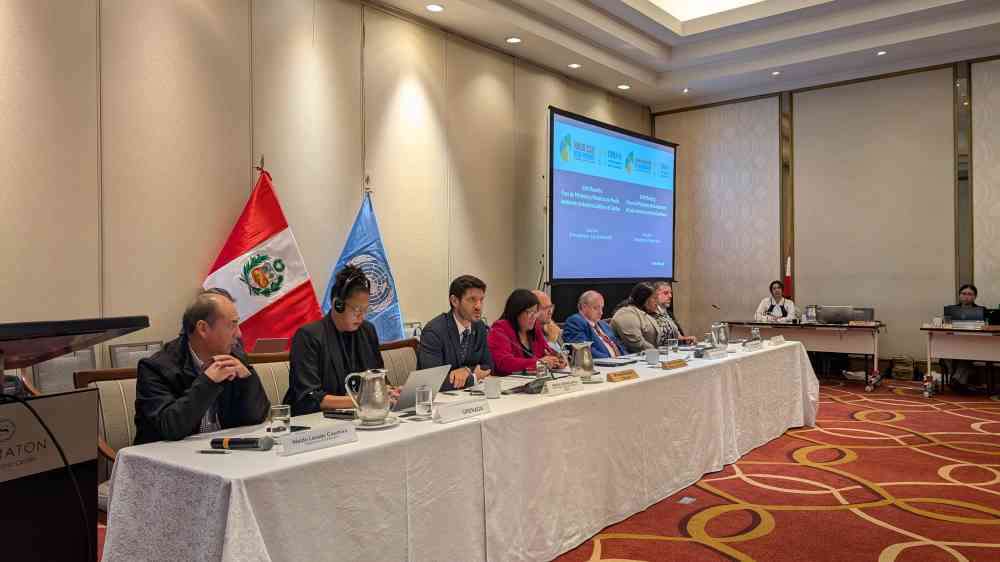
Multi-hazard early warning systems are set to become a central pillar of climate adaptation in Latin America and the Caribbean, as environment ministers committed to strengthening the Early Warnings for All (EW4All) initiative through expanded coverage, regional cooperation, and sustainable finance.
The pledges were made during the XXIV Meeting of the Forum of Ministers of Environment of Latin America and the Caribbean, where delegations agreed that early warning systems must move beyond fragmented tools to be embedded in Nationally Determined Contributions (NDCs), National Adaptation Plans (NAPs), and other national strategies.
“Early Warning Systems are proven to save lives and protect livelihoods—but they are also one of the smartest investments a country can make. Every dollar invested yields up to ten dollars in avoided losses,” said Nahuel Arenas Garcia, Chief of the UNDRR Regional Office for the Americas and the Caribbean, underscoring the scale of the commitments.
Turning pledges into action
From the Caribbean to the Andes, ministers described how early warning systems are no longer optional add-ons but core infrastructure for resilience. Mexico announced it will share its satellite imagery platform with the wider Caribbean, providing coastal and marine data—from monitoring coral reefs to tracking sargassum—helping close regional information gaps.
CARICOM pledged support for its Member States in integrating early warnings across national policies, while Grenada stressed that countries need simplified and direct access to financing. “Support must come through innovative mechanisms, not additional debt,” noted Ambassador Safiya Sawney, adding that fisherwomen and other vulnerable groups must benefit directly from climate finance.
Barbados called for forecast-based funding that can be immediately disbursed after disasters, so governments are not forced to cut from health or education budgets. At the same time, it urged countries to uphold the 1.5°C global temperature limit in negotiations, warning that surpassing it threatens the very survival of small island developing states.
Costa Rica reaffirmed its commitment to MHEWS, highlighting the need for inter-institutional coordination and trustworthy, public-facing data. Its delegation pointed to collaboration with the health sector on dengue as an example of how early warnings can serve multiple sectors, but emphasized the need to scale up cooperation with academia, the private sector, and international partners.
Adding a broader perspective, Juan Bello, Director of the United Nations Environment Programme for Latin America and the Caribbean, stressed that multi-hazard systems are essential not only for disaster preparedness but also for supporting wider adaptation efforts. “They are key to the restoration and protection of ecosystems that regulate water, a vital resource impacted by floods and droughts. Strong partnerships with UNDRR, WMO, and other agencies are essential to advance the Forum’s agenda and ensure that EWS, a priority agreed by ministers at last year’s special session in Rio de Janeiro, contribute to saving lives, reducing economic losses, and strengthening resilience across the region,” he said.
Building systems that last
Experts stressed that investments must look beyond technology to ensure sustainability. “We must invest in training, maintenance, and long-term capacity if early warnings are to become early action that protects biodiversity and livelihoods,” said Julian Baez, Director of the WMO Regional Office for the Americas.
Teshia JnBaptiste of CARICOM added that early warning systems also safeguard ecosystems and “must be integrated in national plans such as NDCs and NAPs, and designed not as stand-alone tools, but as systems that drive early action.”
Peru’s Vice-Minister of Environment pointed to the importance of forecasting for prevention, zoning, and infrastructure resilience. Reinforcing this, Waldo Lavado of SENAMHI Peru stressed that “impact-based forecasting for anticipatory action is the next generation of where we need to go.”
Chile, meanwhile, highlighted advances toward legislation on early warning systems. But as Felipe Riquelme of SENAPRED cautioned, “We need clear indicators to monitor the effectiveness of these systems, and public investment alone is not enough. The private sector must also be engaged.”
The session also highlighted how early warning systems intersect with financial resilience. Jamaica, Belize, and Barbados called for revising thresholds and triggers to make sure systems inform and strengthen regional insurance schemes such as the Caribbean Catastrophe Risk Insurance Facility (CCRIF). Jamaica emphasized that early warning systems must also account for non-traditional hazards such as oil spills, while Belize stressed the importance of engaging civil society and the private sector, pointing to tourism, agriculture, and fisheries as sectors already under strain from hurricanes and sargassum.
Across interventions, the message was clear: early warnings are not only about saving lives but also about securing economies, protecting ecosystems, and ensuring long-term resilience.
Closing the session, Nahuel Arenas Garcia commended countries for their commitments while stressing the importance of governance that brings together governments, civil society, insurers, the private sector, and local and traditional knowledge. “The region is moving decisively toward systems that combine impact-based financing, anticipatory action, and stronger regional cooperation,” he said.