COP31 leaders back a long-term future for Early Warnings for All
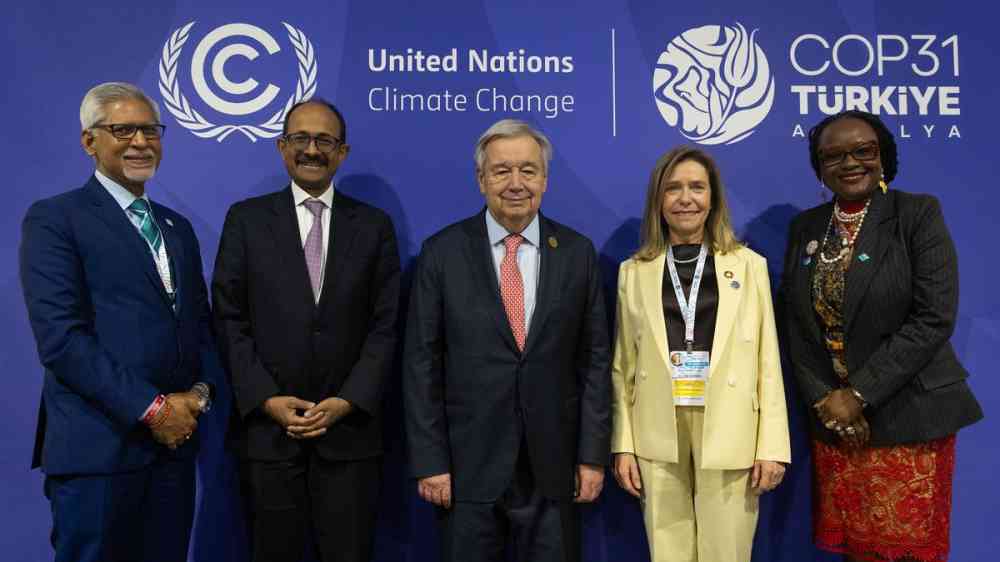
Countries with comprehensive early warning systems record disaster death rates nearly six times lower than countries with limited coverage. At COP31, UN Secretary-General António Guterres and member states recognized the partnership behind that result and asked for the work to continue well past 2027.
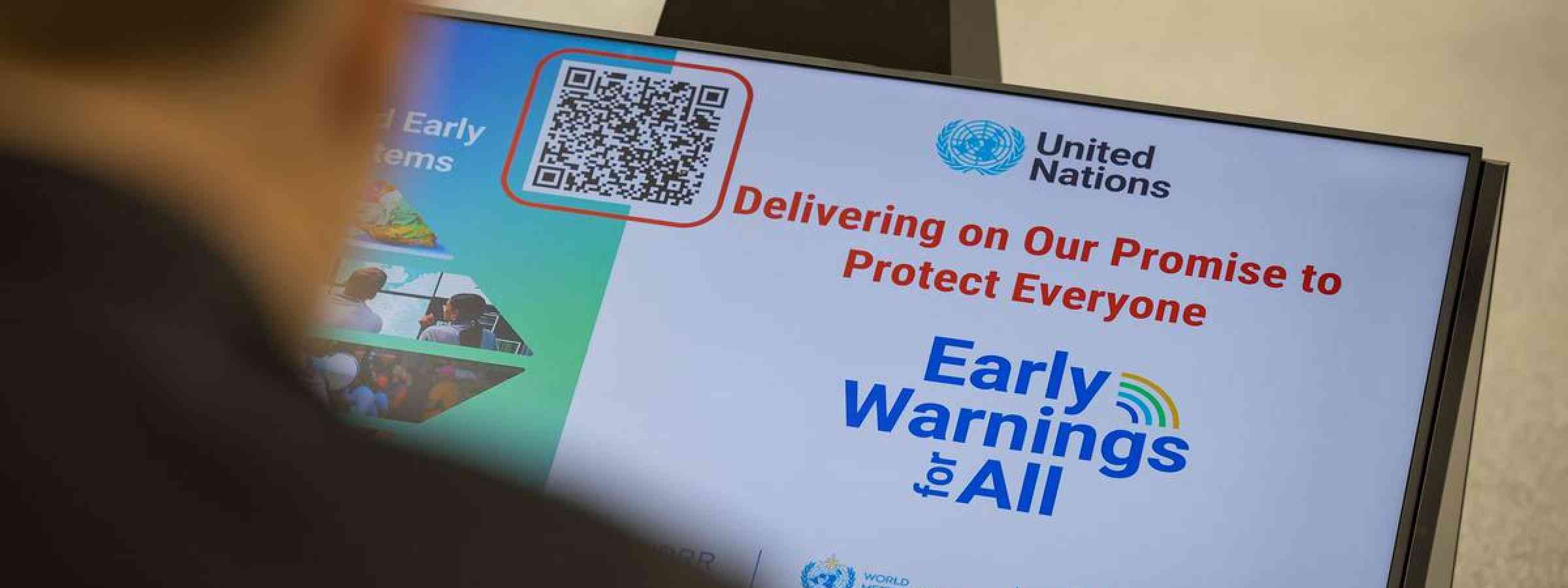
The United Nations Office for Disaster Risk Reduction (UNDRR) and the World Meteorological Organization (WMO) launched the Global Status of Multi-Hazard Early Warning Systems 2026 at a high-level event on Early Warnings for All, held at COP31 in Antalya, Türkiye, on 11 November. The report is the annual stocktake of the initiative, which the two agencies co-lead, along with the International Telecommunication Union (ITU) and the International Federation of Red Cross and Red Crescent Societies (IFRC).
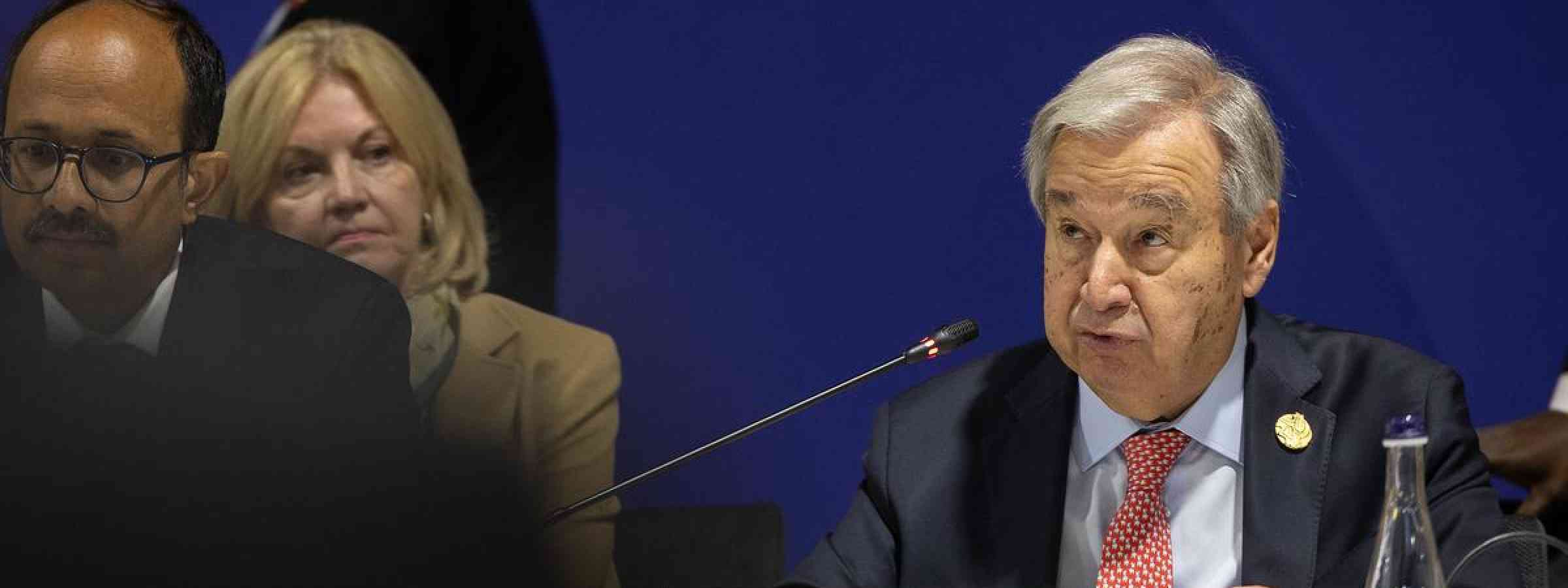
“The evidence is overwhelming,” Secretary-General Guterres said. “Early warning saves lives. Countries with comprehensive early warning systems have disaster death rates nearly six times lower. A warning of 24 hours can reduce damage by up to 30 per cent.”
Moving from fragmented projects to coordinated long-term support.
Guterres credited the four agencies that lead the initiative and asked partners to move behind national plans for the long term.
“I commend the World Meteorological Organization, the UN Office for Disaster Risk Reduction, the International Telecommunication Union and the International Federation of Red Cross and Red Crescent Societies for their leadership and all the partners who have joined them,” he said.
“We must move from fragmented projects to coordinated long-term support. That means rallying partners behind country-led plans, strengthening national and regional institutions, and building lasting capacity.”
The goal, the Secretary-General said, is systems that last. To do this, world leaders must make early warnings a permanent public service; they must close the gaps in financing and capacity; and they must strengthen international cooperation in support of country ownership.
“The climate crisis is accelerating. Our protection of people must accelerate with it,” he said. “Together, let us make sure that every warning arrives in time.”
A rallying call across the world
Kamal Kishore, Special Representative of the Secretary-General for Disaster Risk Reduction, said early warning had outgrown its technical niche.
“Early Warnings for All now has become a mantra. It has become a brand name,” he said.
“It has become a rallying call across the world. Many different organizations, many different types of stakeholders, many people working across many different sectors have come together to ensure that everybody on the planet has access to early warning.”
“It is no longer a niche technical area. It is something behind which there is a much broader coalition and momentum. The number of countries that now report having a multi-hazard early warning system has more than doubled since the adoption of the Sendai Framework,” he said.
Global Status of Multi-Hazard Early Warning Systems 2026 offers evidence of progress in implementing the Early Warnings for All initiative, showing a 143 per cent increase in the number of countries reporting the existence of such systems since reporting began in 2015.
In 2025, the number of active anticipatory action frameworks increased 70 per cent in a year, from 154 to 262, spanning 75 countries. A total of 146 anticipatory action activations were recorded in 54 countries, directly reaching 9.6 million people, reducing reliance on post-disaster humanitarian response.
“When I see all of this, I see that the Early Warnings for All initiative is not just a UN initiative, it’s everybody’s initiative, and it is touching people’s lives in a very, very tangible way, in a positive way,” Kishore said.

The next phase is already taking shape
UNDRR and its partners are already holding regional consultations on what follows 2027, including one in Africa in September this year.
“We need to go further. We need to consolidate progress and expand to areas that need to be covered,” Kishore said.
“We’ll need to work towards looking at interconnected, cascading hazards. We will need to enlarge our partnerships, work even more closely with regional institutions that can support national and subnational efforts. And very importantly, ensure that early warning is connected to systems of social protection. It’s one thing to be warned. It’s another thing to have access to resources to act on that warning.”
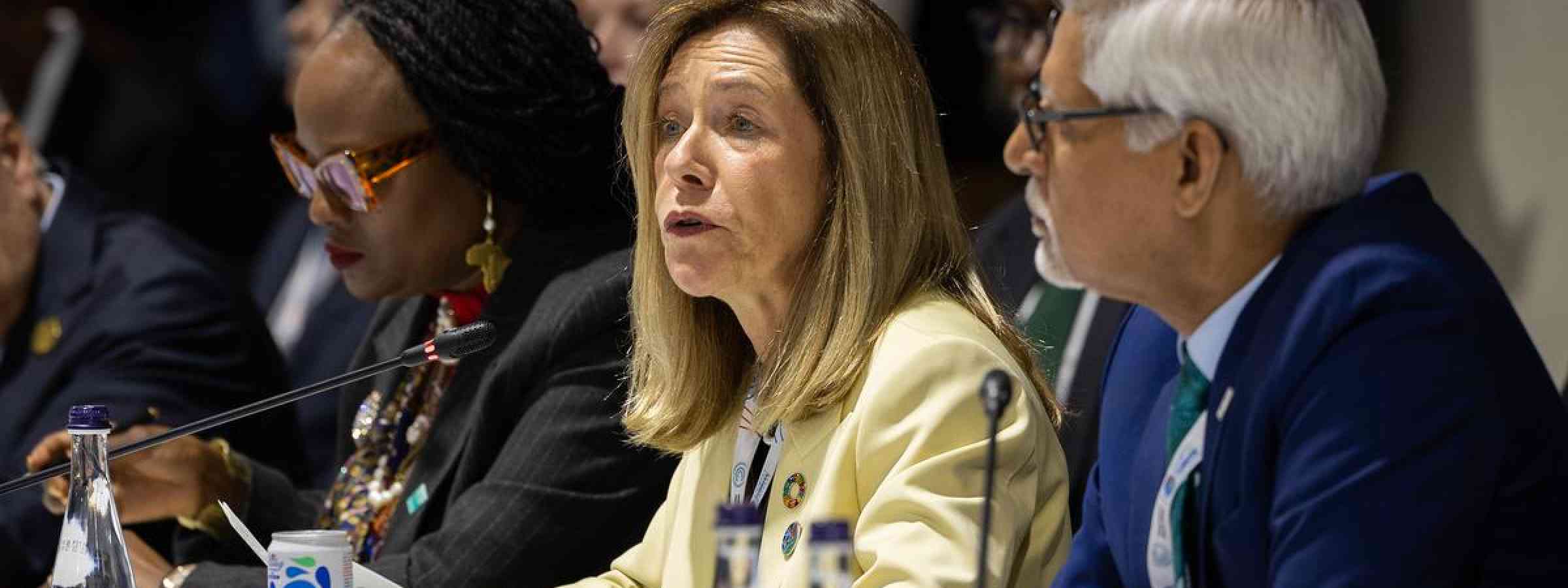
WMO Secretary-General Celeste Saulo said that successful early warnings go unnoticed.
“When a warning works, nothing happens. There are no headlines, no tragedies, nothing to see,” she said.
This is why it is important to track the successes. The Global Status of Multi-Hazard Early Warning Systems 2026 report, she said, “shows that we are making progress, but not fast enough. Four in five people hit by a disaster in the past five years received advance warning, Saulo said.
”But in more than half of the countries that report, the system is still breaks down somewhere between the forecast and the action.”
“We will continue to shape the next phase, region by region, leading to a global meeting in the middle of next year. These milestones will decide what Early Warnings for All becomes after 2027,” she said.
Not the finish line, but a milestone
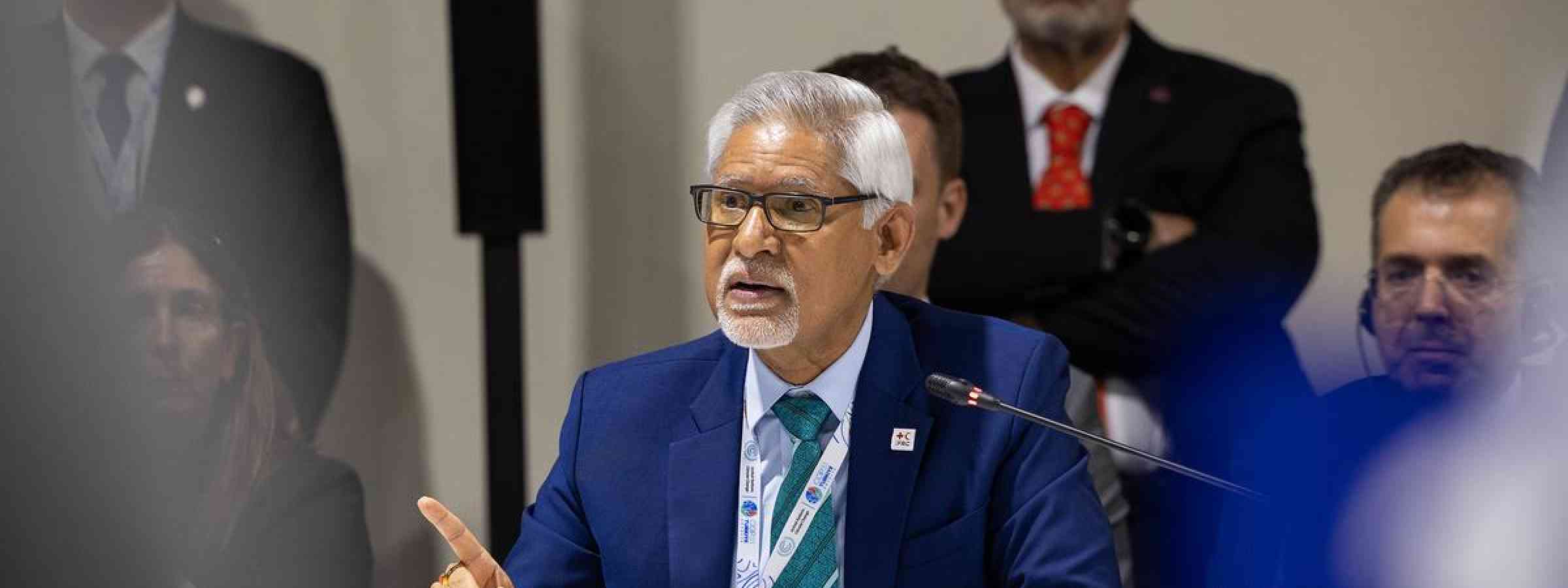
Jagan Chapagain, Secretary General of the IFRC, made the same case.
“As we approach 2027, we should see it not as the finish line, but as a milestone. The work of protecting every person from hazardous events will not end in 2027.”
Warning systems only work when people can act on them. To illustrate this point, he recounted his conversation with a headmaster in Nepal, Mr Rajendra Dawadi, who took quick and decisive action on a warning before the devastating August flash flood arrived at his school.
“He had nine minutes and he had 900 children inside the school,” Chapagain said. “That warning of nine minutes he utilized to save all of those 900 children. This is the power of early warning. And he credits it to a preparedness programme supported by the Red Cross.”
“He thanked me for the training, but he is my real hero," Chapagain said.
“It is early action that makes early warning work. In fact, recent evidence shows that while four out of five people affected by disaster received a warning, 1 in 3 were unable to act on it. One in three – that's 33% of the people – were unable to act on it even after they have received the warning,” he said.
“That is the implementation gap.”
Looking beyond 2027
More than 20 governments, regional bodies, cities and development banks voiced their support for the launch. Many cited examples of the difference multi-hazard early warning systems are already making: the Maldives’ national roadmap, early warning focal points on every inhabited island in the Marshall Islands, and Bangladesh’s sharp fall in disaster deaths.
A common thread ran through the statements – the need for implementation and support to continue, and to close the gaps that remain for the most exposed countries and communities.
Fewer than half of small island developing states have multi-hazard early warning systems, coastal and mountain monitoring is thin, and remote communities are still hard to reach. El Niño was a shared concern: Fiji and the Marshall Islands are already feeling its impacts, and the African Union warned of drought in southern Africa and floods in the east.
Many of the speakers noted that early warning systems need sustained capacity – trained staff, maintenance and operating budgets that last well beyond installation. They asked for predictable, largely grant-based financing mechanisms, including finance released quickly once a credible warning is issued. They also asked for technical support through technology transfer, capacity building and stronger regional institutions.
Daniel Best, President of the Caribbean Development Bank, summed up what sustaining the work will take.
“The promise of Early Warnings for All is fulfilled when a warning reaches a community, people understand it and they have the means to act. Let us finance every link in that chain and sustain it beyond 2027. Our responsibility is to ensure that no community is left unprotected,” he said
“That, friends, is how we turn an early warning into lasting protection.”