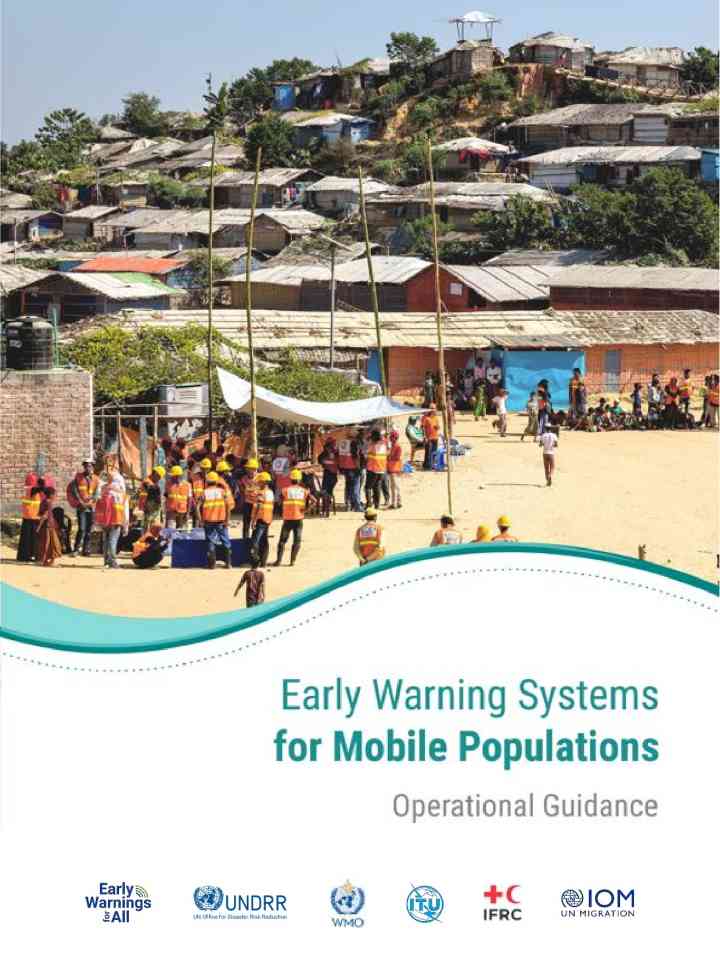
Early Warning Systems for mobile populations: Operational guidance
This operational guidance provides practical direction for designing and implementing people-centred, inclusive multi-hazard early warning systems that effectively reach and protect mobile populations, including displaced persons, refugees, migrants in vulnerable situations and other groups affected by changing locations or circumstances. Human mobility shapes disaster risk in multiple ways. People may move into hazard-prone areas due to economic necessity, displacement or insecurity; they may be temporarily present along routes, in workplaces or transit hubs; or they may be unable to move at all because of poverty, disability or insecurity.
It concludes that a MHEWS that effectively includes mobile populations is not a separate or specialized system. It is a more robust and resilient system that recognizes mobility as a persistent feature of risk and designs early warning processes that can function despite movement, uncertainty and constraint. By grounding inclusion in existing institutions, mandates and operational realities, this guidance aims to support incremental but meaningful improvements in how early warnings reach and protect people on the move.