
Greece strengthens urban resilience and expands national and local engagement with MCR2030

Athens, Greece | March 2026 – The United Nations Office for Disaster Risk Reduction (UNDRR) advanced partnerships and local resilience action in Greece through multiple meetings and events in Athens, reinforcing collaboration on urban resilience, extreme heat, wildfire risk governance, and community engagement. The events highlighted growing momentum for the Making Cities Resilient 2030 (MCR2030) initiative in Greece, with the City of Athens expressing strong interest in becoming a Resilience Hub. This would position Athens as a regional leader in advancing risk-informed urban development and peer-to-peer exchange across Europe and Central Asia.
During a bilateral meeting with Ms. Natalia Alonso Cano, the Regional Chief of UNDRR Regional Office for Europe and Central Asia, the Mayor of Athens reaffirmed the city’s commitment to strengthening resilience efforts, including enhancing preparedness for extreme heat and climate-related risks. UNDRR will support the city in advancing its application to become a Resilience Hub, with the support of national partners including the Climate Change Hub (CC Hub).
The mission also convened a closed dialogue with Greek mayors, where cities expressed strong interest in joining MCR2030 and emphasized the need for practical tools, knowledge exchange, and collaboration to address shared challenges. Discussions highlighted the importance of local leadership in implementing the Sendai Framework, particularly in areas such as risk governance, data systems, and community engagement.
At the national level, UNDRR met with the Ministry of Climate Crisis and Civil Protection, strengthening cooperation on priorities including wildfire management, school safety, tsunami awareness, and the development of a national disaster risk database. Opportunities for collaboration were identified around early warning systems, education, and upcoming regional and global platforms.
A high-level policy dialogue hosted at the European Parliament Liaison Office brought together government representatives, local authorities, academia, and civil society to discuss Greece’s evolving risk landscape. Stakeholders highlighted key challenges, including gaps in local planning, data availability, and risk communication, while also identifying solutions such as youth engagement and improved coordination across sectors.
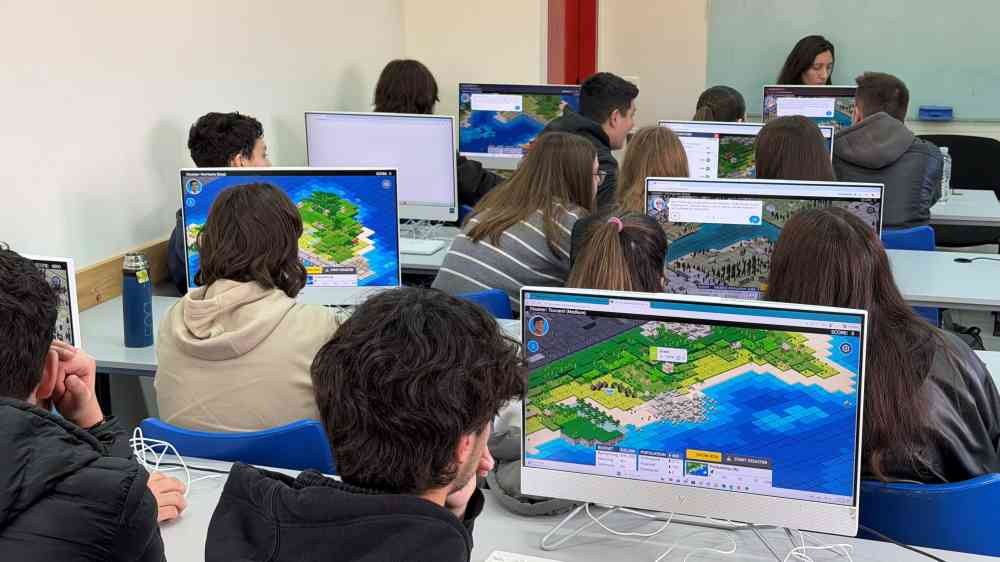
Engagement with partners extended to collaboration with the CC Hub and discussions with global leaders on extreme heat action, including opportunities to align city-level efforts with international initiatives. Through the events, UNDRR also emphasized the role of education and youth engagement in building a culture of prevention. UNDRR, together with partners, conducted a session with youth ambassadors, introducing disaster risk reduction concepts through the Stop Disasters game and supporting students to develop peer-led awareness initiatives.
Overall, UNDRR organized events reinforced Greece’s commitment to strengthening disaster risk reduction and highlighted the value of city-to-city collaboration, national-local coordination, and inclusive approaches to resilience. As engagement with MCR2030 expands, Greece is well positioned to play a leading role in advancing urban resilience in the region.