
Strengthening disaster data systems in the Indian Ocean
The Indian Ocean region is exposed to recurring climate and disaster risks, including hurricanes, heavy rainfall, and other hydrometeorological hazards. In addition to these recurrences, countries in the region face persistent gaps in tracking disaster impact data, generating risk information, and early warning communication systems. Technical capacity for collecting and analysing primary data remains uneven, while open access to standardized and interoperable disaster-related information is limited. Reliable disaster data is essential for disaster risk reduction (DRR), climate action, and risk-informed sustainable development. DELTA Resilience (Disaster & Hazardous Events, Losses and Damages Tracking & Analysis), provides technical solutions and institutional guidance for establishing comprehensive national systems, offering a pathway to address these gaps.
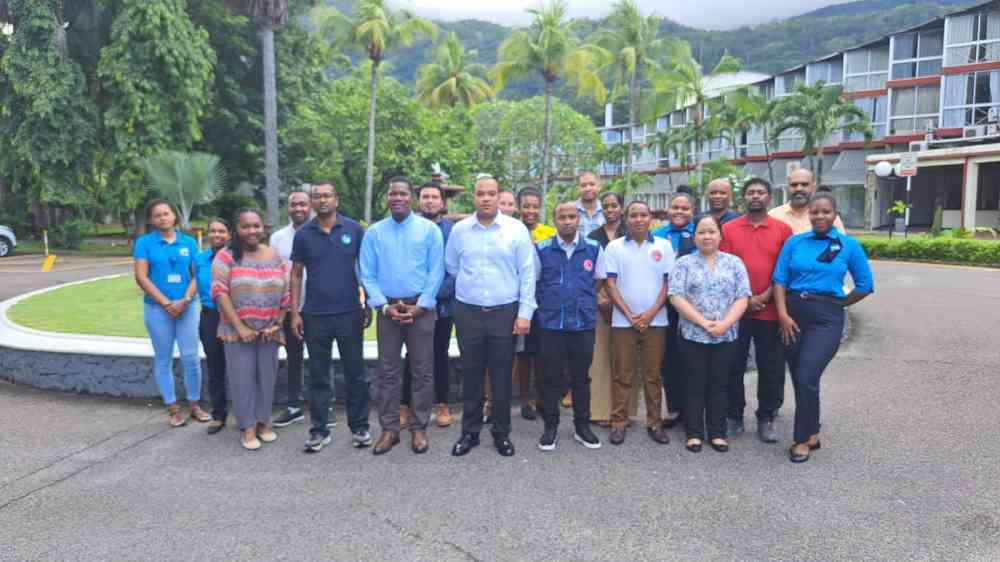
Against this backdrop, Seychelles hosted a regional peer learning workshop from 18 to 20 January 2026 on building methodological foundations for national disaster tracking systems powered by DELTA-Resilience. The workshop brought together participants from Seychelles, Mauritius and Madagascar, and focused on enhancing Member States’ understanding of approaches to cataloguing hazardous events. Hazard classification, and global standards and methodologies for monitoring and estimating disaster losses and damages. It also expanded appreciation for use-cases and application of disaster data in risk information generation, risk-informed planning, preparedness and early action, DRR financing, and socio-economic benefit assessment. Participants built skills in assessing the maturity of their national data ecosystems, applying toolkits to identify strengths and gaps, and planning for government-owned, contextualized systems. The event also facilitated peer exchanges across government institutions and sectors, supporting alignment of national disaster data systems with the global Sendai Framework.
Resilience building and disaster response management in the Indian Ocean (RDRM-IO)
The overall objective of the Resilience building and disaster response management in the Indian Ocean (RDRM-IO) programme is to reduce disaster and climate related losses in the human, economic, social, physical, and environmental assets of Indian Ocean Commission (IOC) member states.
This training was co-funded by the European Union (EU) in partnership with the Indian Ocean Commission (IOC) and implemented by the IOC, PIROI Plateforme d’Intervention Régionale de l’Océan Indien - French Red Cross) and UNDRR through the Resilience building and disaster response management in the Indian Ocean programme (RDRM-IO) programme 2020-2026. Under this project, UNDRR has helped to improve DRR understanding and governance capacities in the island states of Comoros, Madagascar, Mauritius, and Seychelles.
With Mauritius facing 41 different hazards, including cyclones and heavy rainfall, disaster data collection is no longer optional—it is essential. The new DELTA system will strengthen early warning, improve preparedness, and enable informed decisions that can save lives and reduce losses.
- Pravind Rughoo, Communication and data officer
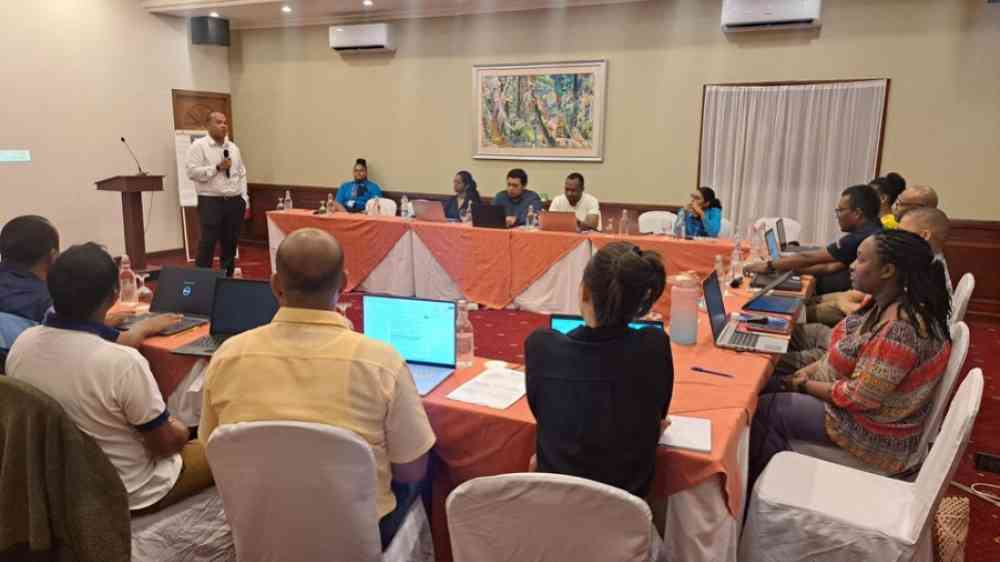
Participants developed and peer-reviewed country-specific action points for institutionalizing losses and damages tracking mechanisms, and prepared roadmaps to improve the maturity of their data ecosystems. Each country also established a work plan to strengthen its national disaster tracking system, including selected data use cases and applications. Importantly, the event emphasized collaboration. Indian Ocean countries engaged in joint exercises to practice using DELTA Resilience, while sharing experiences, challenges, and goals with one another. This peer learning approach not only reinforced technical skills but also built a foundation for sustained regional cooperation, ensuring that countries are better equipped to generate official disaster impact statistics and strengthen resilience through evidence-based decision-making.
Through the training, participants also recognised the advantages of engaging with regional and global systems for early warning. These regional and global systems allow for the standardization of collected data, therefore minimizing confusion. Additionally, regional and global systems allow for more effective collaboration between national systems by harmonizing workflows and terminologies, and collaboration ultimately leads to effective responses.
The countries were trained on the use of more efficient and accurate tools for monitoring events, which analyse damage and loss data to enable better decision making in response to incoming hazards. The workshop’s successes will allow these Indian Ocean countries to improve their resilience and responsiveness at the national level and also as a region, and the training they have received will help them to transform damage and loss data into actionable insights.
Effective disaster data management is not only about recording numbers. It is about enabling sound, evidence-based decision-making. It allows us to design policies and interventions that genuinely reduce vulnerability, strengthen resilience, and minimise loss and damage. It also helps ensure that those most at risk - particularly women, girls, persons with disabilities and other vulnerable groups - are visible in our data and therefore considered in our policies and actions.
- Daniel Cetoupe, Principal Secretary, Seychelles